
Jun 26, 2026Product Knowledge & Guides
Wooden vs Aluminum Reformers: A 20-Year Manufacturer's Guide
Wooden or aluminum? Get expert advice from a 20-year factory. Compare the pros, cons, and long-term ROI of Maple, Beech, and Oak Pilates reformers today

In the specialized world of Pilates, a reformer is more than fitness equipment — it is the structural heart of a studio. It shapes how movement feels, how sound travels, and how clients perceive your brand before they begin their first exercise.
For studio owners, distributors, and purchasing managers, the most important question is no longer:
“Maple or aluminum?”
It is now:
“Wood or aluminum?”
With wooden reformers crafted from maple, beech, and oak, and aluminum frames engineered for industrial precision, this comparison is broader and more strategic than ever.
As a manufacturer specializing in handcrafted wooden Pilates apparatus since 2007, with nearly two decades of OEM and ODM experience, we have engineered, tested, exported, and customized thousands of reformers worldwide.
This guide is not marketing hype.
It is a material-science and business-logic comparison to help you make a long-term investment decision.
I. Why Wood Remains the Premium Standard
The enduring appeal of wooden reformers begins with the origins of the Pilates method.
Joseph Pilates developed his original apparatus using natural materials. He believed the training environment should reflect the organic nature of the human body.
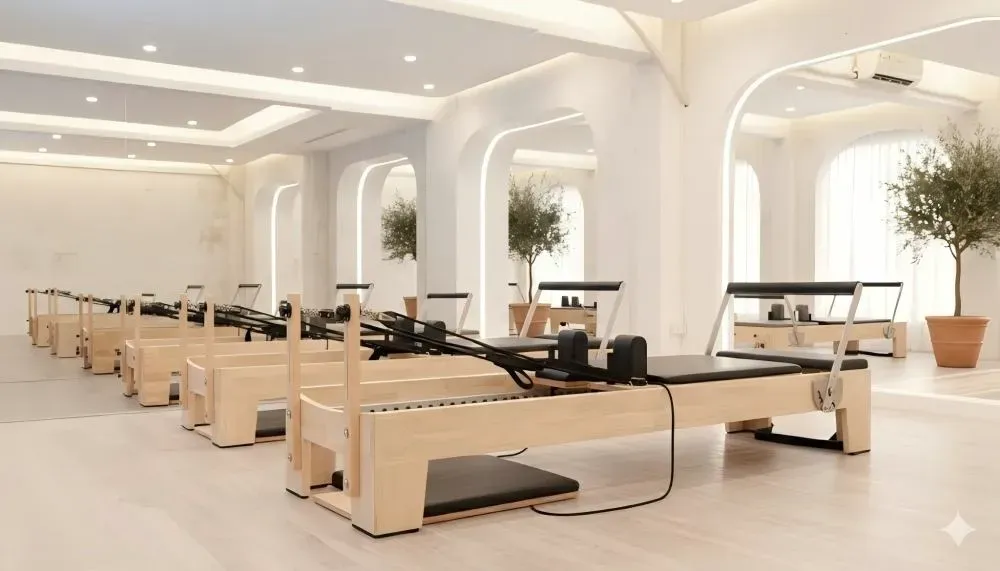
Today, wooden reformers — crafted from maple, beech, or oak — continue that philosophy.
1. Maple, Beech, and Oak: What’s the Difference?
Modern wooden reformers typically use three hardwoods:
- Maple: Dense, uniform grain, premium boutique feel
- Beech: Strong, cost-effective, excellent load-bearing performance
- Oak: Visually luxurious, strong structural rigidity
The true determinant of quality is not the species alone — it is proper kiln drying, moisture control, and precise craftsmanship.
2. Biomechanical Dampening: Why Wood Feels Different
Wood is cellular and fibrous. Aluminum is rigid and crystalline.
This difference dramatically affects how movement feels.
During exercises like:
- Heavy spring leg press
- Jump board sequences
- Long stretch series
Micro-vibrations travel through the frame.
- Wood absorbs and disperses these vibrations → softer joint feedback
- Aluminum transmits vibrations → sharper impact
This is why many boutique studios and rehab centers prefer wooden reformers.
Premium studios describe them as:
“Warmer,” “Smoother,” “More grounded.”
3. Acoustic Performance: The Silent Advantage
Pilates relies on breath, rhythm, and instructor cues.
- Aluminum frames can produce high-frequency spring resonance and metallic echo
- Wooden reformers act as natural acoustic insulators
In properly engineered wooden reformers:
- Carriage glide sounds like a soft whisper
- Spring engagement is lower in pitch
- Frame resonance is minimized
This creates a more premium client experience, especially in one-on-one and boutique studio settings.
II. Engineering Stability: Is Wood Really Less Stable Than Aluminum?
A common misconception:
“Wood warps. Aluminum is stable.”
This is only true when wood is poorly processed.
1. Moisture Control (8–12% Rule)
Professional manufacturers control wood moisture using industrial kiln drying.
Optimal range: 8%–12%
If moisture is too high:
- Shrinkage in air-conditioned studios
- Joint gaps
- Creaking
If too low:
- Brittleness
- Risk of cracking under spring tension
Proper wood science ensures:
- Straight 2+ meter frames
- Structural integrity under 150–200 kg dynamic load
- Long-term rail alignment
2. Structural Performance
Hardwood (Maple, Beech, Oak):
- Excellent screw retention
- High fatigue resistance
- Natural vibration dampening
Aluminum:
- Lightweight and dimensionally precise
- Moisture resistant
- May experience metal fatigue over long cyclic loading
Both can last 10–15 years if manufactured properly, but wood provides vibration comfort and acoustic refinement that aluminum cannot.
III. Aluminum Reformers: Industrial Precision & Efficiency
Aluminum reformers excel in:
- Commercial gyms
- Multi-location fitness chains
- Humid environments
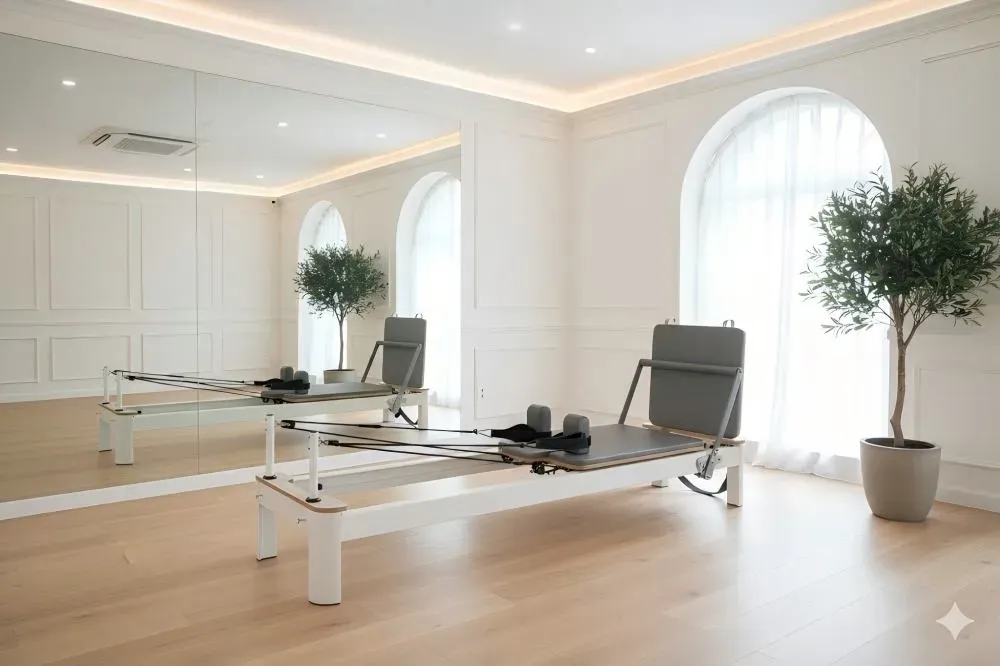
1. Engineering Precision
Aluminum extrusion allows:
- Micron-level dimensional consistency
- Laser-cut assembly precision
- Scalable high-volume production
Ideal for studios requiring uniform fleet installation.
2. Climate Immunity
Aluminum is immune to moisture, making it suitable for:
- Tropical climates
- Beachfront resorts
- Outdoor or multi-purpose fitness halls
3. Portability
Aluminum frames are lighter and easier to move, which benefits:
- Pop-up studios
- Mobile instructors
- Event-based programs
IV. Business Perspective: Asset vs Expense
A reformer is a capital asset, not a short-term expense.
1. Resale & Restoration
- Can be refinished
- Maintain aesthetic and structural value
- Retain 60–70% resale value after 8–10 years
Aluminum reformers:
- Cannot be refinished
- Powder coating scratches are permanent
Wood behaves like furniture. Aluminum behaves like equipment.
2. Brand Psychology
Wood: warmth, craftsmanship, premium positioning
Aluminum: efficiency, modernity, athletic focus
Your equipment choice communicates your studio’s story before clients even start.
V. Sustainability & Environmental Impact
Wood: renewable, biodegradable, lower carbon footprint
Aluminum: energy-intensive mining and smelting
Eco-conscious studios often choose wood for environmental branding.
VI. Decision Matrix
Studio Type | Recommended Material | Why |
|---|---|---|
Boutique Studio | Wood (Maple/Beech/Oak) | Premium look & acoustic softness |
Rehab / Physiotherapy | Wood | Vibration dampening |
Large Gym Chain | Aluminum | Fleet uniformity |
Tropical / Humid Climate | Aluminum | Moisture immunity |
Luxury Resort | Wood | Visual warmth & brand identity |
VII. OEM & Distributor Considerations
Wooden Reformers: multiple wood species, custom stains, logo engraving, structural flexibility
Aluminum Reformers: faster production, lighter shipping, high-volume cost control
For OEM partners, wood offers brand differentiation; aluminum offers operational efficiency.
Recommended Reading for Studio Owners
IX. Frequently Asked Questions
Q1: Which lasts longer — wood or aluminum?
A: Both 10–15+ years if manufactured properly. Wood depends on moisture stability; aluminum depends on weld quality.
Q2: Do wooden reformers require high maintenance?
A: Minimal. Properly kiln-dried and sealed wooden frames maintain performance with simple care.
Q3: Is aluminum smoother than wood?
A: Glide smoothness depends on rail precision and bearing quality — not just material.
Q4: Is wood suitable for humid climates?
A: Yes, with stabilized moisture and HVAC control; otherwise aluminum may be safer.
X. Final Thoughts: Material Is Strategy
The question is not which material is “better.”
It is:
- What client experience do you want?
- What brand story do you want to tell?
- What is the long-term business strategy?
Wood = tradition, warmth, sensory refinement
Aluminum = industrial precision, operational flexibility
The best choice aligns with your studio’s long-term vision, not just your initial budget.