
Jun 26, 2026Product Knowledge & Guides
Importing Wooden Pilates Reformers by LCL? Avoid This Common Shipping Damage Mistake
Learn how to prevent frame cracks and transit damage when shipping wooden Pilates reformers via LCL cargo from China.
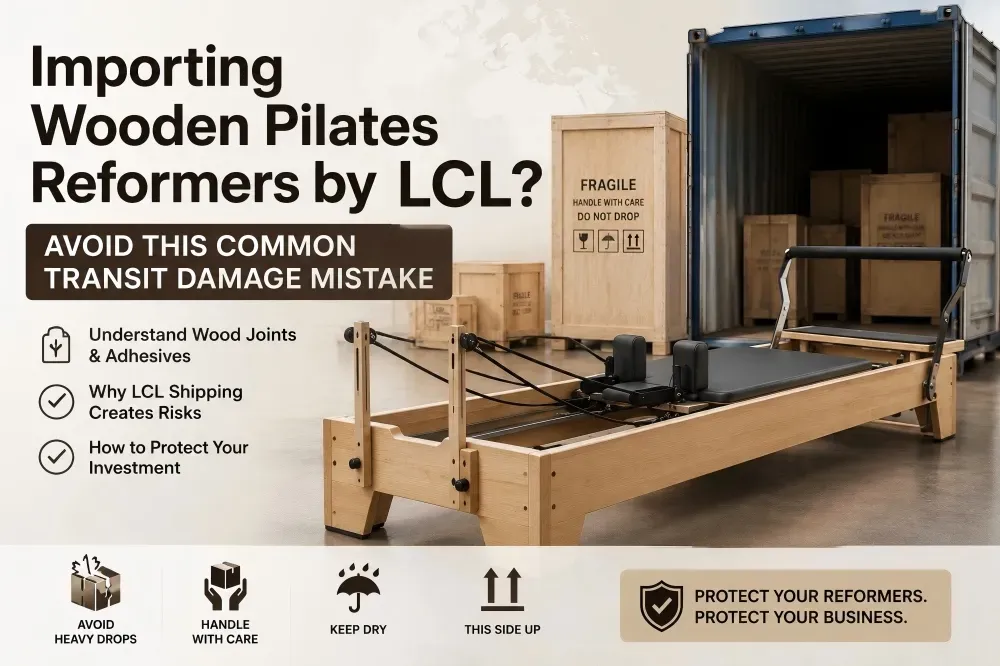
Importing Wooden Pilates Reformers by LCL? Avoid This Common Transit Damage Mistake
Introduction
Importing premium wooden Pilates reformers from China has become increasingly popular among Pilates studios, distributors, fitness retailers, and commercial gym projects worldwide.
Compared with aluminum models, wooden Pilates reformers are highly valued for their natural aesthetics, quieter glide performance, superior stability, and more refined studio appearance. Whether made from oak, maple, beechwood, or other hardwood materials, wooden reformers are still considered the preferred choice for many professional Pilates studios.
If you are currently sourcing or planning to import wooden pilates reformer, especially through LCL (Less than Container Load) shipping, there is one critical transportation risk many buyers underestimate.
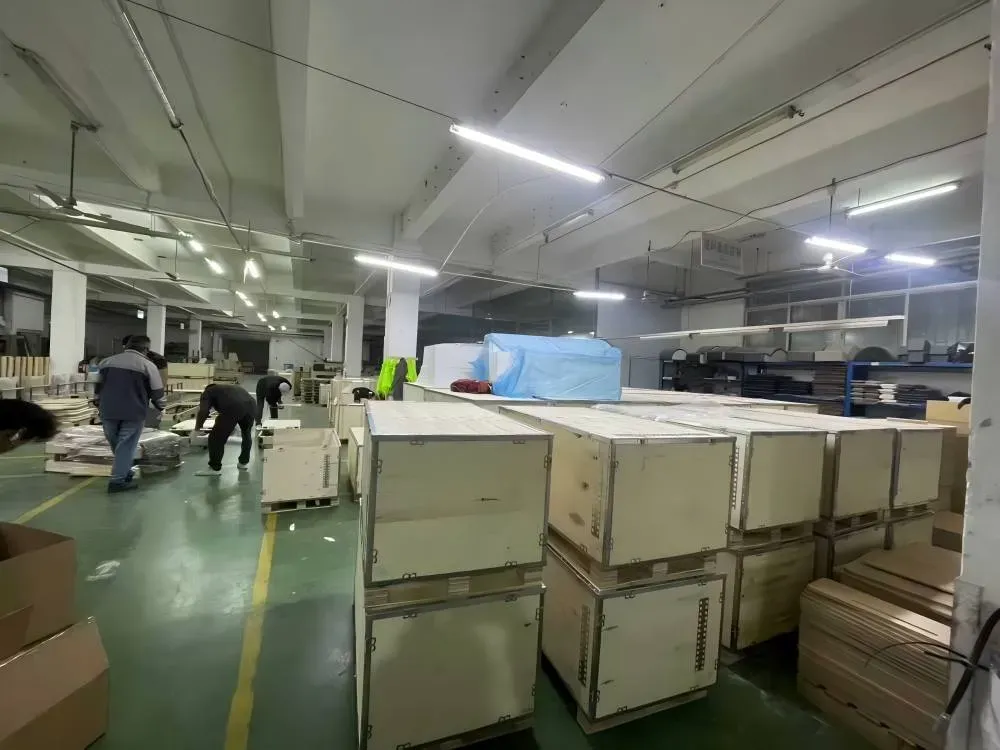
In reality, most frame cracking or joint damage discovered after arrival is not caused by manufacturing defects. It is usually the result of violent handling, sudden drops, or severe impact during international logistics transportation.
As a manufacturer with nearly 20 years of experience in Pilates equipment production and export, we believe buyers should clearly understand how wooden equipment behaves during shipping — especially during loose cargo transportation.
In this article, we will explain:
- Why wooden reformers use industrial wood adhesives
- Why this is considered premium craftsmanship
- Why LCL shipping creates additional risks
- How to reduce the chance of transit-related frame damage
Why High-End Wooden Pilates Reformers Use Industrial Adhesives
One common misunderstanding is that large fitness equipment should rely entirely on screws or metal bolts for strength.
In professional woodworking, that is not how premium wooden Pilates reformers are built.
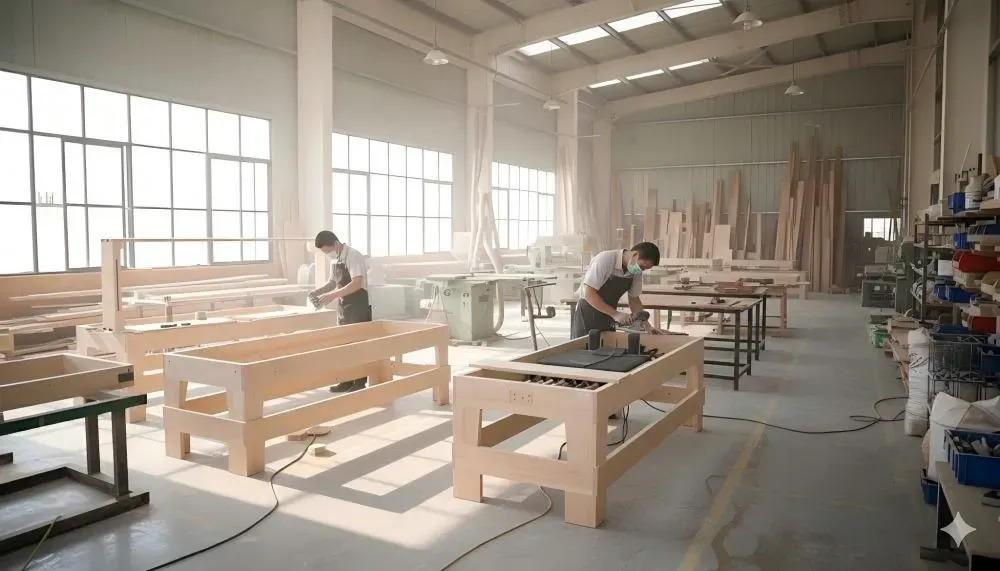
- Precision woodworking joints
- Reinforced hardware systems
- Industrial-grade wood adhesives
- CNC-machined structural connections
This construction method is widely used in:
- Luxury furniture manufacturing
- Professional woodworking
- High-end fitness equipment production
Why?
Because wood is a natural material that slightly expands and contracts depending on temperature and humidity. Industrial wood adhesives create a strong yet flexible bond that distributes stress evenly throughout the frame structure.
Compared with relying only on screws, bonded wooden connections help:
- Reduce squeaking during movement
- Improve overall frame stability
- Prevent long-term loosening
- Absorb micro-vibrations naturally
- Create smoother and quieter glide performance
This is especially important for professional studios using Pilates reformers with tower systems or high-frequency commercial equipment.
So when buyers hear the word “glue,” it should not be associated with weak construction.
In premium woodworking, industrial adhesive bonding is actually a sign of advanced craftsmanship.
The Real Risk During LCL Shipping: Gravity Impact
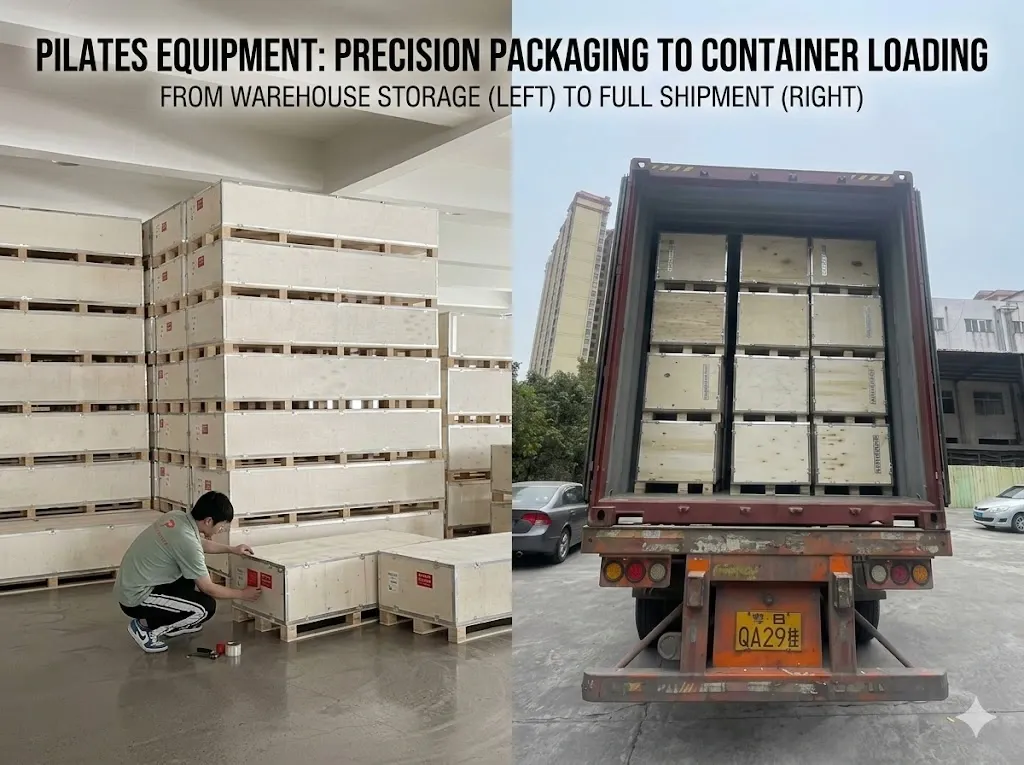
When reformers leave the factory, they are usually packed with:
- Thick foam protection
- Reinforced cartons
- Wooden export crates
- Corner protection materials
You can learn more about our Pilates equipment packaging and shipping solutions designed specifically for international transportation.
However, LCL shipments go through multiple stages of handling:
- Warehouse transfers
- Forklift loading
- Container consolidation
- Port unloading
- Customs warehouse movement
- Local truck delivery
- Final-mile unloading
Unlike FCL (Full Container Load) shipments, loose cargo is repeatedly handled by different operators throughout the logistics process.
This is where the biggest risk appears.
Wooden Pilates reformers are designed to withstand years of repetitive workout tension and horizontal mechanical stress during Pilates training.
But they are not designed to absorb severe vertical impact caused by:
- Dropping the crate from a truck
- Violent forklift handling
- Heavy slamming during unloading
- Sudden gravity shock during transportation
A strong vertical impact creates an instant shockwave through the wooden frame.
In many cases, the wood itself does not immediately break. Instead, the stress concentrates around the bonded connection areas, which may lead to:
- Hairline cracks
- Glue-line separation
- Joint stress fractures
- Corner splitting
- Hidden structural damage
Sometimes the damage is not visible until installation or later usage.
Why Wooden Reformers Are More Sensitive to Impact Than Aluminum Models
Unlike aluminum reformers, wooden reformers rely more heavily on bonded woodworking structures to maintain:
- Natural flexibility
- Quiet operation
- Smooth movement performance
- A premium studio experience
This is one reason many studios still prefer wooden reformers over aluminum reformers, despite the higher manufacturing cost.
However, this also means wooden frame connections are naturally more sensitive to violent vertical impacts during transportation.
This is not a product defect.
It is simply a physical characteristic of premium wood craftsmanship.
The same principle applies to:
- Luxury wooden furniture
- Musical instruments
- High-end woodworking products
All require more careful logistics handling.
3 Important Tips for Buyers Shipping Wooden Reformers as LCL Cargo
1. Use Clear “Fragile” and “Do Not Drop” Labels
Make sure the packaging includes visible handling labels on multiple sides of the crate.
Recommended labels include:
- FRAGILE
- HANDLE WITH CARE
- DO NOT DROP
- KEEP DRY
- THIS SIDE UP
Clear warning labels help reduce careless warehouse handling during transit.
2. Pay Special Attention to Final-Mile Delivery
In many international shipments, the highest damage risk happens after customs clearance during local delivery.
This is often the stage where cargo may be:
- Dropped from truck tail lifts
- Dragged across uneven ground
- Mishandled by temporary delivery workers
- Unloaded without professional equipment
Whenever possible:
- Use forklift unloading
- Avoid sudden dropping or tilting
- Inform local delivery teams that the shipment contains premium wooden fitness equipment
- Request careful unloading procedures
One heavy drop can create hidden internal stress at the frame joints.
For buyers regularly importing studio equipment, understanding the difference between LCL vs FCL shipping for Pilates equipment can also help reduce transportation risks.
3. Inspect the Wooden Frame Immediately After Unboxing
Before installation, carefully inspect:
- Corner joints
- Rail connections
- Frame seams
- Bonded connection areas
Look for:
- Small cracks
- Uneven gaps
- Separation lines
- Surface stress marks
Early inspection helps identify transportation-related damage before assembly and usage.
Professional Craftsmanship Also Requires Professional Logistics
A premium wooden Pilates reformer is more than just fitness equipment.
It is a combination of:
- Precision engineering
- Professional woodworking
- Structural craftsmanship
- Long-term movement performance
That craftsmanship deserves proper protection throughout the logistics process.
As an experienced Pilates equipment manufacturer in China, we believe transparency is part of professional responsibility. Many transportation-related issues can be avoided simply by understanding how wooden equipment behaves during LCL shipping.
By working closely with your freight forwarder, warehouse operators, and local delivery team, you can significantly reduce the risk of shipping-related frame damage.
Need Safer International Shipping for Wooden Pilates Reformers?
We provide:
- Reinforced export packaging
- Wooden crate protection
- LCL-safe loading solutions
- International logistics support
- Commercial studio shipping assistance
👉 Contact our team today to discuss safer international shipping solutions for your Pilates equipment project.
You can also explore our:
Related Articles
Final Thoughts
If you are planning to import wooden Pilates reformers through LCL shipping, careful handling during transportation is extremely important.
In many cases, the biggest threat to premium wooden Pilates equipment is not manufacturing quality — but violent logistics handling after the product leaves the factory.
Understanding this difference helps protect both your investment and the long-term performance of your equipment.