
Sep 27, 2026Product Knowledge & Guides
Stainless Steel vs. Aluminum Alloy: What Makes a Pilates Tower Stable?
Compare stainless steel and aluminum Pilates Towers. Learn how material stiffness, frame design and mounting connections affect stability and durability.
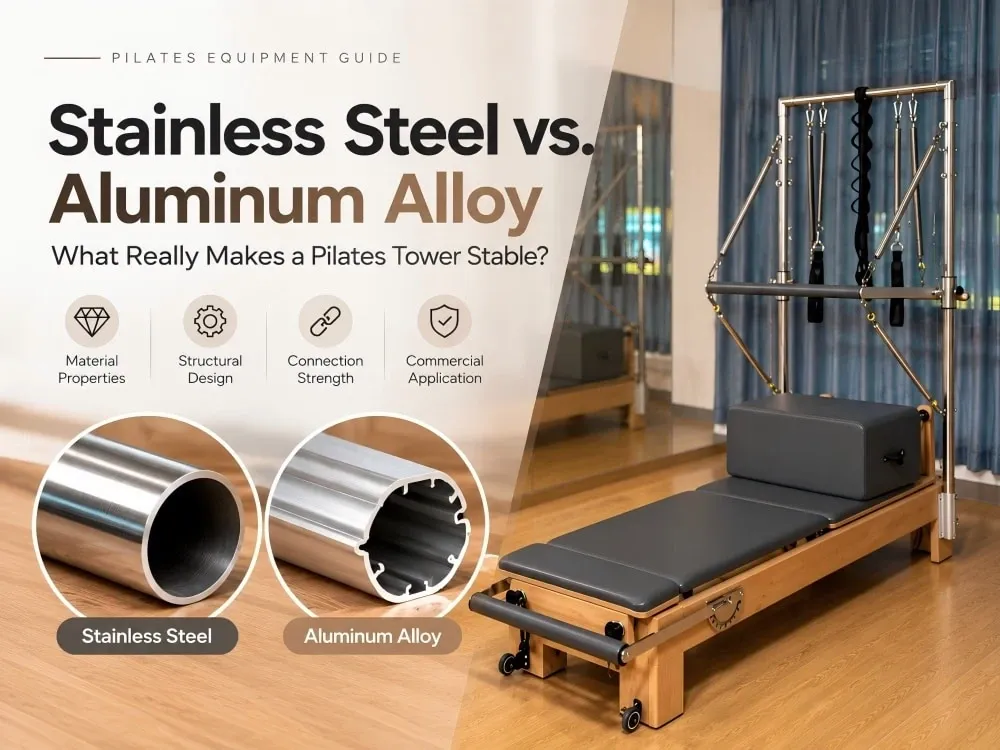
An Engineering Guide to Pilates Reformer Tower Materials, Frame Construction, and Commercial Equipment Selection
Introduction
When purchasing a Pilates Reformer with Tower, one of the most frequently overlooked details is the material used in the Tower structure.
While buyers often compare Reformer frame materials, spring configurations, upholstery colors, and accessories, the Tower itself deserves equal attention—particularly in professional studios where equipment is used repeatedly throughout the day.
Two commonly used materials in Pilates Tower construction are stainless steel and aluminum alloy.
Stainless steel is recognized for its relatively high material stiffness and structural rigidity, while aluminum alloy offers advantages in weight, corrosion resistance, and manufacturing flexibility.
However, choosing between them is not simply a matter of deciding which metal is stronger.
A Pilates Tower is a complete structural system. Its performance depends on how the material, profile dimensions, frame geometry, reinforcement, and mounting connections work together.
This article explores the differences between stainless steel and aluminum alloy Towers, explains the engineering factors that influence stability, and provides practical considerations for Pilates studio owners, equipment distributors, and OEM buyers.
For buyers who are still planning their equipment configuration, our Beginner's Guide to Choosing Pilates Equipment for a New Studio provides a broader comparison of Reformers, Towers, Cadillacs, and other essential studio apparatus.
1. Why Does Tower Stability Matter in Pilates Equipment?
A standard Pilates Reformer primarily uses a moving carriage, springs, ropes, and a footbar to provide resistance-based exercises.
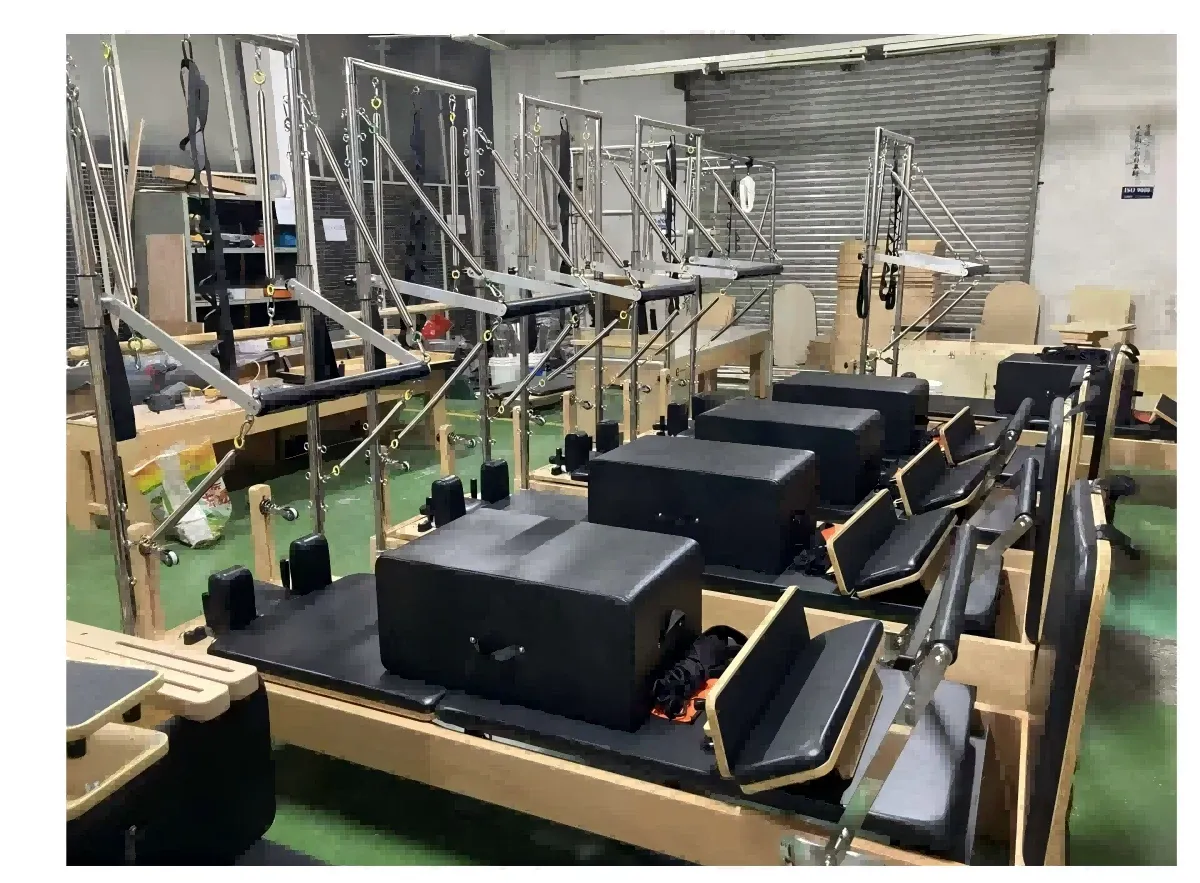
A Reformer with Tower adds a vertical framework that expands the available exercise configurations through additional spring attachment points and accessories.
Depending on the equipment configuration, these may include:
- Push-through Bar
- Roll-down Bar
- Arm Springs
- Leg Springs
- Adjustable Spring Attachment Points
- Safety Straps or Chains
During exercise, the Tower may experience forces acting in different directions.
For example, pulling resistance springs attached to the upper frame can generate horizontal forces, while certain movements involving the Push-through Bar create additional bending moments and forces at the mounting connections.
These forces are transferred through the vertical posts and into the supporting Reformer structure.
If the frame or its connections lack sufficient stiffness, users may experience noticeable movement or vibration during exercise.
This is why Tower stability should be considered as part of the complete equipment design rather than judged solely by the appearance or thickness of its metal components.
2. Stainless Steel vs. Aluminum Alloy: Understanding the Material Differences
Both stainless steel and aluminum alloy can be used in Pilates equipment manufacturing, but they have different mechanical and physical properties.
Understanding these differences helps explain why manufacturers may select different materials for different structural applications.
Stainless Steel: Higher Material Stiffness
One of the most important characteristics of stainless steel is its relatively high elastic modulus.
Elastic modulus describes how resistant a material is to elastic deformation when subjected to stress.
For commonly used structural materials, typical reference values are:
- Stainless steel: approximately 190–200 GPa.
- Aluminum alloy: approximately 69–71 GPa.
Under identical dimensions, cross-sectional geometry, and loading conditions, a stainless steel component will generally exhibit less elastic deformation than an aluminum alloy component.
This characteristic can be particularly relevant for tall structures such as Pilates Towers, where controlling bending and unwanted movement is an important engineering consideration.
Stainless steel also offers good corrosion resistance, although its performance depends on the specific grade, surface condition, and operating environment.
Its main trade-off is weight.
With a density of approximately 7.9–8.0 g/cm³, stainless steel is significantly heavier than aluminum alloy.
Aluminum Alloy: Lightweight and Structurally Versatile
Aluminum alloy is widely used in modern equipment manufacturing because of its low density and flexibility in structural design.
With a typical density of approximately 2.7 g/cm³, aluminum is considerably lighter than stainless steel.
This can offer practical benefits in manufacturing, transportation, installation, and equipment handling.
Aluminum can also be manufactured into different profile shapes, allowing engineers to adjust wall thickness, cross-sectional geometry, and reinforcement according to the intended application.
Although its elastic modulus is lower than stainless steel, the structural stiffness of an aluminum component can be improved through appropriate design.
For example, a larger or more efficiently shaped aluminum profile may provide greater bending stiffness than a smaller steel profile.
Therefore, material stiffness and finished structural stiffness should not be treated as the same thing.
Material Comparison at a Glance
Property | Stainless Steel | Aluminum Alloy |
|---|---|---|
Elastic modulus | Approx. 190–200 GPa | Approx. 69–71 GPa |
Density | Approx. 7.9–8.0 g/cm³ | Approx. 2.7 g/cm³ |
Material stiffness | Higher | Lower |
Component weight | Generally heavier at equivalent geometry | Generally lighter |
Corrosion resistance | Good, depending on grade | Good, depending on alloy and finish |
Structural flexibility | Depends on fabrication and design | Suitable for varied extruded profiles |
Key design consideration | Rigidity and structural performance | Weight and profile optimization |
Note: These are typical reference properties. Actual material performance varies according to alloy grade, manufacturing condition, and component design.
Material selection is equally important when choosing the supporting Reformer frame. For a broader comparison of frame materials, explore our Hard Maple vs. Beech vs. Aluminum Pilates Reformers Guide, which examines material characteristics and practical considerations for different studio environments and markets.
3. Does a Stainless Steel Tower Always Provide Better Stability?
Not necessarily.
Stainless steel offers a clear advantage in material stiffness when compared with common structural aluminum alloys under equivalent conditions.
However, the stability of a complete Pilates Tower is influenced by several additional factors.
Profile Dimensions and Cross-Sectional Design
A Tower's resistance to bending depends on both the material's elastic modulus and the geometry of its structural members.
In engineering terms, bending stiffness is commonly expressed as:
EI
Where:
- E represents the elastic modulus of the material.
- I represents the second moment of area of the cross-section.
This means that increasing the dimensions or optimizing the shape of a structural profile can significantly influence its resistance to bending.
A properly designed aluminum profile can therefore compensate for some of the material's lower elastic modulus.
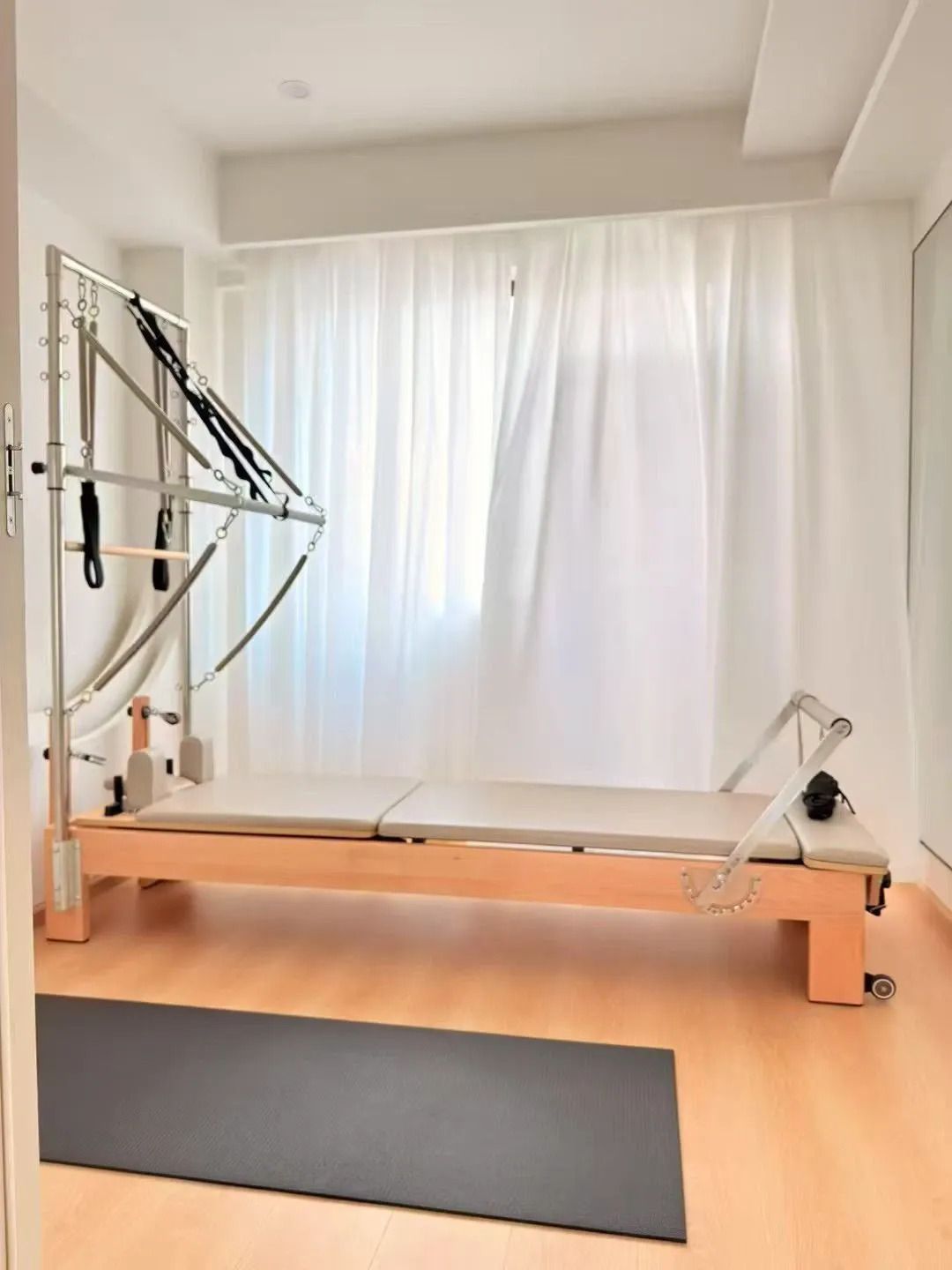
Wall Thickness
Wall thickness influences structural performance, local deformation, weight, and connection design.
Two Tower frames made from the same material may behave differently if their tube dimensions and wall thicknesses are different.
A thicker tube is not automatically sufficient to guarantee better overall stability, but wall thickness remains an important engineering consideration.
Tower Height and Frame Geometry
The height of the Tower also affects how the structure responds to applied forces.
A taller vertical frame can experience greater bending moments when horizontal forces are applied near its upper section.
Manufacturers must therefore consider Tower height, frame proportions, and expected loading conditions together.
Reinforcement and Structural Support
Depending on the design, reinforcement brackets, diagonal supports, or additional connecting members may help reduce unwanted frame movement.
These features can be particularly useful where structural stiffness needs to be improved without changing the primary material.
However, reinforcement should be designed according to the complete load path rather than added simply to make the equipment appear stronger.
The key takeaway is that material selection establishes the starting point for structural performance, while engineering design determines how effectively that material is used.
Structural engineering also influences the long-term performance of the Reformer itself. Our Guide to Choosing a Pilates Reformer for High-Frequency Commercial Use explains how frame construction, carriage systems, springs, and maintenance requirements affect equipment selection for busy studios.
4. Why the Connection Between the Tower and Reformer Matters
One of the most important areas of a Reformer with Tower is the connection between the vertical framework and the supporting Reformer base.
During use, forces applied to the Tower must be transferred through its mounting points into the main equipment structure.
Even when the vertical posts themselves are sufficiently rigid, movement may still occur if the mounting system is inadequately designed.
Several details deserve attention.
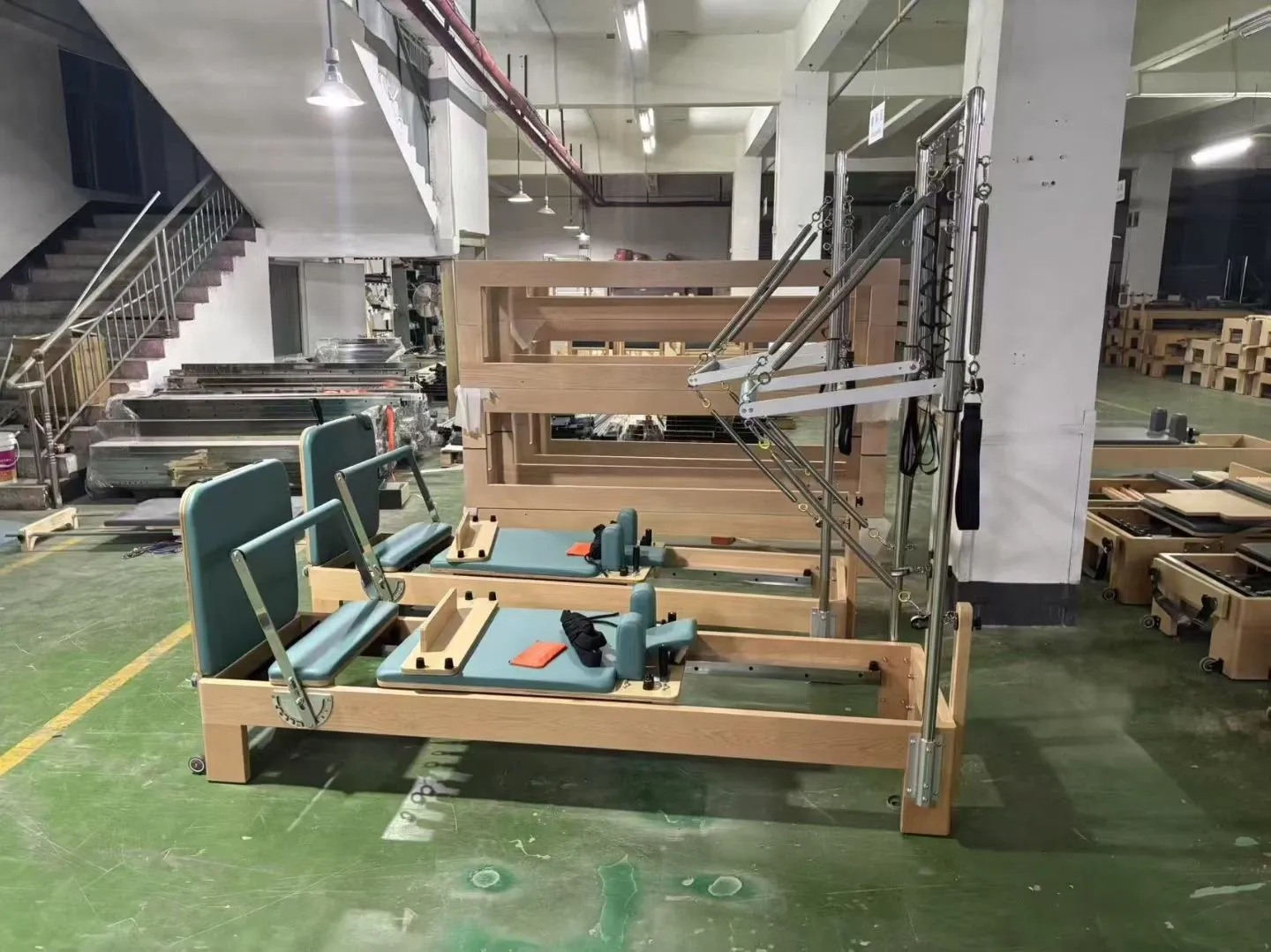
Mounting Brackets
The brackets should provide appropriate support and transfer the intended loads into the Reformer frame.
Fasteners and Connection Design
Bolts, fastening arrangements, and connection geometry must be suitable for the expected operating conditions.
Supporting Frame Strength
The Reformer base must be designed to accommodate the additional loads introduced by the Tower.
Long-Term Connection Reliability
Repeated loading may affect connection performance over time, making appropriate maintenance and inspection important.
This also explains why a Tower should not automatically be treated as a universal accessory.
Not every standard Reformer is designed to accept an additional Tower structure.
Before purchasing a retrofit Tower system, buyers should confirm compatibility with the original equipment manufacturer.
Before selecting a Tower configuration, buyers should also understand the functional differences between integrated systems and standalone apparatus. Our Cadillac Reformer vs. Trapeze Table Buying Guide explores these equipment configurations and their applications in professional studios.
5. Can Different Materials Be Used in the Same Pilates Tower?
Yes. A Pilates Tower does not necessarily need to be manufactured entirely from one material.
Different components have different functional requirements, and material selection can be adapted accordingly.
For example, a Tower system may incorporate:
Component | Main Design Considerations |
|---|---|
Vertical posts | Stiffness, structural strength, and stability |
Upper crossbeam | Load transfer and frame rigidity |
Push-through Bar | Strength, operating weight, and ease of adjustment |
Roll-down Bar | Grip, handling, and exercise functionality |
Adjustment mechanisms | Positioning accuracy and repeated-use reliability |
Mounting brackets | Secure attachment and load distribution |
Some professional equipment designs combine steel or stainless steel structural frames with aluminum components and wooden exercise bars.
This demonstrates an important principle in equipment engineering:
The most appropriate material should be selected according to the function of each component, rather than applying one material throughout the entire machine.
For manufacturers developing commercial Pilates equipment, this approach allows material properties, structural requirements, and usability to be considered together.
For buyers interested in integrated aluminum-alloy equipment configurations, Leyue's Premium Aluminum Classical Pilates Reformer with Half Tower provides an example of a Reformer and Tower combination for professional studio applications.
6. Stainless Steel or Aluminum Tower: What Should Commercial Buyers Consider?
For professional Pilates studios, distributors, and equipment importers, selecting a Tower should involve more than comparing material names on a quotation sheet.
The following considerations can help buyers make a more informed purchasing decision.
Intended Equipment Application
Different studios may use Tower equipment for different training programs.
Buyers should confirm that the selected equipment is designed for the exercises, accessories, and operating conditions they intend to use.
Structural Specifications
Ask the manufacturer for information about the frame material, profile dimensions, wall thickness, and mounting construction.
These details provide a clearer understanding of the equipment than a general description such as premium stainless steel or heavy-duty aluminum.
Stability and Testing
Where available, request relevant structural testing information, operating load specifications, and maintenance instructions.
A manufacturer's claims about stability should ideally be supported by appropriate engineering evaluation or testing.
Installation and Maintenance
Consider the equipment's overall weight, installation requirements, connection accessibility, and replacement-part availability.
These factors can influence long-term ownership costs, especially for commercial studios operating multiple machines.
Product Compatibility
If purchasing a Tower separately, verify that it is specifically compatible with the intended Reformer model.
Do not assume that a Tower can be safely installed on an existing machine simply because the dimensions appear similar.
After-Sales Support
For international buyers, replacement parts, technical documentation, and manufacturer support are also important purchasing considerations.
A well-designed equipment structure should be supported by clear instructions for installation, inspection, and maintenance.
For studio owners purchasing multiple machines, Tower stability should be considered alongside equipment durability, maintenance, and long-term operating requirements. Read our Commercial Pilates Reformer Selection Guide for additional guidance on sourcing professional studio equipment.
7. What Should OEM and Private-Label Buyers Discuss with Their Manufacturer?
For Pilates equipment distributors and private-label brands, Tower material selection may also form part of a broader product development discussion.
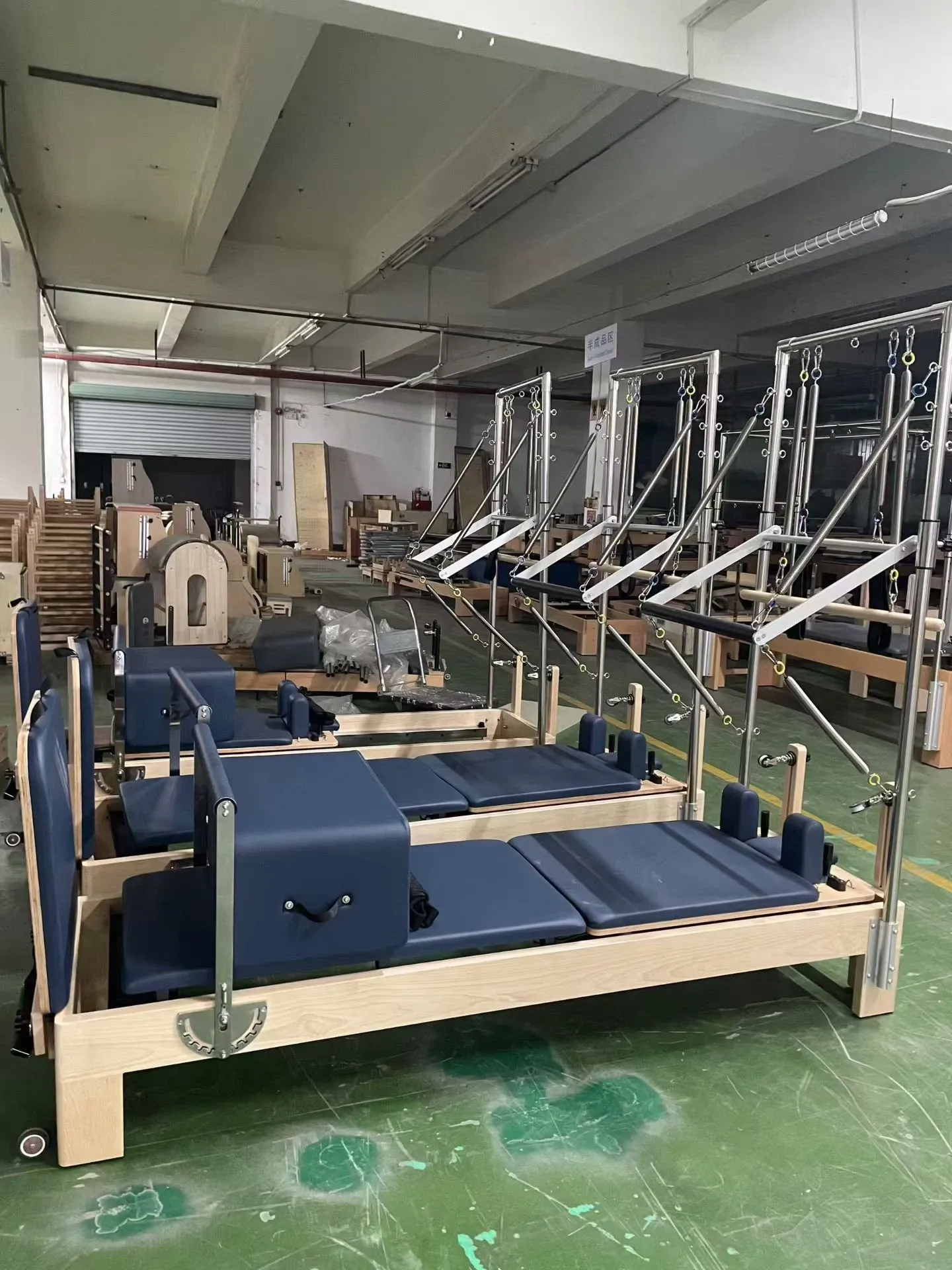
Beyond appearance and pricing, buyers should clarify:
- The intended commercial or home-use application.
- Required Tower configuration and compatible accessories.
- Material and surface-finish options.
- Frame dimensions and structural requirements.
- Packaging dimensions and shipping weight.
- Installation and assembly requirements.
- Replacement parts and maintenance documentation.
- Available product testing and quality-control procedures.
For OEM projects, any structural modification should be evaluated before production to ensure that the finished configuration remains suitable for its intended use.
This is particularly important when changing frame materials, adjusting Tower dimensions, or modifying the connection between the Tower and Reformer base.
If you are developing your own Pilates equipment collection, our OEM Pilates Equipment and Private Label Guide explains how to evaluate manufacturing partners, customization options, quality control, spare parts, and bulk purchasing requirements.
Conclusion: Material Matters, but Engineering Determines the Complete Structure
Stainless steel and aluminum alloy both have practical applications in Pilates equipment manufacturing.
Stainless steel offers higher material stiffness, which can be beneficial when controlling elastic deformation is an important structural requirement.
Aluminum alloy offers advantages in weight and manufacturing flexibility and can provide stable performance when combined with appropriate frame geometry, reinforcement, and connection design.
Neither material should be evaluated independently of the complete equipment structure.
For studio owners and equipment distributors, the most important question is not simply whether a Tower is made from stainless steel or aluminum alloy.
It is whether the complete Tower system has been properly designed and evaluated for its intended application.
Understanding the relationship between material properties, structural design, and mounting construction allows buyers to make more informed equipment decisions.
Explore Leyue Pilates Tower Solutions
Leyue Pilates is a professional Pilates equipment manufacturer specializing in wooden and aluminum Reformers, Reformer with Tower systems, Cadillac equipment, and other studio apparatus.
With nearly 20 years of manufacturing experience, we support international distributors, Pilates studios, and private-label brands through OEM/ODM production and equipment customization.
Explore our Pilates Towers and Cadillacs Collection to discover different Reformer with Tower and Cadillac configurations.
Whether you are sourcing equipment for a new studio or developing your own Pilates equipment collection, our team can assist with product configurations, material options, and manufacturing requirements.
Contact Leyue Pilates to discuss your project.