
Jun 26, 2026Manufacturing & Quality Control
What Makes a Quality Pilates Reformer? A Manufacturing Guide
A deep dive into reformer anatomy, material science, and why CNC machining is vital for professional studio equipment.
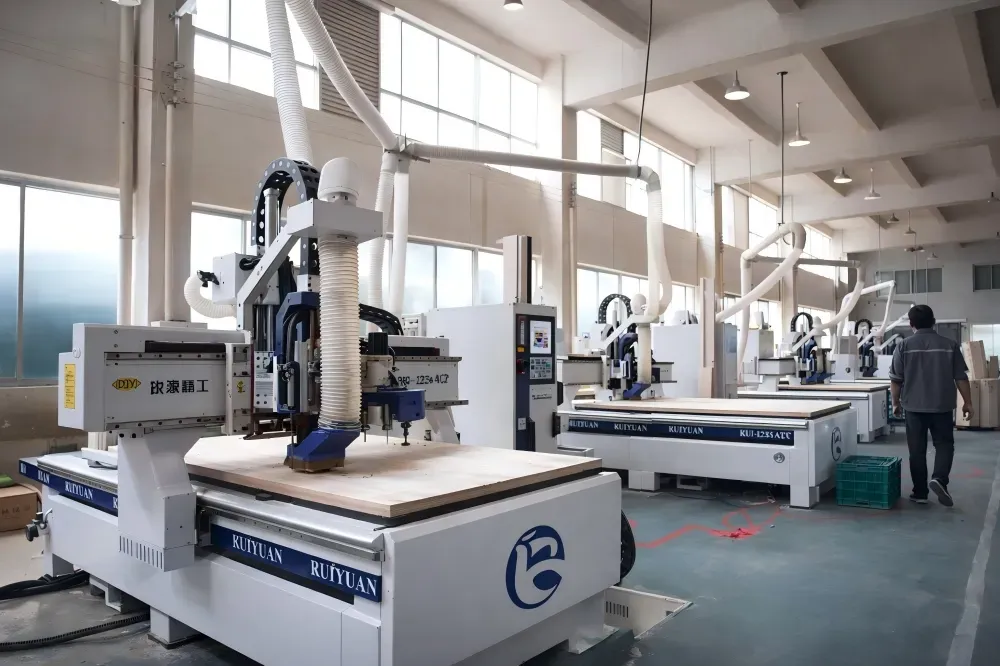
In the high-end fitness equipment market, a Pilates Reformer is more than just a piece of furniture; it is a finely tuned kinetic instrument. For Pilates Reformer brands, the difference between a studio-grade machine and a mediocre one lies in the sub-millimeter details of the production line.
This guide takes you behind the scenes of our manufacturing facility to explore how we combine traditional craftsmanship with Advanced CNC technology to build the future of Pilates.
1. The Anatomy of a Professional Reformer
To understand quality, one must first understand the machine's complexity. A professional reformer is an assembly of over 100 individual parts:
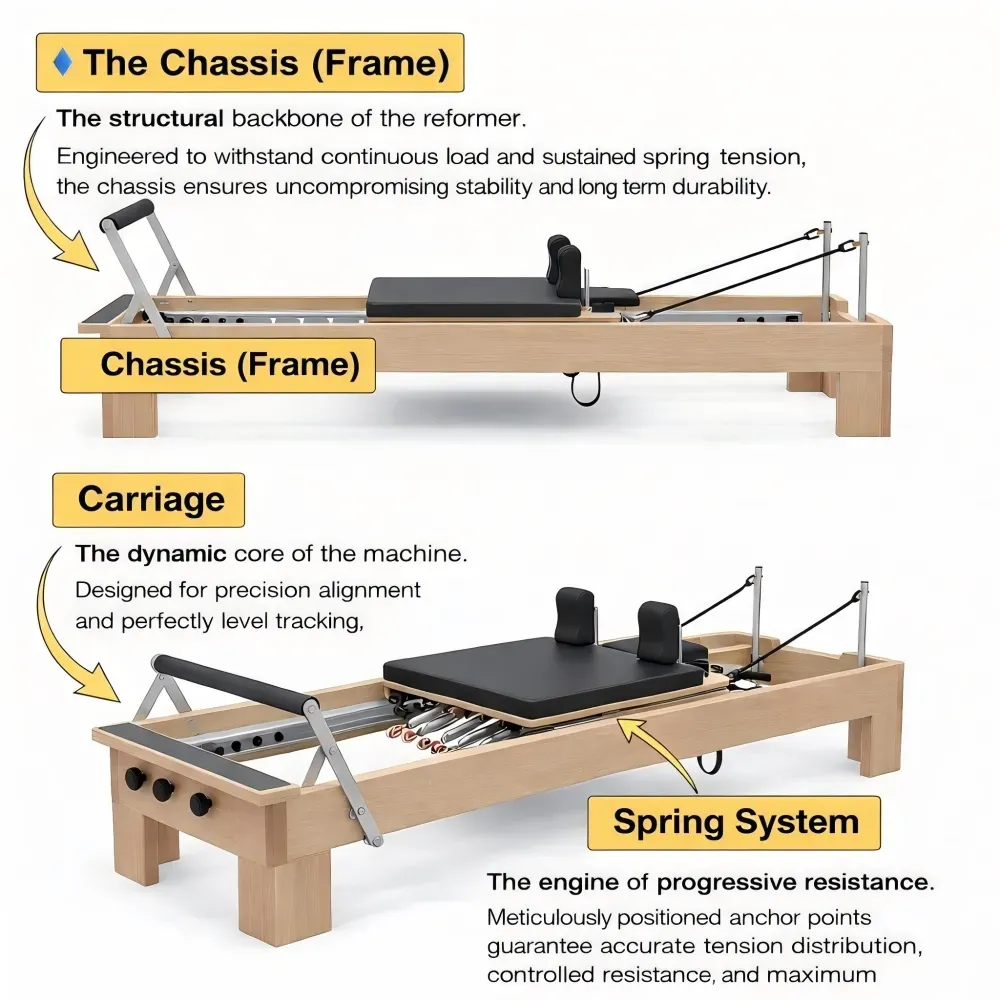
- The Chassis (Frame): The structural foundation that bears the weight and constant tension of the practitioner.
- The Carriage: The moving heart of the machine, requiring a perfectly level surface to ensure friction-less gliding.
- The Spring System: The source of progressive resistance, where anchor point accuracy is vital for safety.
A pilates reformber machine is only as good as its weakest link. If the frame is slightly misaligned, the carriage will eventually squeak or track unevenly.
2. Material Integrity: The Science of Selection
We don't just choose wood for its grain; we choose it for its Janka hardness rating and dimensional stability.
Between hardwoods depends on your studio's specific needs and aesthetic. For a more detailed comparison, see our guide on Choosing Between Maple and Beech: Which Wood is Right for Your Studio?"
Technical Wood Comparison Table
Property | North American Maple | European Beech | Generic Pine (Low-end) |
Janka Hardness | 1,450 lbf | 1,300 lbf | 380 - 420 lbf |
Stability | Extreme (Resists warping) | High (Fine-grained) | Low (Prone to cracking) |
Shock Absorption | Superior | Excellent | Poor |
Our factory utilizes high-density multi-layer boards and solid hardwoods processed through CNC to ensure a deformation tolerance of within $\pm 0.1mm$.
3. The Power of Precision: The CNC Revolution
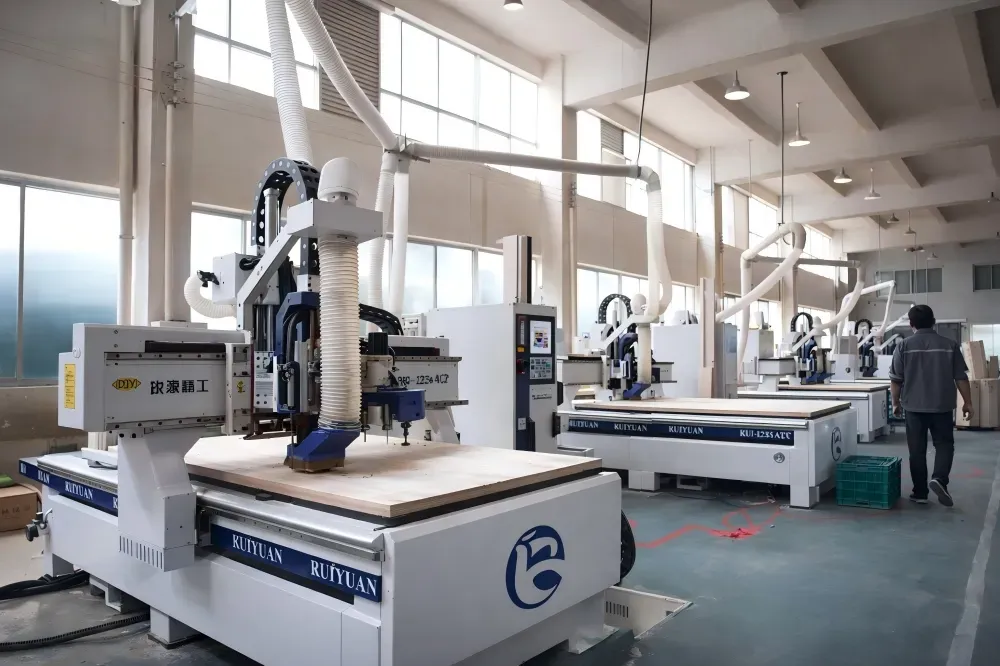
The heart of our factory is the Advanced CNC (Computer Numerical Control) Machining center.
Why CNC is Non-Negotiable for B2B Partners
- Zero-Tolerance Accuracy: Our machines, such as the 1325 model, cut and drill simultaneously. This ensures that every carriage wheel sits perfectly flush against the rails, preventing the "wobble" common in hand-finished frames.
- Identical Consistency: Whether you order 10 units or 500, unit #1 is identical to unit #500. For brands like Reformer Supply, this eliminates the risk of batch-to-batch variation.
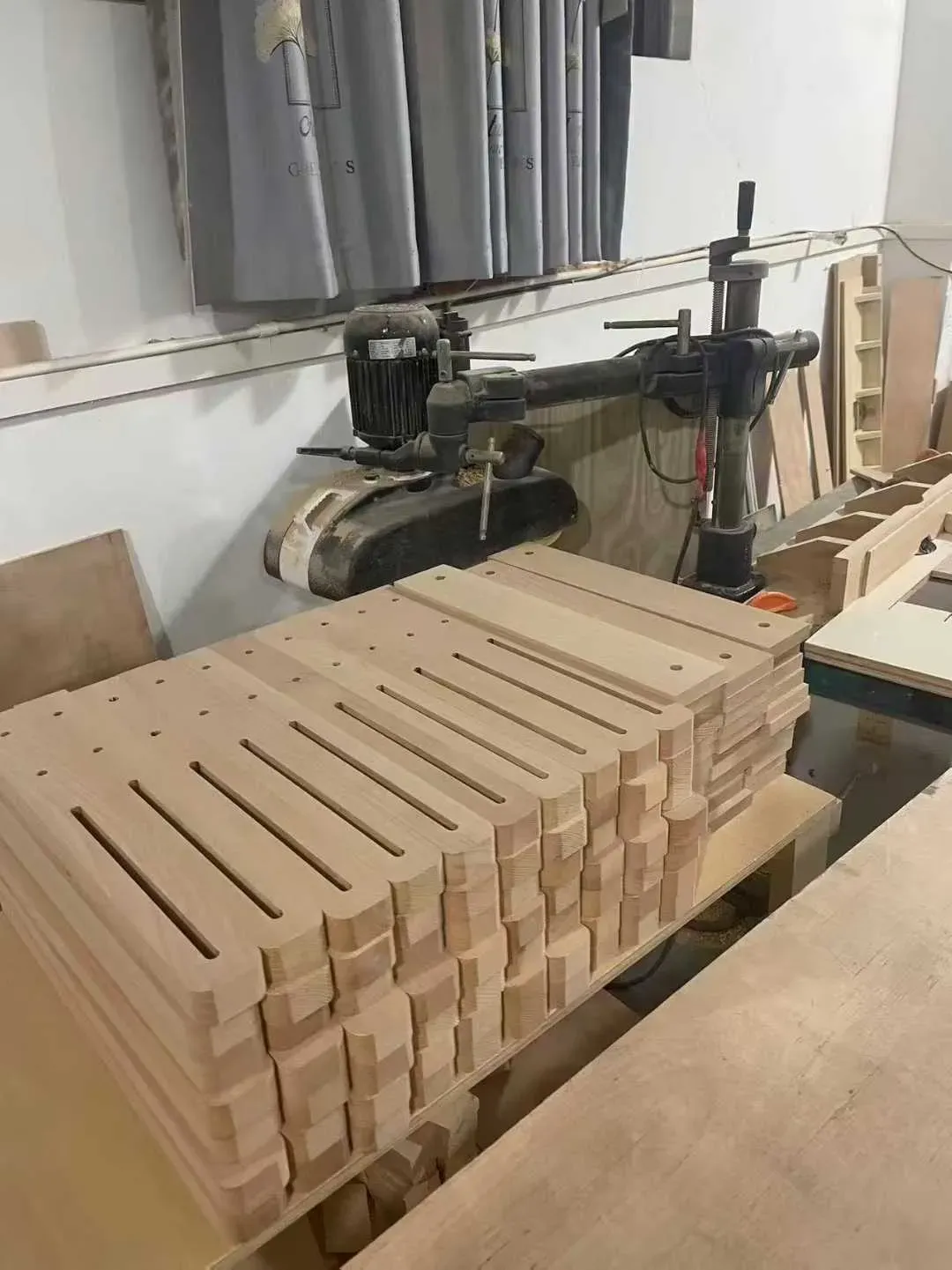
- Complex Joinery: CNC allows us to create intricate tenon-and-mortise joints that are far stronger than simple screws.
The Drilling Advantage
As seen in our production line, the machine drills pilot holes with absolute verticality. This prevents "thread stripping" and ensures the machine remains stable after years of commercial use.
4. The Physics of Resistance: Spring Engineering
The resistance in a Pilates Reformer follows Hooke's Law:
F = kx
To ensure mathematical perfection in every workout:
- Anchor Alignment: The CNC machine places spring hooks so that each spring stretches at the exact same angle.
- Progressive Tension: We use music-grade steel to ensure the spring constant (k) remains stable over 100,000+ cycles.
Technical Insight: Precision is the foundation of effective training. Learn more about The Importance of Spring Tension Accuracy in Pilates Training to see how it affects user performance and machine longevity.
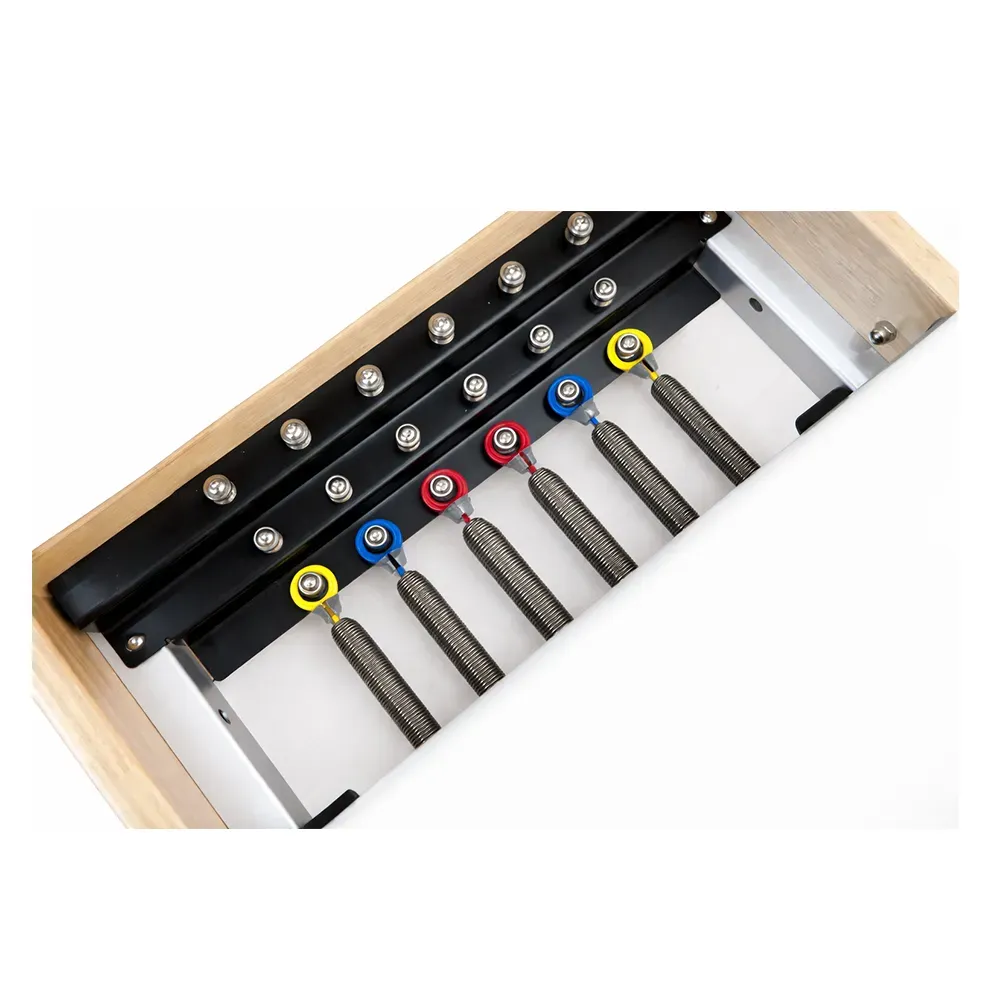
- Silent Operation: Every spring hole is chamfered by our CNC bits to prevent metal-on-metal friction noise.
5. Stability, Safety, and Longevity
Stability in a reformer is about weight distribution and "anti-tip" design. Once you have invested in a high-quality machine, preserving its integrity through proper maintenance is key to protecting your investment.
Maintenance Tip: Proper care is essential for high-performance gear. Check out our expert tips on How to Maintain Your Wooden Pilates Reformer for Longevity.
6. FAQ: Manufacturing Insights
- How do you prevent noise (squeaking)?Noise usually comes from loose joints. Our CNC-machined mortise joints eliminate the gaps that cause friction.
- Can you handle large-scale OEM orders?Yes. Automation via CNC 1325 lines allows us to increase production speed by 40% compared to traditional workshops while maintaining 100% accuracy.
7. Conclusion: Partnering for the Future
The Pilates industry is evolving. Users are more educated, and studio owners are more demanding. A reformer is no longer just a wooden bench with springs; it is a testament to engineering.
At our factory, we don't just make beds; we craft the foundation of your business. Our commitment to CNC precision ensures that when your customers lie down on a machine, they feel nothing but smooth, silent, and supportive resistance.
Related Professional Guides