
Jun 26, 2026Product Knowledge & Guides
7 Mistakes Pilates Studios Make When Importing Reformers
Learn the most common mistakes Pilates studios make when importing reformers and how to avoid damage, missing parts, and sourcing problems.
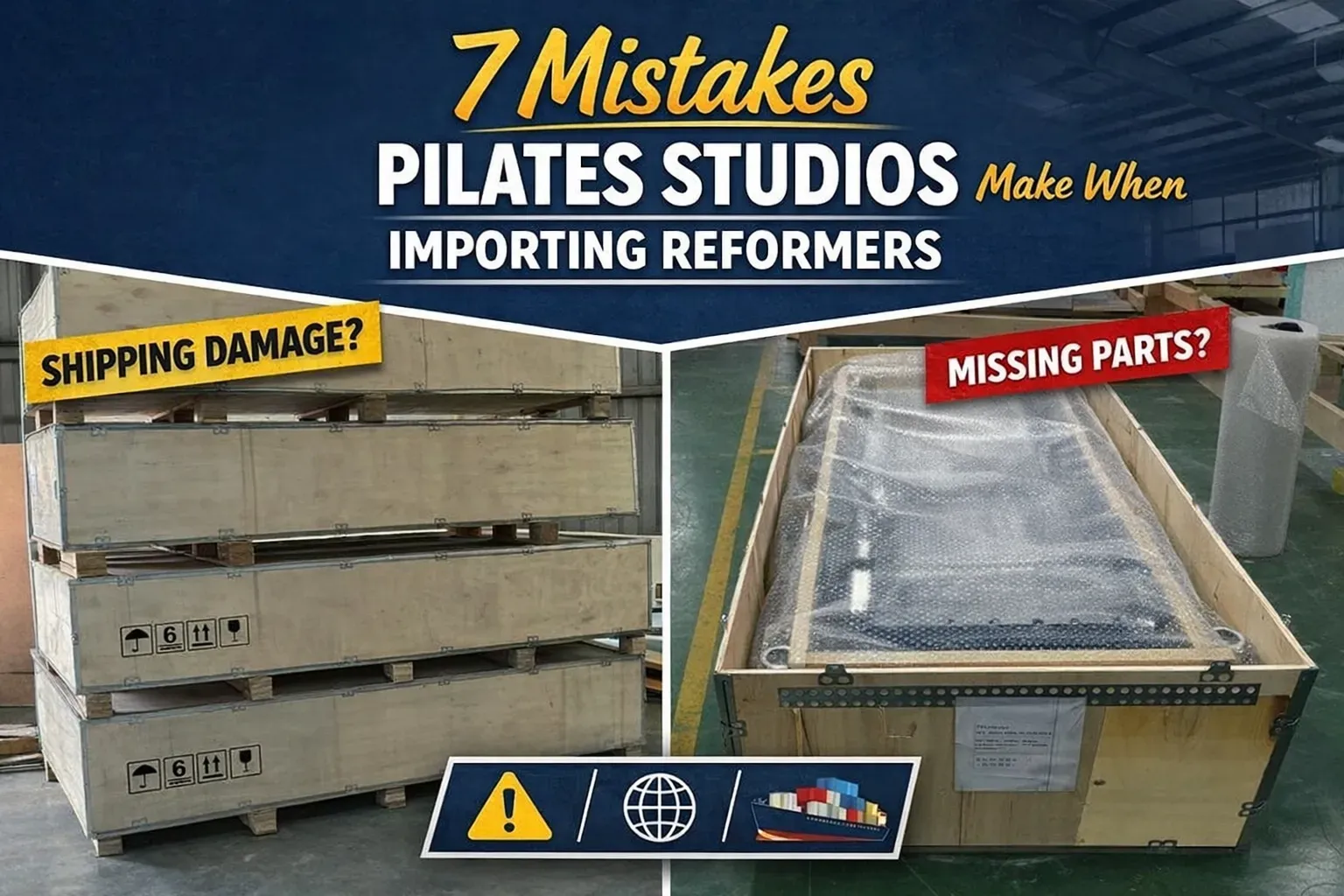
7 Mistakes Pilates Studios Make When Importing Reformers (And How to Avoid Them)
Opening or upgrading a Pilates studio often means investing in high-quality reformers. Many studio owners choose to import equipment directly from manufacturers to reduce costs and gain access to commercial-grade products.
However, importing Pilates reformers is not always straightforward. Without the right preparation, studio owners may face problems such as damaged equipment, missing accessories, delayed delivery, or unexpected costs.
After working with Pilates studios, distributors, and fitness businesses worldwide, we’ve seen several common mistakes that buyers make when sourcing reformers internationally.
Here are 7 mistakes Pilates studios make when importing reformers — and how to avoid them.
1. Choosing Price Over Quality
One of the most common mistakes is selecting the lowest quote without carefully evaluating the equipment quality.
A commercial Pilates reformer must withstand daily use in professional studios. If the frame, rails, springs, or carriage system are poorly made, the equipment may wear out quickly and create safety risks for clients.
Before choosing a supplier, studio owners should evaluate:
- Frame material (solid maple wood or aluminum frame quality)
- Rail precision and carriage smoothness
- Spring durability and resistance
- Overall structural stability
"While Maple wood is the gold standard for aesthetics, our new Aluminum series offers a modern, lightweight alternative for studios requiring higher mobility without sacrificing stability."
2. Not Verifying the Manufacturer
Some buyers unknowingly purchase from trading companies rather than actual manufacturers.
While trading companies can be useful, working directly with a manufacturer usually provides better control over:
- Product quality
- Customization options
- Pricing
- Production timelines
Before placing an order, it’s helpful to ask for:
- Factory photos or videos
- Production line information
- Quality control procedures
- Export experience
These details help confirm whether the supplier has real manufacturing capability.
3. Ignoring Product Specifications
Another common issue is ordering equipment without carefully reviewing the product specifications.
Small differences in dimensions, carriage height, or spring resistance can significantly affect the user experience in a Pilates studio.
Studio owners should confirm details such as:
- Reformer length and width
- Carriage height
- Spring resistance levels
- Maximum user capacity
- Included accessories
Clear specifications help ensure the equipment fits the studio space and training style.
4. Ignoring Packaging and Shipping Protection
Many buyers focus heavily on the product itself but overlook packaging quality. This can lead to serious problems during international shipping.
Pilates reformers are large and heavy pieces of equipment. If they are not properly packed, they may be damaged during transport.
Professional manufacturers typically use reinforced wooden crates designed for export shipping to protect the equipment.
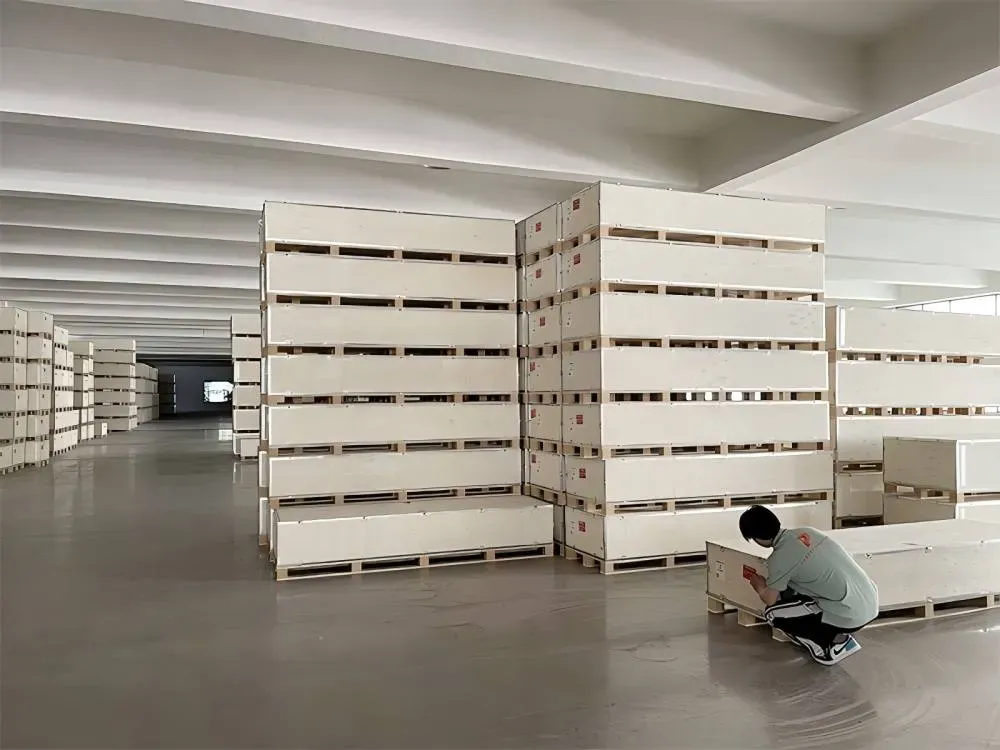
Strong packaging reduces the risk of:
- frame damage
- bent rails
- scratches and structural issues
Proper packaging is essential when equipment travels thousands of kilometers before reaching the studio.
Pro-Tip from the Factory Floor: > "At Leyue, we’ve found that standard cardboard isn't enough for international transit. We utilize CNC-cut reinforced wooden crates tailored to each reformer's dimensions. This ensures zero movement inside the box, which is the #1 way to prevent rail misalignment during sea freight."
5. Not Checking Accessories Before Shipment
Another frequent concern for studio owners is missing parts.
Pilates reformers include multiple accessories, such as:
- ropes
- springs
- footbars
- shoulder rests
- pulleys
If these components are not carefully checked before shipment, studios may receive incomplete equipment that cannot be used immediately.
Professional factories usually perform accessory checks before sealing the packaging to ensure that all components are included.
This step helps avoid delays and additional shipping costs.
6. Skipping Quality Control Inspection
Quality control is one of the most important steps in manufacturing fitness equipment.
Without proper inspection, small production issues may go unnoticed until the equipment arrives at the studio.
A reliable supplier should perform inspections such as:
- structural stability checks
- carriage movement testing
- spring installation verification
- accessory completeness checks
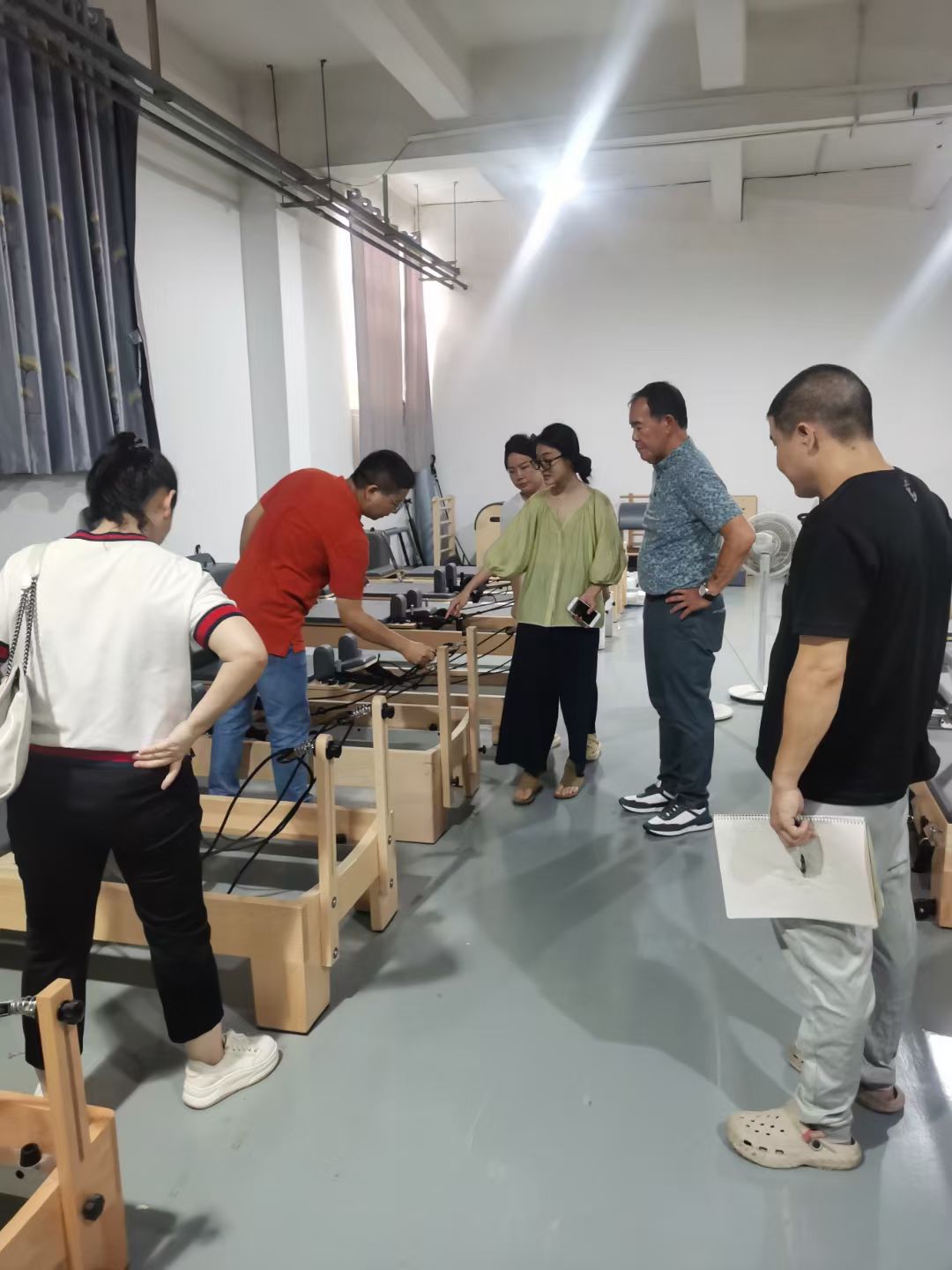
Many manufacturers also conduct final inspections after packaging to ensure the equipment is ready for export.
7. Not Planning for Long-Term Studio Needs
Finally, some studios focus only on immediate needs instead of long-term growth.
If the studio plans to expand, open additional locations, or increase class capacity, it may be beneficial to choose equipment suppliers that can support future orders.
Working with a stable manufacturer helps ensure:
- consistent product quality
- easier equipment expansion
- long-term maintenance support
Building a long-term partnership with a supplier often benefits growing Pilates studios.
Final Thoughts
Importing Pilates reformers can be a cost-effective way for studios to access high-quality equipment. However, avoiding common sourcing mistakes is essential to ensure a smooth experience.
By focusing on:
- reliable manufacturers
- clear specifications
- strong packaging
- proper quality control
studio owners can significantly reduce risks and ensure their reformers arrive safely and ready for use.
For studios and distributors sourcing equipment internationally, taking the time to evaluate these factors can make the entire importing process more efficient and reliable.
Looking for a Reliable Manufacturing Partner? At Leyue Pilates, we specialize in high-performance Maple and Aluminum reformers designed for the global market. We handle the technical details—from EN71 compliance to reinforced export packaging—so you can focus on your studio. [Download our 2026 Product Catalog] or [Request a Bulk Quote Today].