
Jun 26, 2026Industry Insights & Trends
How to Start a Pilates Reformer Business: 2026 Strategic ROI Guide
Start your Pilates studio with our 2026 expert guide. Explore commercial reformer costs, wholesale sourcing from China, and a complete startup checklist to maximize your ROI
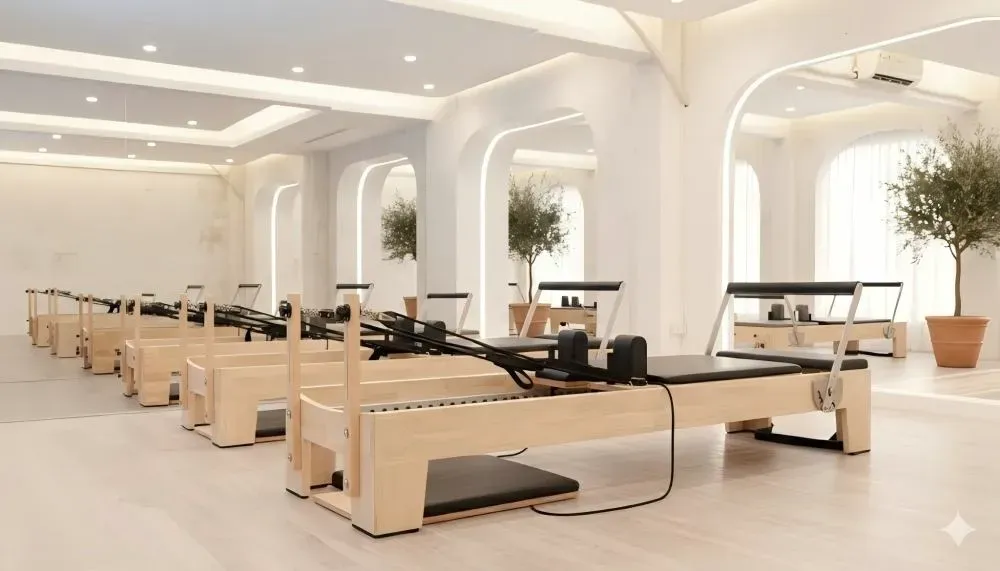
Introduction: The Evolution of the Pilates Economy
In 2026, the fitness landscape has shifted. We have moved past the era of "no pain, no gain" and entered the era of Longevity, Biomechanics, and Controlled Movement. Pilates is no longer a niche hobby for the elite; it is a multi-billion dollar pillar of the global wellness economy.
For entrepreneurs and investors, the question isn't just about fitness—it’s about capital efficiency. Compared to traditional gyms that require massive square footage and high electricity costs, a Pilates studio offers a "High-Density Revenue Model." By utilizing high-performance apparatus in a curated environment, you can generate more revenue per square meter than almost any other boutique fitness concept.
This guide, authored by a manufacturing team with 20 years of experience in pilates equipment wholesale from China, provides the data-driven blueprint you need to move from concept to Grand Opening.
Chapter 1: Market Intelligence and Competitive Positioning
Before exploring the commercial reformer cost, you must understand your "Product-Market Fit." The Pilates industry is not monolithic.
1.1 Understanding Your Business Model
- The Boutique Studio (High-Ticket B2C): These studios focus on a "Premium Lifestyle." Clients pay $40–$60 per class for an intimate experience. Your equipment must reflect this.
- The Mass-Market Chain (High-Volume B2C): This model relies on "Membership Churn" and high-occupancy classes (15+ reformers). Durability and stackability are your priorities.
- The Hybrid Wellness Center (B2B): Integrating Pilates into physiotherapy clinics or chiropractic offices. Here, equipment must be medical-grade and versatile.
1.2 Identifying Your Competitive Moat
Why will a client choose you over a competitor 2 kilometers away? Is it your unique instructor training? Or is it your handcrafted Maplewood Reformers that offer a smoother, quieter glide than the competitor’s noisy, low-cost alternatives?
Chapter 2: The Science of Sourcing – Why It Matters
When you search for pilates equipment wholesale from China, you will find thousands of listings. However, 90% of these are trading companies, not manufacturers. As an investor, you must understand the "Material Science" behind your assets.
2.1 The "Soul" of the Machine: High-Carbon Steel Springs
The spring is where the "Pilates Magic" happens. Low-quality springs have a "linear" tension that feels jerky. Professional-grade springs utilize a progressive tension curve.
- Manufacturing Insight: Our factory uses heat-treated, high-carbon steel that undergoes 100,000 cycle-fatigue tests. This ensures that the resistance a client feels in Month 1 is the same as in Month 60.
2.2 Wood vs. Aluminum: A Strategic Decision
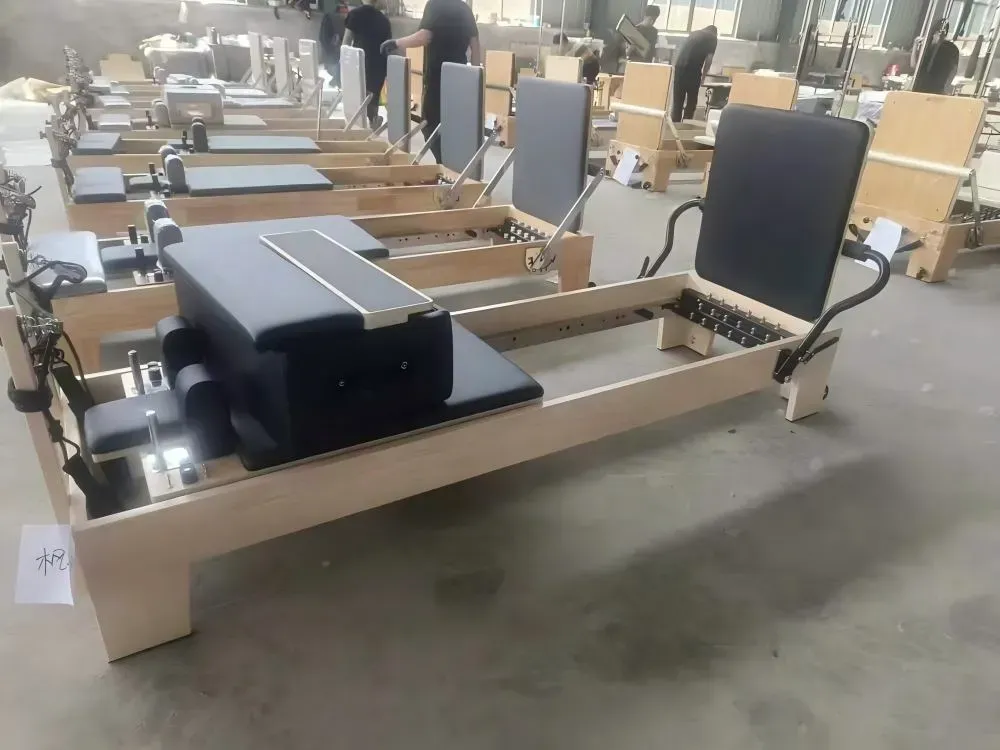
- The Wooden Pilates Reformer: We utilize A-grade North American Maple and European Beech. The key technical detail is the Moisture Content (MC). We kiln-dry our wood to exactly 8%–12% MC. If the MC is higher, the wood will shrink and creak in air-conditioned studios. If it's lower, it becomes brittle.
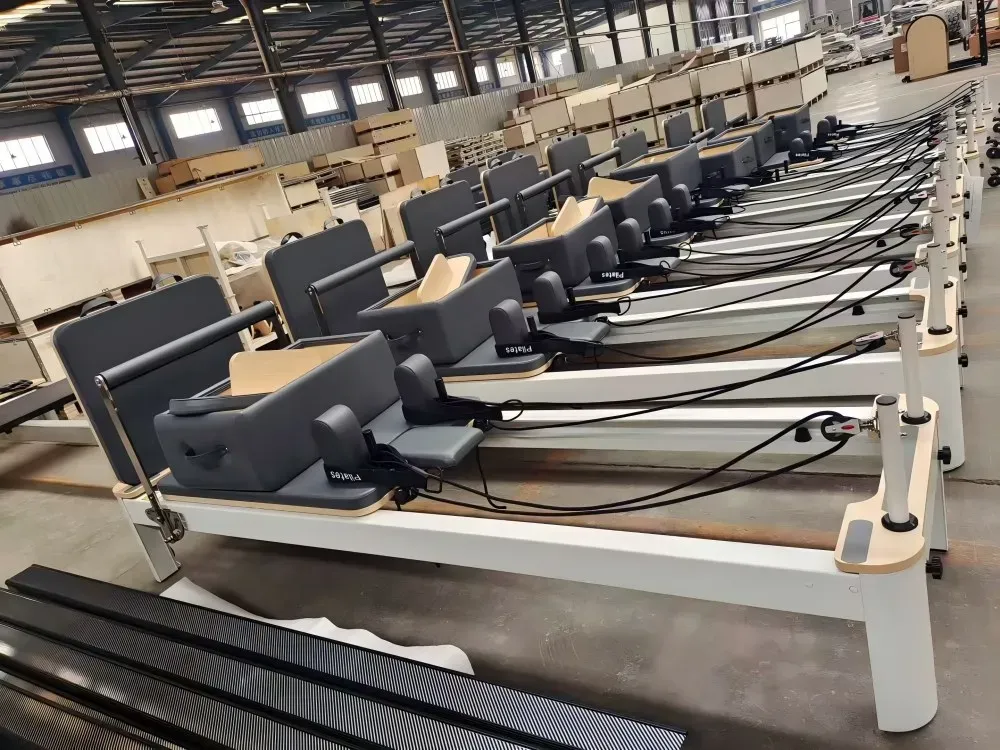
- The Aluminum Standard: For high-traffic studios, we recommend 6061-T6 Aircraft Grade Aluminum. It is non-corrosive, lightweight, and offers an aesthetic of "Industrial Precision."
2.3 The Megaformer Evolution: For High-Intensity Studios
While traditional reformers focus on precision and flexibility, the Megaformer is the engine of the "High-Intensity, Low-Impact" fitness revolution. For entrepreneurs targeting a younger, results-driven demographic, choosing a Megaformer is a strategic move to differentiate your studio.
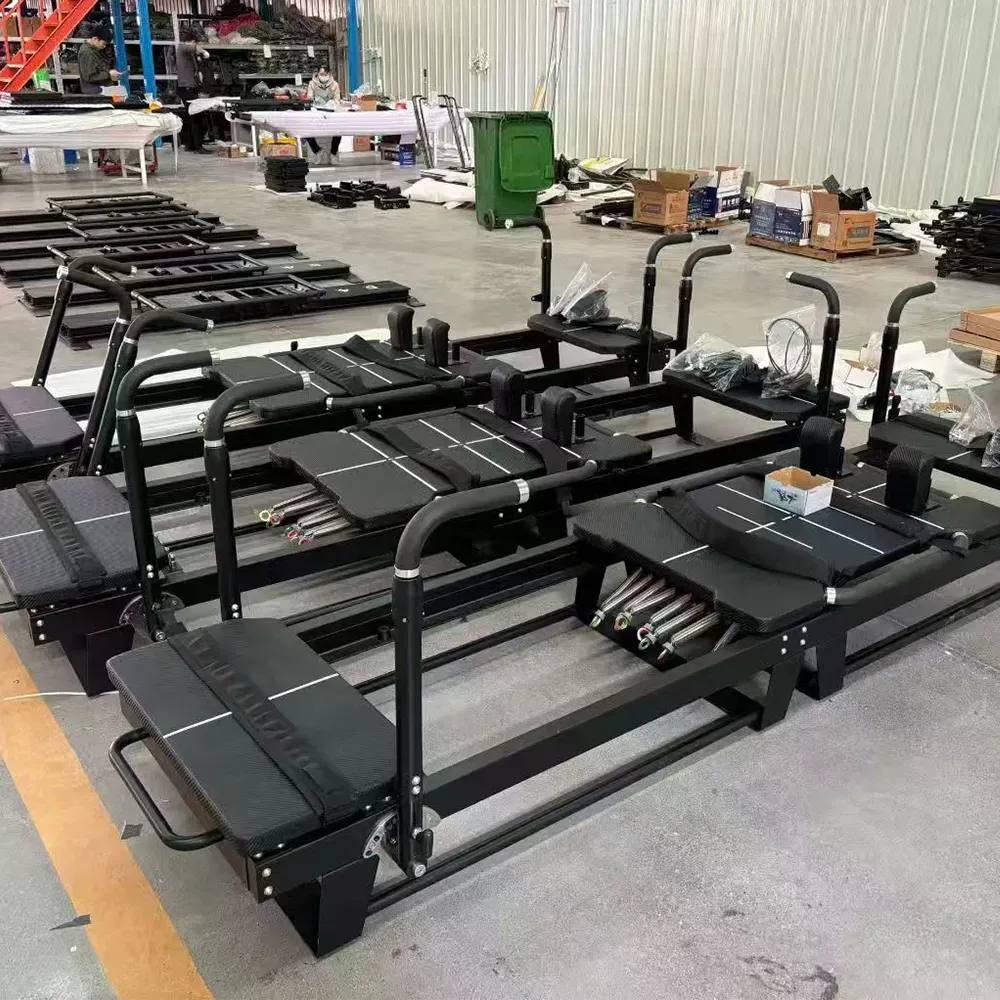
- Engineering for Power: Our Megaformer Series is built with a reinforced, oversized frame (327cm length) to handle explosive, high-cadence movements that would strain a standard reformer.
- Maximum ROI: While the initial investment is higher, Megaformer classes typically command a 20%–40% premium in session pricing compared to classical Pilates.
- Custom Branding (OEM): For studio chains, we offer full customization—from frame colors to laser-etched logos—ensuring your equipment is as unique as your brand identity.
2.4 Upholstery and Ergonomics
Studio hygiene is a top-of-mind concern for modern clients. We use Medical-Grade PU Leather that is resistant to microbial growth and sweat-induced cracking. Underneath, we use High-Density EVA Memory Foam that retains its shape even after 10 back-to-back classes.
Chapter 3: Calculating the Financials – Commercial Reformer Cost and CapEx
A realistic budget is the difference between a thriving business and a failed venture.
3.1 Breaking Down the Commercial Reformer Cost
The price of a reformer is not just the sticker price; it is the Landed Cost.
- Factory Price: Usually ranges from $1,200 to $2,500 depending on customization (Wood vs. Aluminum, Tower vs. Basic).
- Ocean Freight: In 2026, shipping a 20ft container (holding roughly 24–30 reformers) is the most cost-effective method.
- Customs and Duties: Depending on your country (USA, EU, Australia), duties can range from 0% to 25%. We provide DDP (Delivered Duty Paid) services to remove this complexity for our clients.
3.2 The ROI Formula
Let’s calculate the payback period for one unit:
- Cost per Unit (Landed): $2,000
- Class Price: $35
- Daily Usage: 4 classes at 70% capacity = 2.8 paying clients/day.
- Daily Revenue: $98
- Operating Margin (after rent/instructor): 30% = $29.40 profit/day.
- Breakeven: ~68 Days of operation per machine.
Even with conservative estimates, a high-quality machine from a reliable factory pays for itself within its first year, leaving 9+ years of pure profit.
Chapter 4: The "How to Open a Pilates Studio Checklist"
This is the operational core of your project. Missing a single step can delay your launch by months.
Phase 1: The Foundation (Months 1–2)
- Business Registration & Licensing: Secure your LLC and fitness-specific liability insurance.
- Site Selection: Look for "High-Visibility, Low-Noise" locations. Second-floor spaces are often 30% cheaper and provide better privacy for clients.
- Lease Negotiation: Ensure the floor can handle a load of 100kg+ per square meter (Pilates reformers are heavy!).
Phase 2: Procurement and Branding (Months 3–4)
- Select Your Wholesale Partner: Choose a factory that offers Private Labeling (OEM). Branding your logo onto the wood frame or upholstery increases your studio’s "re-sale" value.
- Color and Material Customization: Match your upholstery to your interior design. Our factory offers 40+ color options.
- Logistics Planning: Finalize your port of entry and drayage services.
Phase 3: Construction and Talent (Months 5–6)
- Interior Fit-out: Lighting is everything. Avoid "hospital-grade" overhead lights. Use warm, dimmable LED tracks. Clients spend 50% of the class looking at the ceiling!
- Instructor Recruitment: Look for PMA-certified instructors or those with 500+ hours of training.
- Software Integration: Set up booking platforms like MindBody or Walla.
Chapter 5: Operational Excellence and Risk Mitigation
Once the doors are open, the challenge becomes Asset Management.
5.1 Preventative Maintenance Schedule (PMS)
To protect your commercial reformer cost investment, you must treat your machines like high-performance cars.
- Daily: Wipe down upholstery with alcohol-free disinfectant.
- Weekly: Clean the aluminum tracks with a microfiber cloth to prevent "black dust" buildup (oxidized aluminum).
- Quarterly: Inspect "High-Wear" parts: ropes, loops, and carabiners. Replace springs every 2 years regardless of appearance.
5.2 Common Pitfalls in Sourcing from China
Many entrepreneurs get burned by:
- Poor Packaging: Reformers are long and fragile. We use triple-layered plywood crates to ensure 0% transit damage.
- Lack of After-Sales: Trading companies disappear. As a 20-year factory, we provide a 5-year structural warranty and keep a permanent inventory of spare parts.
Chapter 6: The Future of Pilates – 2026 and Beyond
The trend is moving toward "Connected Fitness" and "Eco-Conscious Materials." * Sustainability: We are seeing a massive surge in demand for FSC-Certified woods and water-based, non-toxic finishes. Clients in 2026 care about the "VOC" (Volatile Organic Compounds) levels in your studio.
- Versatility: The "Combo Chair" and "Wall Tower" integrations are becoming standard. When buying pilates equipment wholesale from China, consider "Full-Studio Packages" rather than just reformers to increase your service variety.
Summary: Your Path to a Profitable Studio
Starting a Pilates business is a marathon, not a sprint. By focusing on Factory-Direct Procurement, rigorous ROI Analysis, and following our How to open a pilates studio checklist, you are building a business on a foundation of solid steel and seasoned wood.
2026 Studio Budget & ROI Calculator (Interactive Tool)
Use the table below to estimate your initial investment and projected returns.
Part A: Estimated Startup Investment (CapEx)
Budget Item | High-End Studio (12 Units) | Compact Studio (6 Units) | Strategy to Save |
Equipment Cost | $24,000 | $12,000 | Buy Factory-Direct |
Shipping & Customs | $4,500 | $2,500 | Use LCL Shipping |
Flooring & Decor | $8,000 | $3,500 | Minimalist Design |
Marketing (Launch) | $3,000 | $1,500 | Organic Social Media |
Total Investment | $39,500 | $19,500 | |
Part B: Monthly Revenue Projections
- Classes per Month: 150 classes
- Avg. Attendance: 80% (8 people for a 10-reformer studio)
- Price per Head: $35
- Monthly Gross: $42,000
- Operating Expenses (Rent/Staff/Util): ~$25,000
- Net Monthly Profit: $17,000
FAQ: The Business Perspective (Reformer vs. Megaformer)
Q: I’m looking to start a Megaformer™-style business; can I use high-end wood reformers?
A: While Megaformers are specialized for high-intensity, Lagree-style workouts, many successful boutique owners choose Commercial-Grade Wood Reformers for their business startup. Here’s why:
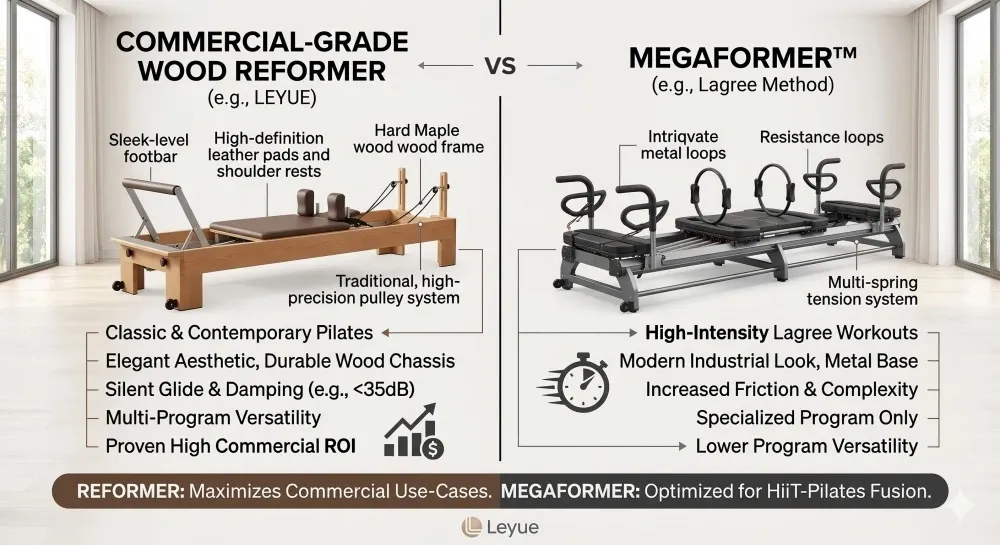
- Versatility & ROI: A wood reformer allows for the full classical and contemporary Pilates repertoire, attracting a wider client base and maximizing your hourly studio revenue.
- Aesthetic Branding: The natural elegance of Hard Maple or Oak creates a "premium sanctuary" feel that metal-heavy Megaformers can't replicate, justifying higher membership tiers.
- Lower Maintenance CAPEX: Our 8-wheel silent carriage system and kiln-dried wood frames are engineered for 10+ classes a day with significantly lower long-term maintenance costs compared to complex mechanical hybrids.
Expert Tip: Choosing the wrong equipment can be a $100,000 mistake. For a full breakdown of the financial differences, check out our in-depth analysis: Reformer vs. Megaformer: Cost, ROI & Best Equipment for Pilates Studios.
Are you ready to build your legacy? Don't settle for "middleman" quality. Partner with a factory that has defined the standards for pilates equipment wholesale from China for two decades.
Choosing the right equipment is a $100,000 decision. Whether you decide on a signature Megaformer Experience or a classic Professional Pilates Reformer setup, we ensure studio-grade quality that lasts.
About the Author: With 20 years of manufacturing excellence, we help studio owners worldwide turn their vision into high-performance fitness realities.