
Jun 26, 2026Manufacturing & Quality Control
5 Quality Standards for Professional Pilates Reformers
Discover 5 essential quality standards every professional Pilates reformer must meet, from maple wood selection to frame stability, QC process, and export packaging.
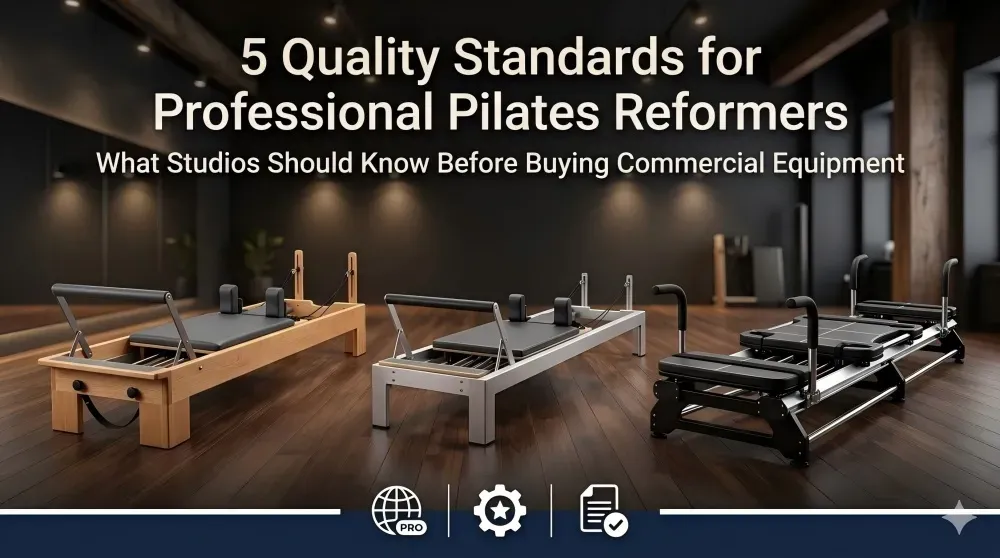
5 Quality Standards for Professional Pilates Reformers
Is Your Pilates Reformer an Asset—or a Liability?
For Pilates studio owners, distributors, and brand operators, a reformer is not simply a piece of fitness equipment—it is a long-term operational asset.
Whether the equipment is a classic wooden reformer, a modern aluminum reformer, or a high-intensity Megaformer-style machine, its performance directly affects studio operations, user experience, and brand reputation.
Yet in today’s global market, many machines look nearly identical in catalogs and product photos. The real differences only become visible after 6–12 months of daily commercial use.
Studios often begin to experience:
- Unexpected noise during carriage movement
- Frame instability under load
- Loose joints and hardware fatigue
- Shipping damage or missing parts
- Increasing after-sales service issues
At that point, the real cost is no longer the purchase price—it becomes downtime, reputation risk, and replacement expense.
From a manufacturer’s perspective, the true quality of a professional reformer is determined long before it reaches the studio floor.
Based on years of production experience and long-term cooperation with international distributors and studios, this article outlines five non-negotiable quality standards that every commercial Pilates reformer must meet.
Standard 1: Material Selection Is a Structural Decision, Not a Visual One
Why Frame Material Determines Long-Term Performance
When evaluating Pilates reformers, many buyers focus first on appearance. However, from an engineering standpoint, material selection directly determines structural stability, durability, and long-term performance.
Professional reformers are typically built using two main structural approaches:
Hard Maple Wood Frames
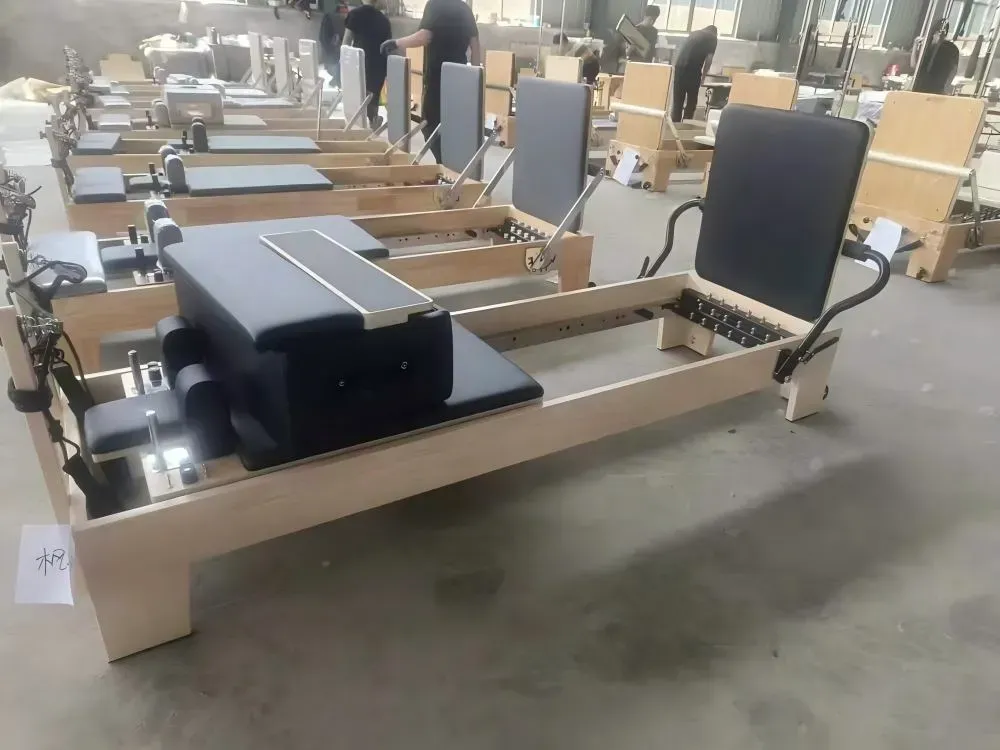
- High density and strength
- Uniform grain structure
- Excellent load-bearing capacity
- Natural vibration absorption
These characteristics allow wooden reformers to maintain stable performance during high-frequency studio use.
Aluminum Alloy Frames
Modern Pilates studios increasingly adopt aluminum reformers, especially for contemporary studio environments.
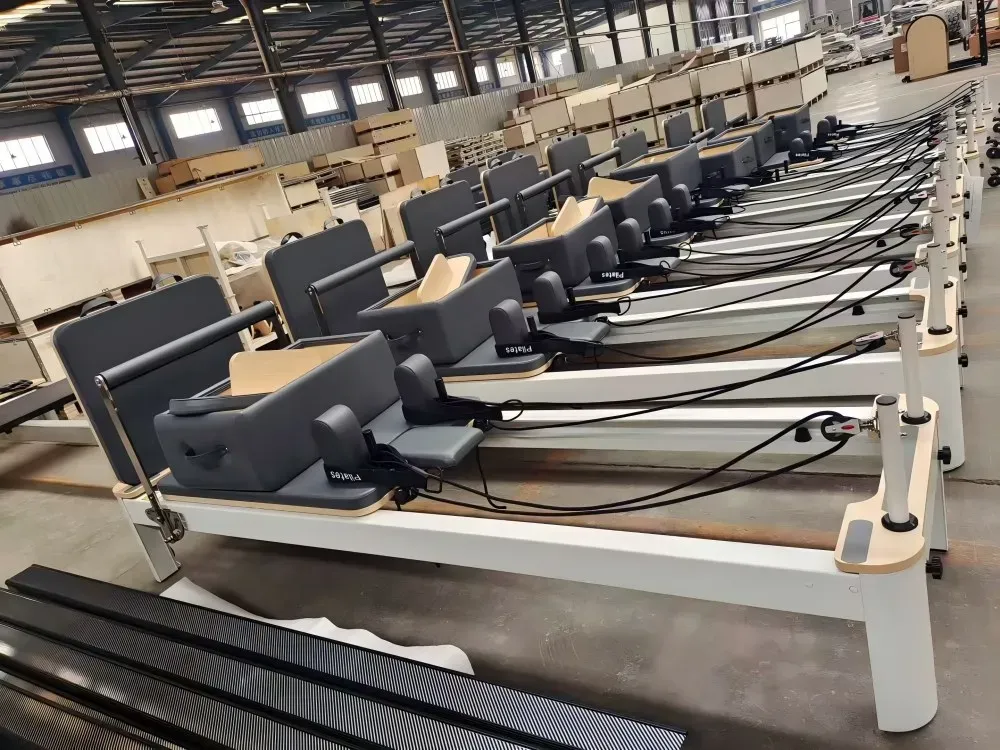
Key advantages include:
- High structural strength with reduced weight
- Resistance to humidity and environmental changes
- Long-term dimensional stability
- Sleek modern aesthetics
Megaformer Structural Requirements
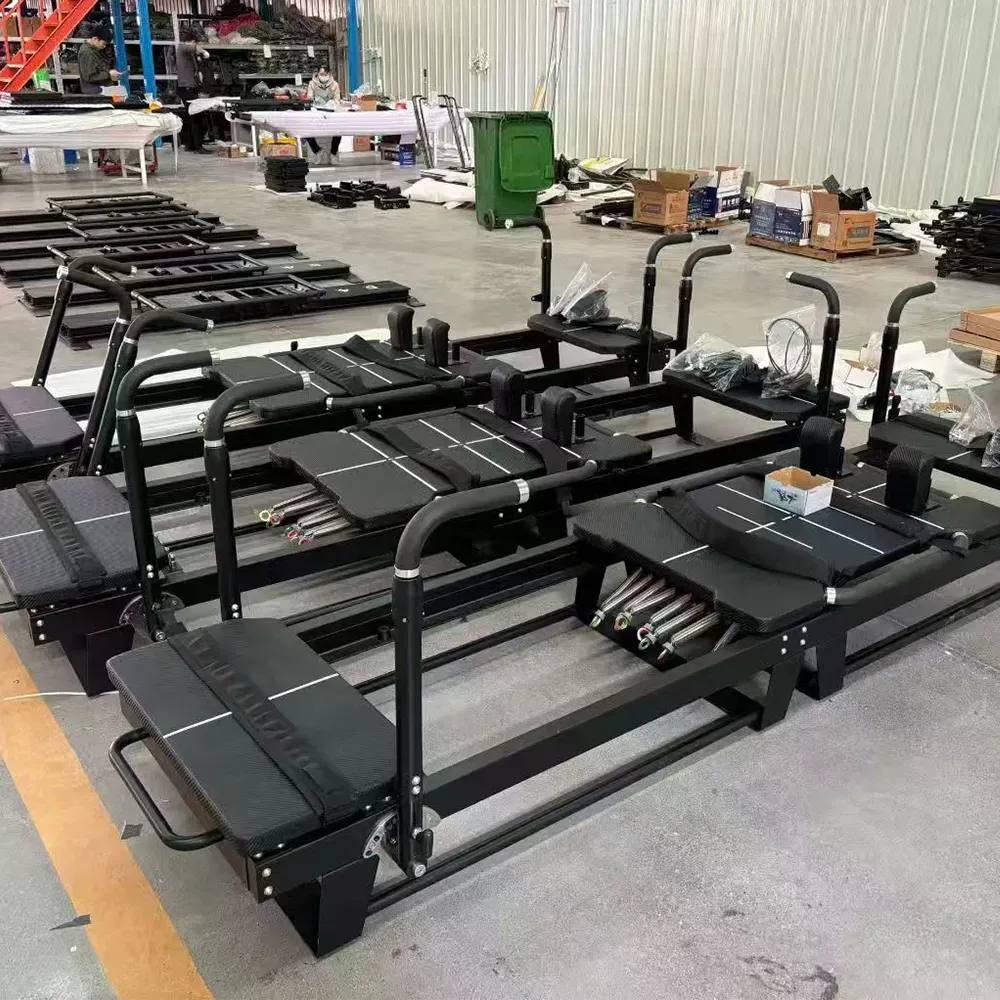
- High-resistance spring systems
- Multi-directional movement
- Continuous high-intensity workouts
This requires reinforced frames and precision-machined components to ensure stability under extreme load cycles.
From a manufacturing perspective, material selection is not about appearance—it is about ensuring structural reliability for years of daily commercial operation.
Standard 2: Frame Engineering That Eliminates Noise and Instability
The Real Cause of Squeaking and Shaking
One of the most common complaints from Pilates studios is unexpected noise or frame movement after several months of use.
In most cases, this is not a maintenance problem, but a result of insufficient frame engineering.
Noise typically originates from:
- Micro-movement at structural joints
- Uneven load distribution across the frame
- Weak reinforcement at stress points
- Poorly designed carriage rail systems
Engineering Principles for Professional Reformers
A commercial-grade reformer frame must be designed to:
- Maintain rigidity under asymmetric loads
- Absorb vibration instead of transmitting it to joints
- Preserve structural geometry after thousands of repetitions
- Maintain smooth carriage movement over time
For Megaformer-style machines, this becomes even more critical due to constant high-resistance dynamic movement.
Achieving this requires:
- Reinforced joint design
- Precision-machined structural connections
- Controlled assembly tolerances
- Prototype stress testing during development
For studios and distributors, frame engineering quality directly determines long-term user satisfaction and equipment reliability.
Standard 3: Industrial-Grade Hardware and Precision Tolerance Control
Why Small Components Create Big Problems
In professional Pilates equipment, durability often depends on the smallest components.
Bolts, fasteners, washers, and connectors may appear insignificant, yet they frequently determine whether a machine remains stable after thousands of workouts.
In lower-grade equipment, inconsistent hardware quality can cause:
- Gradual loosening of structural joints
- Misalignment in moving components
- Increased friction and noise
- Accelerated wear of rails and wheels
Manufacturing Standards for Professional Equipment
Professional Pilates reformers must use:
- Industrial-grade fasteners rather than decorative hardware
- Standardized torque specifications during assembly
- Precision spacers and washer systems for alignment control
- Accurate machining for carriage and rail systems
Tolerance control is particularly critical in the carriage glide system. Even minimal deviation can affect smooth movement and accelerate mechanical wear.
From a factory perspective, achieving this level of consistency requires:
- Precision machining equipment
- Standardized assembly procedures
- Skilled technicians trained in equipment alignment
For distributors and OEM buyers, these details translate directly into fewer warranty claims and lower long-term support costs.
Standard 4: Multi-Stage Quality Control—Not Just Final Inspection
Why Final Inspection Alone Is Not Enough
Many factories rely heavily on final inspection, but by that stage structural defects are already embedded in the product.
Professional manufacturers apply multi-stage quality control throughout the entire production cycle.
A Professional Quality Control System
1. Incoming Material Inspection
- Wood moisture verification
- Aluminum material certification
- Hardware specification confirmation
2. In-Process Production Checks
- Structural alignment verification
- Joint reinforcement inspection
- Assembly torque confirmation
3. Functional and Load Testing
- Carriage glide smoothness testing
- Stability verification under load
- Spring resistance and durability checks
This layered quality control system ensures that problems are detected before the equipment reaches final assembly.
For B2B buyers, this process is what separates long-term manufacturing partners from transactional suppliers.
Standard 5: Export Packaging Is Part of Product Quality
Why Shipping Protection Protects Your Brand
For international distributors and studios, shipping damage is more than a logistics problem—it directly affects customer experience and brand reputation.
Professional Pilates reformers must be packaged to withstand:
- Long-distance sea freight
- Humidity exposure during transport
- Repeated handling in warehouses and customs inspections
Professional Export Packaging Standards

Reliable export packaging typically includes:
- Reinforced wooden crates with internal fixation
- Protective foam and shock absorption systems
- Moisture-resistant wrapping for wood and upholstery
- Clear component organization to prevent missing parts
Proper packaging ensures that machines arrive ready for installation—not repair.
Why These Standards Matter for B2B Buyers
For studios, distributors, and brand owners, these five standards provide benefits far beyond equipment durability:
- Reduced after-sales service workload
- Lower warranty and replacement costs
- Consistent user experience in studios
- Stronger brand credibility with end customers
- Higher lifetime value per client
In competitive Pilates markets, reliability and consistency are what allow brands to scale successfully.
How We Support Professional Buyers
As a manufacturer focused on long-term B2B cooperation, our goal goes beyond simply supplying studioequipment.
We provide complete manufacturing support for wooden reformers, aluminum reformers, and Megaformer-style machines, helping distributors and studios build reliable product lines.
Our support includes:
- Low MOQ starting from 10 units
- Sample and prototype development
- OEM and private-label branding
- Stable production lead times
- Export-ready packaging for global shipping
Our objective is not just to manufacture equipment—but to reduce operational risk for our partners.
Final Thoughts: What to Ask Before Choosing a Reformer Manufacturer
Before selecting a Pilates equipment supplier, professional buyers should look beyond catalogs and ask:
- How are structural materials selected and processed?
- How is frame stability engineered and tested?
- What hardware standards are used?
- Is quality control applied throughout production?
- How is the equipment protected during international shipping?
Professional Pilates reformers are built on engineering standards—not marketing promises.
When evaluated correctly, they become long-term business assets that support studio growth, brand credibility, and sustainable profitability.
Frequently Asked Questions About Professional Pilates Reformers
What makes a Pilates reformer suitable for professional studios?
A professional studio reformer must support high-frequency commercial use. This includes a structurally stable frame (wood or aluminum), reinforced joints, industrial-grade hardware, precision carriage alignment, and multi-stage quality control during manufacturing.
Are aluminum reformers better than wooden reformers?
Both materials have advantages. Wooden reformers provide classic aesthetics and natural vibration absorption, while aluminum reformers offer modern design, lighter weight, and strong environmental resistance. The best choice depends on studio style and usage requirements.
Why is frame stability important for Megaformer-style machines?
Megaformer-style machines involve high-resistance springs and continuous dynamic movement. Without reinforced structural engineering, instability and noise can quickly develop during intensive workouts.
How can studios reduce equipment maintenance problems?
Studios should choose manufacturers that apply strict engineering standards, industrial hardware, precise assembly tolerances, and multi-stage quality control throughout production.