
Sep 4, 2026Product Knowledge & Guides
Opening Your First Pilates Studio: A Practical Guide for Beginners
Planning your first Pilates studio? Learn how to prepare your business plan, budget, location, equipment, instructors, pricing, operations and launch step by step.
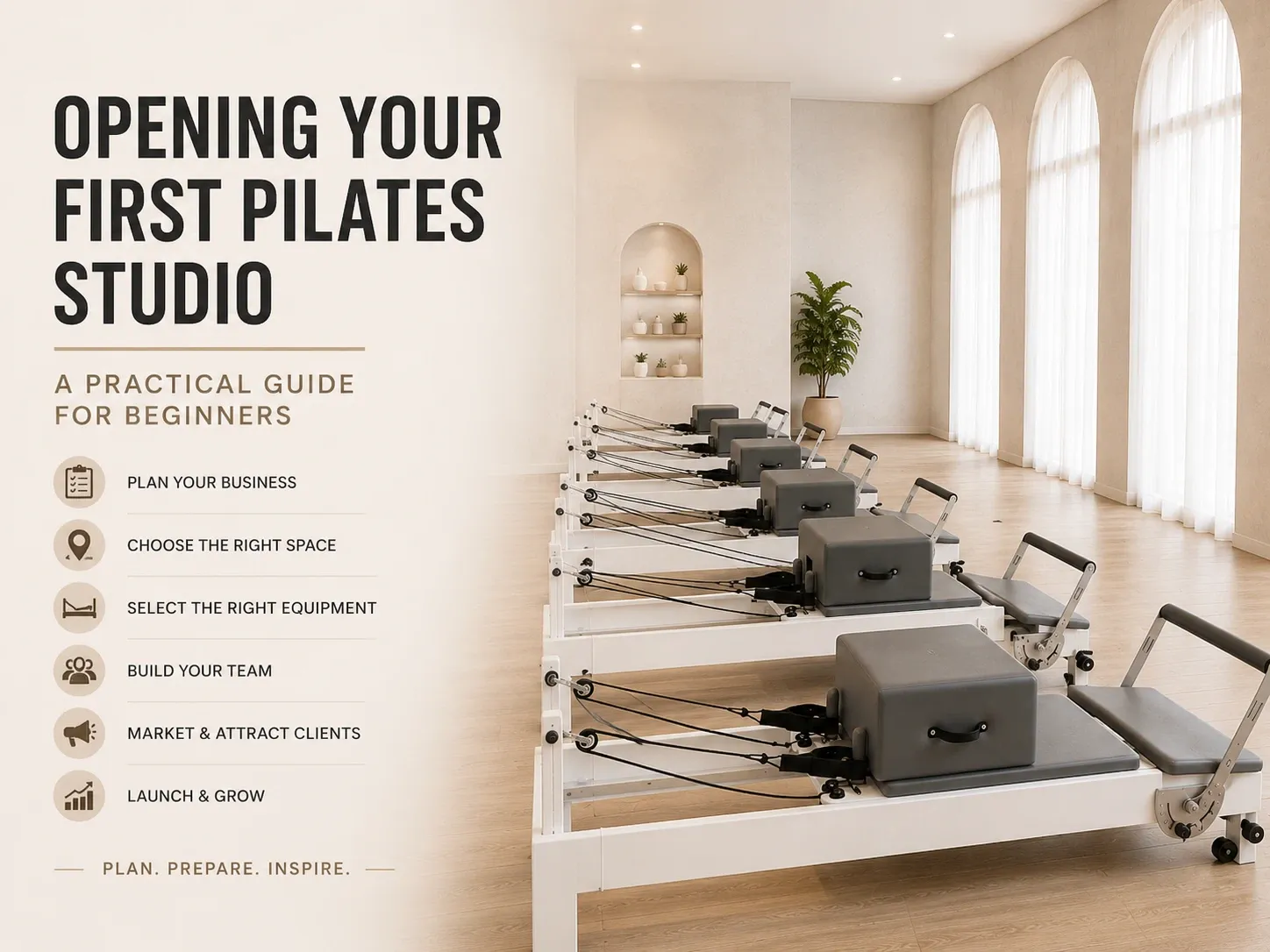
Opening your first Pilates studio can be exciting, but it can also feel overwhelming.
You may already be thinking about reformer colors, mirrors, flooring, lighting and the name above the front door. But these are not necessarily the decisions that should come first.
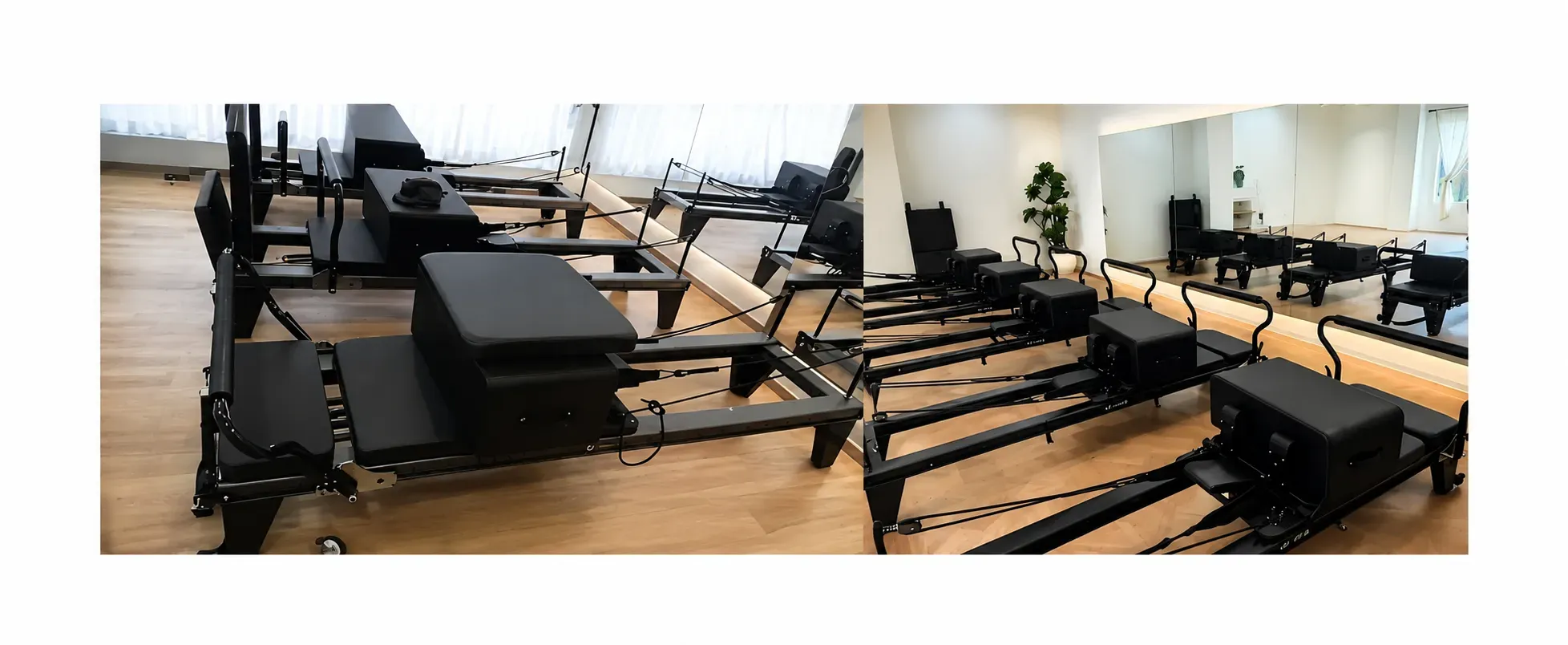
A successful Pilates studio is a combination of several systems working together:
the right market + the right space + the right equipment + qualified instructors + workable pricing + efficient operations + enough cash to reach stable membership.
For a first-time studio owner, the biggest risk is often not making one terrible decision. It is making several expensive decisions in the wrong order.
For example:
- signing a lease before confirming how many reformers the room can comfortably accommodate;
- ordering equipment before deciding the class model;
- spending heavily on interior design while underestimating working capital;
- setting membership prices before calculating realistic class capacity;
- planning an opening date without allowing enough time for equipment production, international shipping and installation.
This guide walks through the decisions in a more practical order.
The goal is not simply to help you open a Pilates studio.
It is to help you build one that can operate sustainably after opening day.
1. Start With the Business Model, Not the Equipment
One of the first questions new owners often ask is:
“How many reformers should I buy?”
But there is an earlier question:
What kind of Pilates business are you building?
A Pilates studio can take many forms:
- Boutique Reformer Pilates studio
- Classical Pilates studio
- Contemporary Pilates studio
- Private or semi-private studio
- Group Reformer studio
- Pilates + Yoga / Barre / Wellness concept
- Premium or luxury studio
- Athletic-performance focused studio
Your choice affects almost everything that follows.
A high-volume group Reformer studio may prioritize class capacity, fast adjustments and durable commercial equipment.
A classical studio may need a broader apparatus collection, including Reformers, Cadillac, Wunda Chairs, Ladder Barrels and smaller classical apparatus.
A premium private studio may use fewer machines but invest more heavily in equipment finishes, interior design and personalized instruction.
So before comparing equipment suppliers, write one sentence that explains your concept:
We provide ______ Pilates for ______ customers through ______ type of classes.
If that sentence is difficult to complete, the business concept probably needs more work.
2. Research the Local Market Before Signing a Lease
Do not assume that having no Pilates studio nearby automatically means there is an opportunity.
Sometimes it does.
Sometimes it means demand is limited.
Likewise, having several successful studios nearby is not necessarily bad. Competition can also indicate that a local Pilates market already exists.
Research:
Who are your competitors?
Look at studios within the realistic distance your customers would travel.
Record:
- number of reformers;
- class size;
- class schedule;
- pricing;
- memberships;
- introductory offers;
- Google reviews;
- positioning;
- instructor profiles;
- opening hours.
Then look for gaps.
Perhaps the market already has inexpensive group Pilates but lacks premium small-group training.
Perhaps existing studios have long waiting lists.
Perhaps there are many classical studios but little contemporary Reformer Pilates.
Or perhaps the opportunity is not another Pilates-only studio at all, but a combined Pilates and wellness concept.
The objective is not simply to find competitors.
It is to understand why a customer would choose your studio instead of theirs.
Market research and clear positioning are consistently treated as foundational steps in current studio-startup guidance.
3. Build the Financial Model Before Choosing the Interior
A beautiful studio does not automatically create a profitable studio.
Before signing major contracts, estimate both your startup investment and monthly operating costs.
Typical Startup Costs
Depending on the country and project, these may include:
- lease deposit;
- legal and registration costs;
- renovation;
- flooring;
- mirrors;
- lighting;
- signage;
- Pilates equipment;
- shipping and import costs;
- furniture and storage;
- website;
- booking system;
- insurance;
- pre-opening marketing.
Then calculate ongoing expenses:
- rent;
- instructor salaries or class fees;
- receptionist or studio manager;
- utilities;
- cleaning;
- insurance;
- booking software;
- payment processing;
- marketing;
- equipment maintenance;
- replacement parts.
Current studio-business guides similarly recommend modeling startup costs, recurring operating expenses, class capacity and expected revenue before launch.
Don't spend the entire budget before opening.
A common beginner mistake is allocating almost everything to:
equipment + renovation + deposit.
Then opening with very little working capital.
Your studio may need time to build stable occupancy.
Keep a financial buffer for the early operating period rather than assuming every class will be full immediately.
4. Work Backwards From Class Capacity
Now you can start thinking about the number of reformers.
Suppose you plan:
10 reformers
and:
6 group classes per day
That creates:
60 available client spots per day.
At 50% average occupancy:
30 paid visits.
At 80%:
48 paid visits.
At 95%:
57 paid visits.
Now combine this with:
- average revenue per visit;
- classes per week;
- instructor cost;
- rent;
- operating expenses.
This gives you a much better basis for deciding whether 8, 10, 12 or 16 reformers makes sense.
The goal should not be:
Fit as many machines as possible.
It should be:
Create enough class capacity without damaging movement space, instructor visibility or client experience.
Professional practice guidance emphasizes adequate supervision, sightlines, safe circulation and equipment checks when teaching equipment-based groups.
5. Choose the Location With the Studio Layout in Mind
A great retail location is not automatically a great Pilates location.
Before committing to a lease, consider:
Accessibility
Can clients reach the studio conveniently?
Consider:
- parking;
- public transport;
- walking access;
- building access;
- stairs/elevators;
- local accessibility requirements.
Ceiling Height
Particularly important if you plan to use:
Cadillac / Trapeze Table
or
Reformer with Tower.
Floor Area
Do not calculate only the physical footprint of each reformer.
You also need circulation space for:
- instructors;
- clients getting on/off equipment;
- spring changes;
- boxes and jump boards;
- cleaning;
- emergency movement.
Other Space
Remember:
Reception
Changing area
Toilets
Storage
Staff area
Cleaning supplies
Accessories
all consume floor area.
A room that appears capable of holding 14 reformers on a floor plan may work much better operationally with 10 or 12.
6. Decide How Many Reformers You Actually Need
There is no universal correct number.
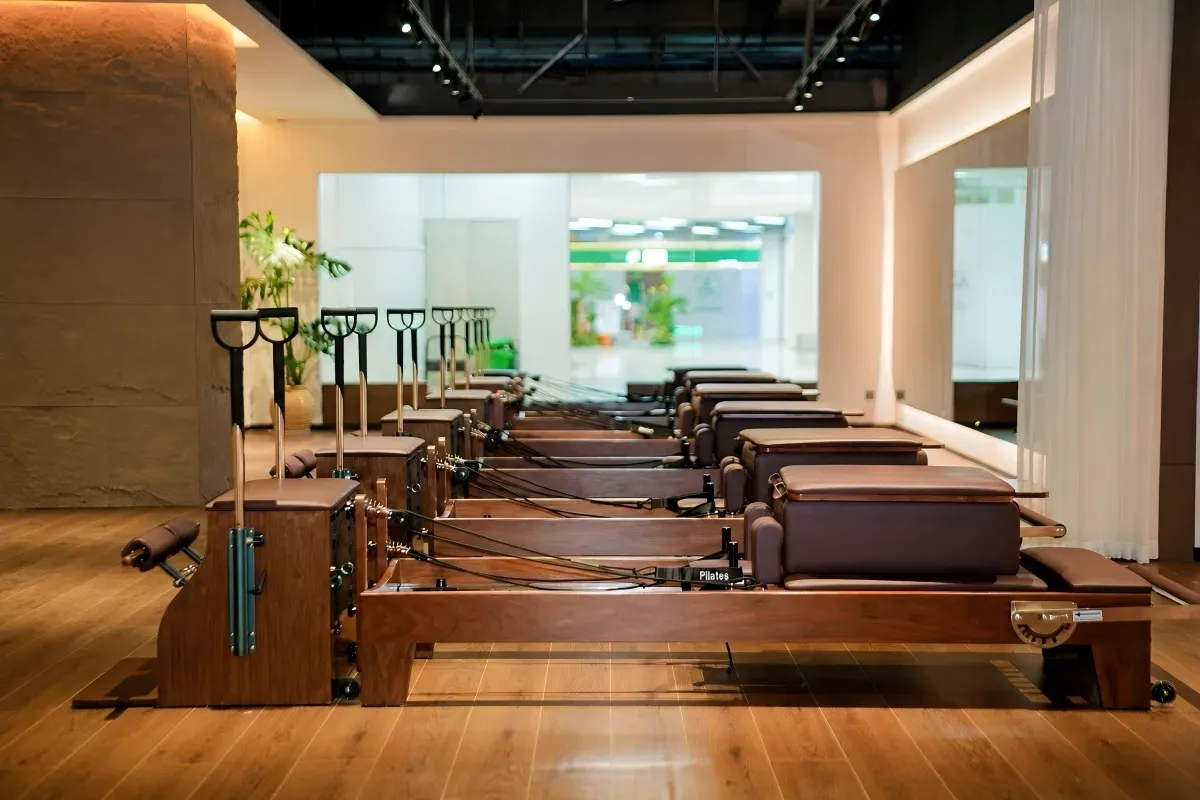
But as a planning framework:
Studio Type | Typical Starting Configuration |
|---|---|
Small / Private Studio | 4–6 |
Small Boutique Reformer Studio | 6–8 |
Standard Group Studio | 8–12 |
Larger Boutique Studio | 12–16 |
High-Capacity / Gym Pilates Zone | 16–20+ |
These are planning references, not rules.
Your correct number depends on:
space + budget + pricing + expected demand + instructor model.
If this is your first studio and demand is uncertain, a slightly smaller but financially comfortable setup can be safer than filling every available square meter on day one.
7. Don't Buy Every Type of Pilates Equipment at Once
Another common beginner mistake is thinking a professional studio needs every apparatus immediately.
Not necessarily.
If your core business is group Reformer Pilates, your first equipment investment may primarily be:
Reformers
plus:
- sitting boxes;
- jump boards;
- straps/handles;
- Pilates rings;
- balls;
- resistance bands;
- mats;
- small weights.
Then expand later according to demand.
For example:
Phase 1
Reformers + core accessories
Phase 2
Wunda Chairs + Ladder Barrel
Phase 3
Cadillac + Spine Corrector + specialized classical apparatus
This phased approach preserves cash and allows equipment expansion to follow the actual development of the business. A current equipment-planning guide similarly recommends building around core classes first rather than purchasing every apparatus immediately.
For equipment options, you can explore commercial Pilates equipment for studios and professional projects.
8. Choose Commercial Equipment Based on Daily Use
A reformer for occasional home use and a reformer operating through multiple classes every day have different requirements.
For commercial use, evaluate:
- frame stability;
- carriage movement;
- wheel and bearing quality;
- spring consistency;
- footbar locking;
- adjustment speed;
- upholstery durability;
- cleaning;
- noise;
- replacement parts;
- maintenance requirements.
Don't judge the equipment only from product photos.
Ask for:
real operating videos.
Listen for:
- wheel noise;
- carriage noise;
- spring noise;
- friction;
- vibration.
Ask the supplier what parts normally wear over time and how replacements are ordered.
9. Think About Equipment Maintenance Before Opening
Your reformers are revenue-producing assets.
If one of ten machines cannot be used, you have not simply lost a machine.
You may also have reduced a class from:
10 sellable spaces → 9.
That is why maintenance and replacement parts should be considered before purchase.
Ask:
- Are replacement springs available?
- Can I order wheels separately?
- Are ropes and straps replaceable?
- How long will components remain available?
- Are parts easy to identify?
- Does the supplier keep specification records?
10. Hire Instructors Earlier Than You Think
Equipment is easier to order than great instructors are to find.
A survey of 119 Reformer studio owners reported that 50% had difficulty hiring qualified instructors, making staffing one of the major startup challenges.
Do not wait until two weeks before opening.
Determine:
- who will teach;
- qualifications required;
- employee vs contractor structure where legally applicable;
- class compensation;
- private-session compensation;
- substitute instructor arrangements;
- onboarding;
- equipment-specific training.
Most importantly, make sure instructors teach within their actual education, competence and local professional/legal scope.
Your studio's reputation will ultimately depend more on:
the experience clients have with instructors
than the logo printed on the reformer.
11. Complete Legal, Insurance and Safety Preparation
Requirements vary significantly by country, state and city, so this section should always be verified locally.
Depending on jurisdiction, you may need to consider:
- business registration;
- local operating licenses;
- fire and occupancy requirements;
- accessibility requirements;
- employment regulations;
- insurance;
- client waivers;
- privacy/data requirements;
- health and safety procedures.
Insurance may include general liability, professional liability and coverage for employees or property depending on local requirements and business structure.
Also establish written procedures for:
equipment inspections
cleaning
incidents
emergencies
client screening
equipment maintenance
before opening.
12. Set Pricing From Your Business Model, Not Your Competitor's Instagram
Your competitor charges $30 per class.
Should you charge $29?
Not necessarily.
Your pricing should reflect:
capacity + costs + positioning + customer value.
Common models include:
- single class;
- introductory package;
- 5/10/20-class packages;
- monthly membership;
- limited monthly membership;
- unlimited membership;
- private sessions;
- semi-private sessions.
Be careful with unlimited memberships if class capacity is limited.
A Reformer studio has a hard physical ceiling:
10 reformers = maximum 10 clients in that class.
Unlike digital products, you cannot sell infinite capacity.
Pricing therefore needs to protect the value of each available spot.
13. Choose Your Booking and Payment System Before Launch
Do not plan to run a growing studio through WhatsApp messages and spreadsheets.
Before opening, your system should ideally handle:
- online booking;
- class capacity;
- waitlists;
- cancellations;
- memberships;
- class packages;
- recurring payments;
- client records;
- instructor schedules;
- attendance.
Current studio-startup checklists consistently treat booking, payment and membership systems as core infrastructure rather than something to add later.
Test the entire customer journey yourself:
Instagram/Google → Website → Class → Payment → Confirmation → Reminder → Arrival.
Every unnecessary step increases friction.
14. Start Marketing Before the Studio Opens
Opening day should not be the first day people hear about your studio.
Start building awareness while the space is being prepared.
Useful pre-opening content includes:
- renovation progress;
- equipment arrival;
- instructor introductions;
- behind-the-scenes setup;
- founder story;
- class explanations;
- beginner FAQs;
- opening countdown.
You can also create:
Founding Member Offers
or
Pre-Opening Packages
to begin validating real demand.
The objective is to arrive at opening day with:
bookings already in the system, not just followers on Instagram.
15. Plan the Equipment Timeline Backwards From Opening Day
This is especially important if equipment is being imported.
Do not plan:
“Studio opens November 1, so equipment should arrive in late October.”
Allow time for:
Specification confirmation
↓
Color / logo confirmation
↓
Production
↓
Quality inspection
↓
Packing
↓
Ocean or air freight
↓
Customs clearance
↓
Final delivery
↓
Unpacking and assembly
↓
Equipment testing
↓
Instructor familiarization
↓
Soft opening
↓
Grand opening
Shipping schedules can change.
Customs can take longer than expected.
A delivery appointment can move.
A minor missing component is much easier to solve three weeks before opening than three hours before the first class.
16. Run a Soft Opening Before the Grand Opening
Don't make your first fully booked class the first time the studio operates under real conditions.
Run several test sessions.
Invite:
- friends;
- instructors;
- founding members;
- local partners.
Test:
check-in
music
lighting
temperature
equipment spacing
class transitions
cleaning
booking
payments
client flow
equipment adjustments
You may discover that the problem is not your reformers.
It may be:
There is nowhere to put 12 pairs of shoes.
These small operational issues are exactly what a soft opening is designed to reveal.
17. Think About the Second Studio Before You Open the First One
This doesn't mean you should immediately expand.
It means making decisions that do not create unnecessary problems if the business succeeds.
For example:
Keep records of:
- reformer specifications;
- upholstery colors;
- spring configurations;
- accessories;
- logo dimensions;
- equipment layout;
- supplier information;
- replacement parts.
If the first studio succeeds and you open another location two years later, you may want the second equipment batch to match the first.
For multi-location operators, repeatability becomes part of brand consistency.
Our guide to batch-to-batch consistency in Pilates equipment manufacturing explains why this becomes increasingly important as a studio or brand grows.
A Beginner's Pilates Studio Opening Checklist
Before signing off on the project, work through this list:
Business
☐ Studio concept defined
☐ Target customer identified
☐ Competitor research completed
☐ Business plan prepared
☐ Startup budget calculated
☐ Working capital reserved
Location
☐ Lease reviewed
☐ Layout tested
☐ Equipment capacity confirmed
☐ Accessibility checked
☐ Storage planned
☐ Local compliance checked
Equipment
☐ Reformer quantity confirmed
☐ Commercial-use requirements checked
☐ Accessories selected
☐ Warranty reviewed
☐ Spare parts confirmed
☐ Production and shipping timeline confirmed
Operations
☐ Qualified instructors secured
☐ Class schedule prepared
☐ Pricing finalized
☐ Booking system tested
☐ Payment system tested
☐ Cleaning and maintenance procedures prepared
Legal & Safety
☐ Business registration completed
☐ Local licenses checked
☐ Insurance arranged
☐ Client policies/waivers prepared
☐ Emergency procedures established
☐ Equipment inspection procedure established
Launch
☐ Website live
☐ Google/local presence prepared
☐ Social channels active
☐ Pre-sale launched
☐ Soft opening completed
☐ Grand opening scheduled
Final Advice: Build the Business Before You Build the Studio
It is easy to become excited about:
beautiful reformers, custom upholstery, mirrors, lighting and interior design.
Those things matter.
But they sit on top of the business.
For a first-time Pilates studio owner, the strongest foundation is much less glamorous:
Clear positioning + realistic numbers + the right location + qualified instructors + reliable equipment + simple operations + enough time and cash to grow.
You do not need to make the first studio perfect.
You need to make it workable.
Start with the core service your customers are willing to pay for. Build a studio that can deliver that service consistently. Then add equipment, classes and amenities as real demand develops.
That approach usually gives a first-time owner much more flexibility than trying to build the “ultimate Pilates studio” before the first client has walked through the door.
Planning Your First Pilates Studio?
If you're deciding how many reformers you need, comparing commercial equipment or planning an imported equipment package, Leyue Pilates can help you evaluate equipment configurations based on your studio size, class model and project requirements.