
Jun 26, 2026Product Knowledge & Guides
Reformer vs Megaformer: Cost, ROI & Best Equipment for Pilates Studios (2026 Guide)
Opening a Pilates studio? Compare Megaformer vs commercial Reformers (wood & aluminum). Learn startup cost, maintenance, versatility, and ROI to choose the best equipment for your studio business.
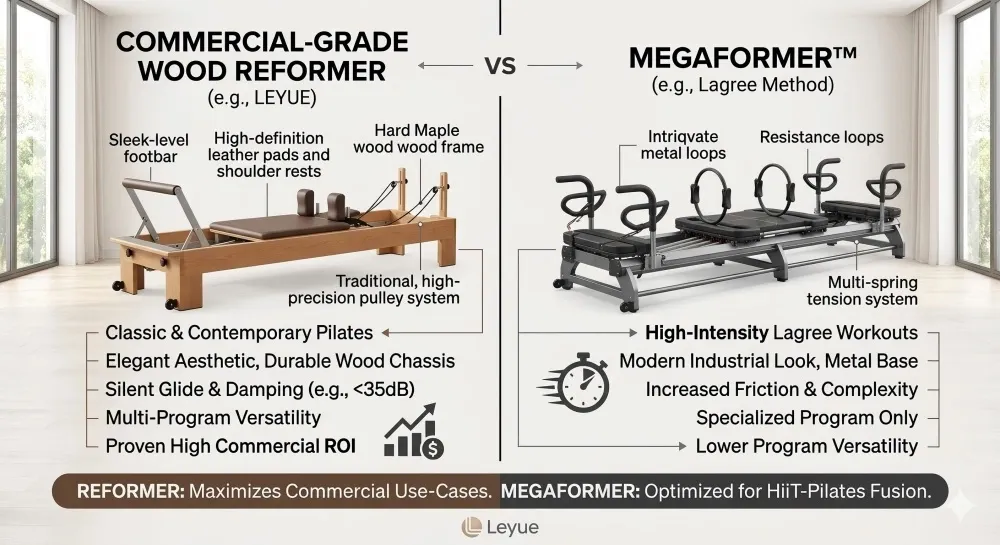
Introduction: The $100,000 Equipment Decision
When launching a Pilates studio, equipment is usually the largest capital investment. A fully equipped studio may require 8–12 machines, making the equipment decision a critical factor for profitability.
In recent years, the rise of high-intensity Pilates workouts has brought significant attention to the Megaformer™. Many fitness entrepreneurs wonder whether investing in Megaformer machines is the best choice for their business.
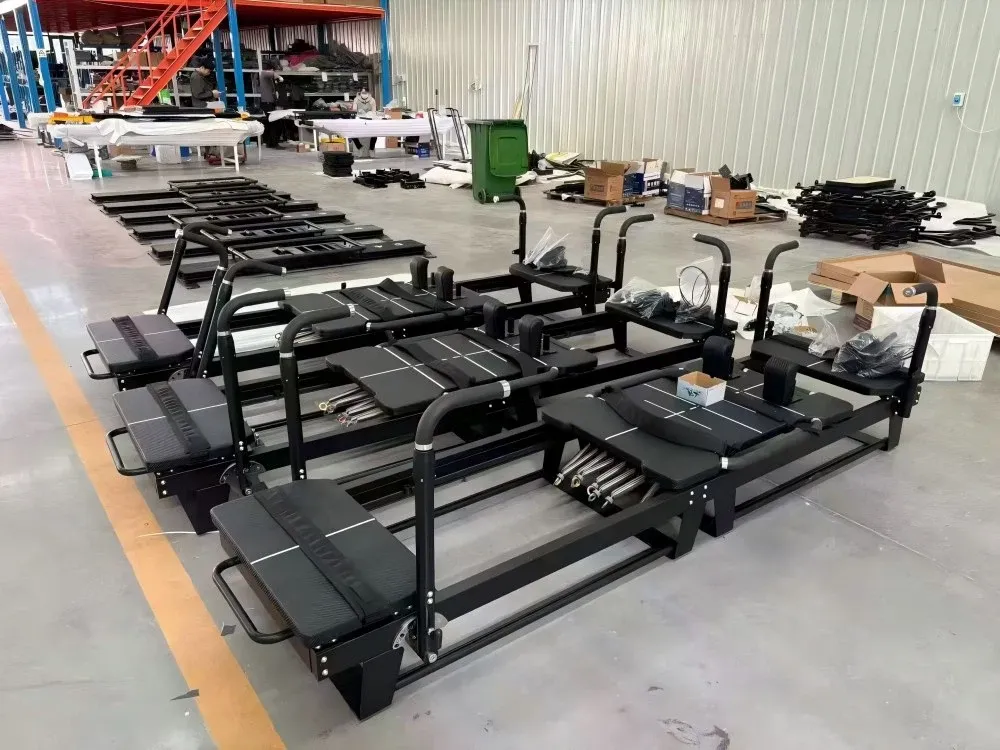
However, experienced studio owners know the real question is not just about trends—it’s about return on investment (ROI).
Is the specialized Megaformer worth the premium price, or does a professional commercial Pilates reformer—available in aluminum or hardwood—provide a more sustainable and versatile business model?
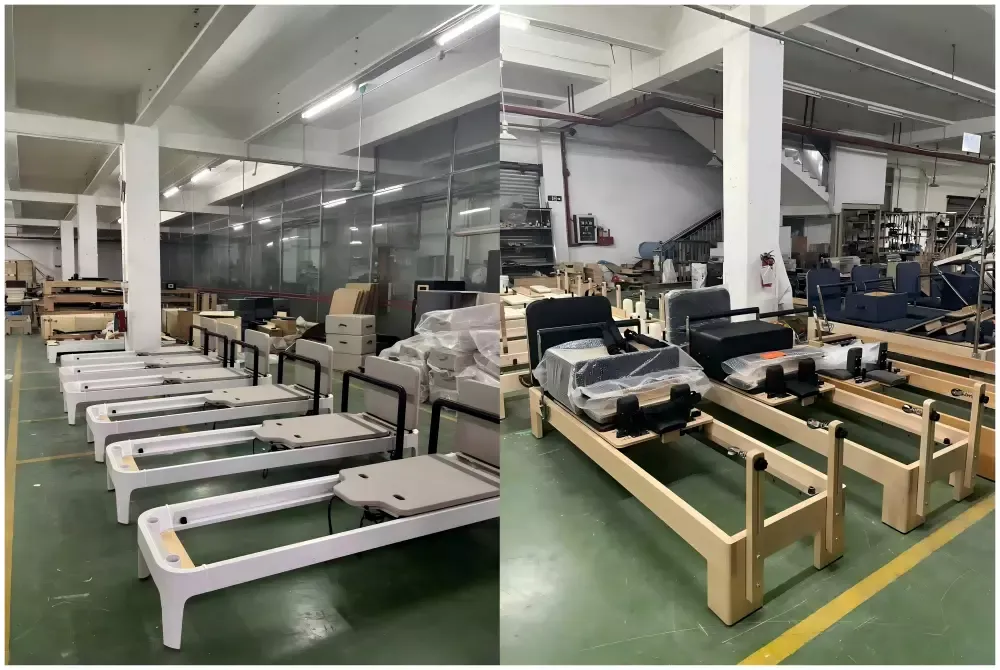
Let’s break down the key factors studio owners should consider.
1. Initial Investment (CAPEX) and Studio Scalability
The most immediate consideration for any studio startup is equipment cost per unit.
Megaformer
A Megaformer typically costs between $8,000 and $12,000 per unit, depending on the configuration and accessories.
For a small studio with 10 machines, the total investment can easily exceed:
$80,000 – $120,000
before considering installation, shipping, and accessories.
Commercial Pilates Reformers
Professional commercial reformers, whether anodized aluminum or solid hardwood, are typically much more cost-efficient for studio setups.
This allows studio owners to equip more stations within the same budget.
Business Impact
For the cost of five Megaformer machines, many studio owners can equip a 10–12 reformer studio with commercial reformers.
This creates several advantages:
- Higher class capacity
- Lower cost per client
- Faster break-even point
- Greater scheduling flexibility
For entrepreneurs launching their first studio, this difference can dramatically improve the financial stability of the business.
2. Material Matters: Aluminum vs Wood Reformers
Commercial reformers are typically available in two primary materials, each suited to different studio environments.
Aluminum Reformers
Aluminum reformers are designed for high-traffic commercial use.
Key advantages include:
- Rust-resistant frame
- Lightweight but extremely strong structure
- Easy cleaning and sanitation
- Modern and professional appearance
These machines are especially popular in franchise studios, gyms, and busy training centers where durability and maintenance efficiency are critical.
Wooden Reformers
Hardwood reformers, usually made from maple, oak, or beech, offer a different aesthetic and experience.
Advantages include:
- Natural vibration absorption
- Premium boutique studio appearance
- Warm, organic atmosphere
- Traditional Pilates design heritage
Many boutique studios prefer wooden machines because they create a luxury environment that supports premium membership pricing.
Long-Term Advantage Over Trend-Based Equipment
Both aluminum and wood reformers offer timeless design and long commercial lifespan. Unlike trend-driven equipment, they remain relevant even as fitness trends change.
3. Programming Versatility and Market Reach
Another important factor for studio profitability is who your equipment can serve.
Megaformer
Megaformer workouts are optimized for high-intensity training. While this approach is popular with certain clients, it often targets a specific niche audience.
Potential limitations include:
- High learning curve for beginners
- Less suitable for rehabilitation programs
- Not ideal for elderly clients
- Limited classical Pilates programming
Commercial Reformers
A traditional reformer is one of the most versatile machines in the fitness industry.
With a professional reformer, studios can offer multiple program types:
- Classical Pilates
- Contemporary Pilates
- Athletic training
- Cardio jumpboard workouts
- Rehabilitation sessions
- Prenatal and senior classes
The ROI Advantage
Versatility allows studios to serve a wider demographic, increasing:
- class occupancy rates
- daily machine usage
- revenue per square meter
For example:
A reformer used for rehab classes in the morning can also support athletic workouts in the evening.
This flexibility maximizes equipment utilization and overall profitability.
4. Maintenance and Long-Term Reliability
In a busy studio running 10–12 classes per day, equipment downtime can directly affect revenue.
Complexity vs Simplicity
Machines with complex mechanical structures often require:
- frequent adjustments
- specialized maintenance
- higher repair costs
Commercial Reformer Engineering
Modern commercial reformers are designed with precision engineering and durability in mind.
Many professional models feature:
- multi-wheel silent carriage systems
- precision aluminum rails
- shielded bearings
- high-quality spring resistance systems
These components reduce friction and mechanical wear, allowing machines to operate smoothly for years with minimal maintenance.
Frame Durability
- Aluminum frames require almost no maintenance
- Hardwood frames are kiln-dried to reduce moisture content and prevent warping
This durability significantly reduces long-term operating costs for studio owners.
Technical Deep Dive: "The key to low-maintenance operations lies in the carriage engineering. Our 8-wheel system is a core reason why our reformers offer a better long-term ROI than complex hybrids. Learn more in [The Science of Silence: Why an 8-Wheel Carriage System is Essential for Studios]
Megaformer vs Commercial Reformer: Quick Comparison
Feature | Megaformer | Commercial Reformer |
|---|---|---|
Price per unit | $8,000–$12,000+ | Much lower startup cost |
Target training | High-intensity niche | All fitness levels |
Programming | Limited workout style | Highly versatile |
Maintenance | More complex | Lower maintenance |
Client accessibility | Moderate | Very high |
Studio ROI potential | Medium | High |
Which Equipment Is Right for Your Studio?
The right choice depends largely on your studio concept and target market.
Choose Megaformer if:
- Your studio focuses exclusively on high-intensity Pilates
- Your brand identity centers around a specialized workout format
- Your market supports premium class pricing
Choose Commercial Reformers if:
- You want a versatile and adaptable studio
- You plan to serve a wide range of clients
- You aim to maximize long-term ROI
- You prefer lower startup costs and maintenance
For many entrepreneurs, commercial reformers offer a more flexible and financially sustainable business model.
Conclusion: Building a Resilient Pilates Studio Business
Fitness trends come and go, but successful studios are built on versatility, reliability, and smart investment decisions.
While the Megaformer has gained attention in the high-intensity fitness market, the commercial Pilates reformer remains the foundation of the global Pilates industry.
With lower startup costs, broader programming capabilities, and lower maintenance requirements, reformers provide studio owners with a powerful and scalable platform for long-term business success.
If you are planning to open or upgrade a Pilates studio, investing in high-quality commercial reformers may be one of the smartest decisions you can make.
Ready to Equip Your Pilates Studio?
If you are exploring equipment options for a new or expanding studio, choosing the right machines is essential for long-term profitability.
Explore commercial reformer solutions designed for professional studios:
- Aluminum Pilates Reformers for modern training facilities
- Wooden Pilates Reformers for boutique studios
- Complete studio equipment packages for startups
With the right equipment strategy, your studio can deliver exceptional training experiences while achieving strong financial performance.
🚀 Studio Startup Success Kit:
- [The 2026 ROI Guide: How to Build a Profitable Business]
- [The Equipment Battle: Reformer vs. Megaformer Comparison]
- [The Quality Standard: Why Silent Engineering Drives Membership]
-