
Jun 26, 2026Product Knowledge & Guides
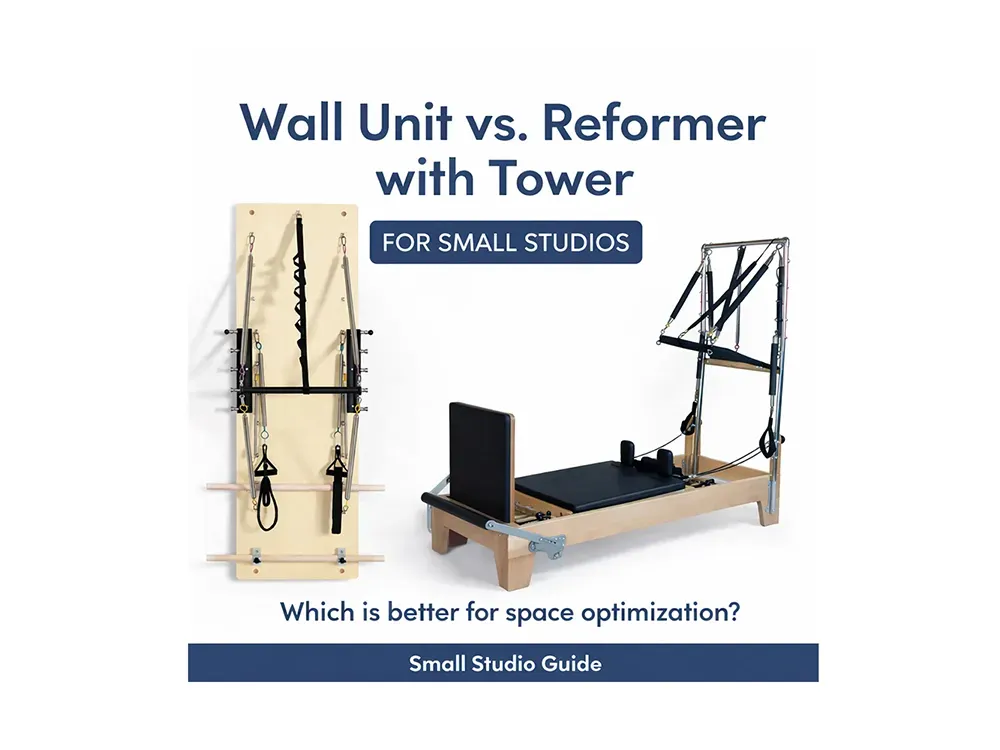
Wall Unit vs Reformer with Tower for Small Studios
Compare Wall Unit vs Reformer with Tower for small Pilates studios. Learn how to optimize space, increase capacity, and improve ROI.
Introduction: The Real Constraint Is Not Equipment — It’s Space
For boutique Pilates studios, space is the most expensive asset. Every square meter must generate revenue.
The most common question we receive from studio owners and distributors is:
“Should I invest in a Reformer with Tower, or can a Wall Unit deliver the same value?”
As a direct Pilates equipment manufacturer, we help studios choose the right system based on space, budget, and training goals.
This guide focuses on space efficiency, class capacity, and business scalability—helping you choose the right system based on your studio model.
1. The Core Difference: Moving vs Stationary System
The biggest difference is not price — it’s how the system functions.
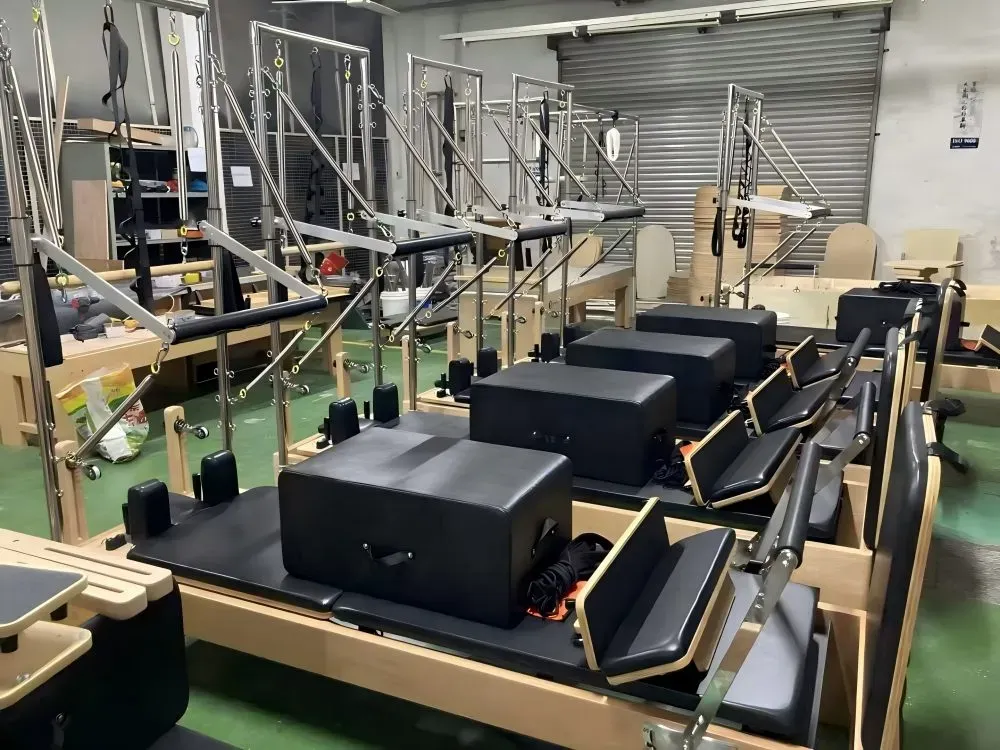
Reformer with Tower
- Includes a sliding carriage system
- Ideal for dynamic exercises:
- Footwork
- Lunges
- Rowing
- Designed for 1-on-1 or premium sessions
Wall Unit
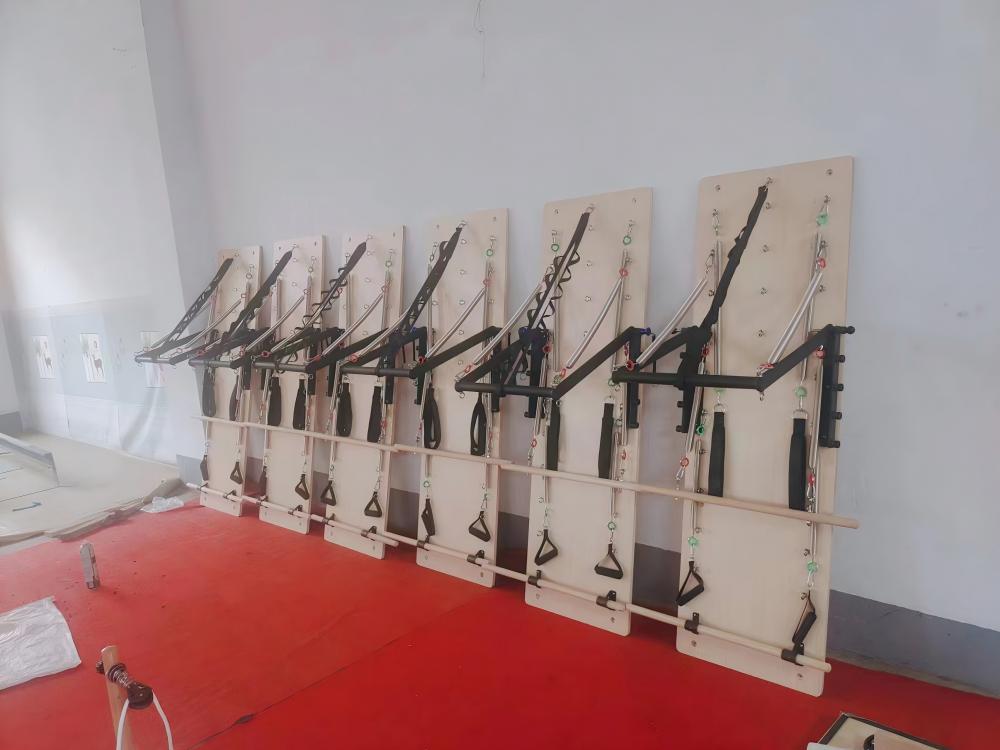
- Wall-mounted, stationary system
- Uses spring resistance without a moving base
- Ideal for:
- Group classes
- Controlled training
- Rehabilitation environments
2. Space Efficiency: The Deciding Factor
Let’s look at a typical 40–60 sqm studio:
Reformer with Tower Setup
- Requires ~2.5m length per unit
- Needs clearance space for instructors
- Fits approximately: 👉 3–5 units
Wall Unit Setup
- Mounted directly to the wall
- Minimal spacing between stations
- Fits approximately: 👉 8–10 units
Business Impact
More stations = more students per class.
👉 This directly increases:
- Revenue per session
- Profit per square meter
3. Revenue Model: Private vs Group Training
Reformer with Tower
Best for:
- Private sessions
- Premium pricing strategy
- High-end positioning
Wall Unit
Best for:
- Group classes
- Semi-private training
- Scalable studio models
Pro Insight (Important)
Many successful studios use a Hybrid Model:
- 2 Reformers → private sessions
- 6–10 Wall Units → group classes
👉 This balances brand positioning + profitability
4. Flexibility of Studio Layout
Reformer with Tower
- Fixed equipment
- Occupies permanent floor space
Wall Unit
- Clears floor when mats are removed
- Allows:
- Mat Pilates
- Yoga
- Barre classes
👉 One room = multiple revenue streams
5. Cost & Logistics (Important for Buyers)
Reformer with Tower
- Higher unit cost
- Higher shipping volume
- Lower container efficiency
Wall Unit
- Lower initial investment
- Flat-pack / knock-down structure
- More units per container
👉 Better for:
- Distributors
- Multi-location studios
6. Maintenance & Long-Term Operation
Reformer with Tower
- Moving parts (carriage, rails, wheels)
- Requires regular maintenance
Wall Unit
- Minimal moving components
- Lower maintenance cost
- Longer lifecycle stability
Final Decision: Which One Should You Choose?
Goal | Choose Reformer with Tower | Choose Wall Unit |
|---|---|---|
Studio Type | Premium / Private | High-volume / Group |
Space | Large | Limited |
Budget | Higher | Scalable |
Training Style | Dynamic (Carriage) | Controlled (Stationary) |
ROI Model | High-ticket sessions | High-capacity classes |
Conclusion: It’s a Business Decision, Not Just Equipment
There is no “better” system — only the right system for your business model.
- Choose a Reformer with Tower if your focus is premium, one-on-one training
- Choose a Wall Unit if your goal is maximizing space efficiency and scaling revenue
If you are also comparing tower-based systems for rehabilitation or high-end studios, read our detailed guide:
Not Sure How to Design Your Studio Layout?
If you are planning a new studio or expanding your equipment line:
👉 Explore our Maple Pilates Wall Unit for space-saving solutions
👉 View our Maple Pilates Reformer with Tower for full-function systems
Get Factory Pricing & Studio Planning Support
As a direct manufacturer, we help distributors and studio owners optimize both equipment selection and layout strategy.
👉 Get a Wholesale Quote: info@leyuepilates.com
👉 WhatsApp: +86 13534175495