
Jun 26, 2026Product Knowledge & Guides
Rubberwood vs Oak: Thailand vs China for Pilates Equipment
Compare rubberwood vs oak and Thailand vs China rubberwood. Discover which material is best for durable Pilates equipment.
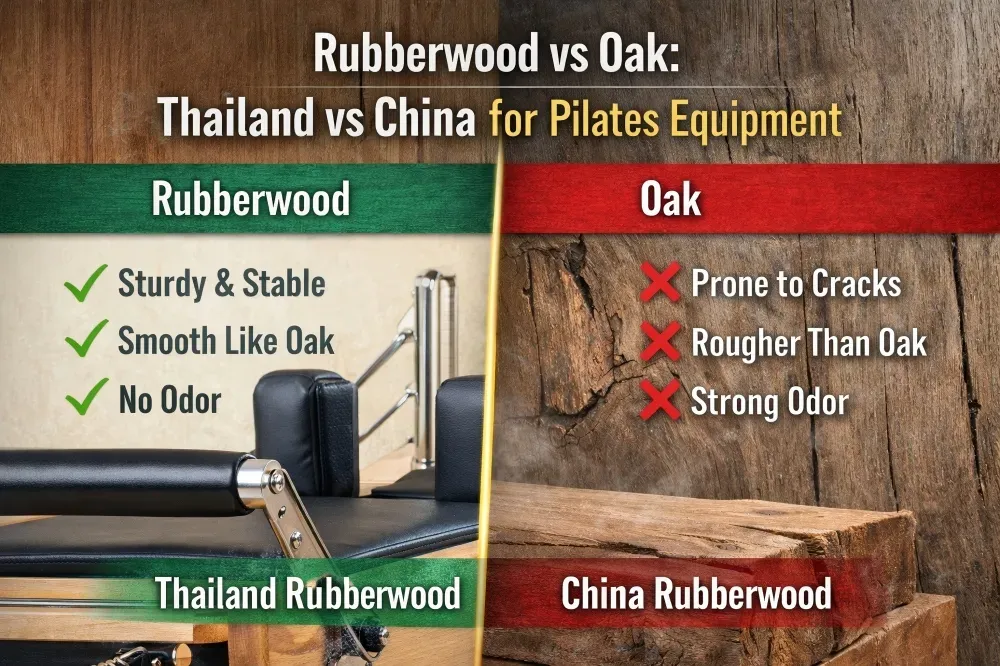
Is Rubberwood as Good as Oak for Pilates Equipment?
Rubberwood is widely used in modern furniture and fitness equipment, and it is often compared to oak due to its light color and similar appearance after finishing.
In fact, many buyers searching for “oak Pilates equipment” are actually looking at products made from rubberwood.
But here’s the key truth:
Rubberwood and oak are not the same—but high-quality rubberwood can perform just as well (or better) in controlled manufacturing environments.5,000+ Units Sold Annually: Foldable Pilates Reformer Crafted from Premium Rubberwood (Often Compared to Oak)
More importantly, not all rubberwood is equal.
The biggest difference comes from origin: Thailand vs China (Hainan).
And this difference directly affects:
- Structural stability
- Durability under load
- Painting quality (especially water-based coatings)
- Odor and user experience
Rubberwood vs Oak: What’s the Real Difference?
Before comparing origins, let’s clarify the relationship between rubberwood and oak.
Key Differences:
Factor | Rubberwood | Oak |
|---|---|---|
Type | Plantation hardwood | Natural hardwood |
Grain | Subtle, uniform | Strong, visible grain |
Color | Light (similar to oak after finishing) | Light to medium brown |
Cost | More cost-effective | Higher cost |
Sustainability | Highly sustainable | Less renewable |
Key Insight:
Rubberwood is often used as an “oak alternative” in manufacturing because it offers similar visual results at a more competitive cost.
For Pilates equipment, the performance difference depends less on species and more on:
✔ Moisture control
✔ Stability
✔ Processing quality
Thailand Rubberwood vs China Rubberwood (Quick Comparison)
Even within rubberwood, quality varies significantly depending on origin.
Factor | Thailand Rubberwood | China (Hainan) Rubberwood |
|---|---|---|
Growth Cycle | 15–20 years | 10–15 years |
Stability | Excellent | Prone to warping |
Moisture Content | 6–8% (kiln-dried) | Often inconsistent |
Sugar Content | Low | High |
Durability | High | Moderate to low |
Painting Performance | Excellent | Unstable |
Appearance | Clean, uniform | Knots, dark streaks |
Odor | None | Noticeable |
Standardization | High | Low |
Price | Higher | Lower |
Conclusion: Thailand rubberwood delivers consistent, “oak-like” performance, while China rubberwood is more variable and risk-prone.
Why Origin Matters More Than “Oak vs Rubberwood”
Many buyers focus on “oak vs rubberwood”, but in reality:
Processing quality matters more than species.
1. Drying Technology
Thailand rubberwood is kiln-dried to 6–8% moisture content, ensuring:
- Dimensional stability
- Reduced cracking
- Better coating adhesion
China rubberwood often has inconsistent drying, leading to:
- Warping
- Internal stress
- Coating defects
2. Sugar Content (Critical for Durability)
Rubberwood naturally contains sugars and proteins.
- Low sugar (Thailand):
- Resistant to mold
- Stable color
- High sugar (China):
- Risk of discoloration
- Higher chance of insect issues
- Potential odor over time
3. Industrial Standardization
Thailand supply chains offer:
- Graded lumber (AA/AB)
- Uniform sizes
- Consistent quality
China rubberwood is often:
- Natural boards
- Less standardized
- Variable quality
How Rubberwood (vs Oak) Affects Painting Quality
If you are using water-based coatings (3 base + 2 top layers), material choice becomes critical.
Why High-Quality Rubberwood Performs Like (or Better Than) Oak:
- Smooth grain → better coating adhesion
- Light base color → clean, bright finish
- Stable moisture → no bubbling or peeling
Risks with Lower-Grade Rubberwood:
- Uneven absorption → patchy coating
- High moisture → blistering
- Darker tone → affects final color
Result: Properly processed Thailand rubberwood can achieve a finish comparable to high-end oak products.
Best Wood for Pilates Equipment: Rubberwood or Oak?
Pilates equipment must handle:
- Continuous mechanical stress (springs & resistance)
- Dynamic human weight
- Humid environments (sweat, studio conditions)
Why Thailand Rubberwood Is Often Preferred Over Oak:
1. Better Cost-to-Performance Ratio
Delivers “oak-like” appearance and performance at a more competitive price.
2. Superior Stability (When Properly Processed)
Less prone to cracking compared to poorly dried hardwoods.
3. Ideal for Coated Finishes
Works perfectly with modern water-based coating systems.
4. Sustainable Material
Rubberwood is a byproduct of latex production, making it environmentally friendly.
When Is China Rubberwood Acceptable?
China rubberwood can still be used—but selectively.
Suitable for:
- Non-structural components
- Internal or hidden parts
- Dark color finishes
- Budget product lines
Not Recommended for:
- Load-bearing frames
- Light or natural finishes (oak-style look)
- Premium or commercial-grade equipment
How to Identify High-Quality Rubberwood (Avoid Confusing It with “Oak”)
To ensure you are sourcing the right material:
Visual Check
- High-quality rubberwood: light, clean, uniform
- Lower-grade: knots, dark streaks
Smell
- Good material: neutral
- Lower-grade: noticeable odor
Documentation
Request:
- Moisture content report (6–8% ideal)
- Origin certificate (Thailand preferred)
- Kiln-drying records
Our Material Standard for Pilates Equipment
To ensure consistent performance, we use:
- AA/AB Grade Thailand rubberwood
- Kiln-dried to 6–8% moisture content
- Anti-mold and anti-insect treatment
- Optimized for water-based coating (3 base + 2 top layers)
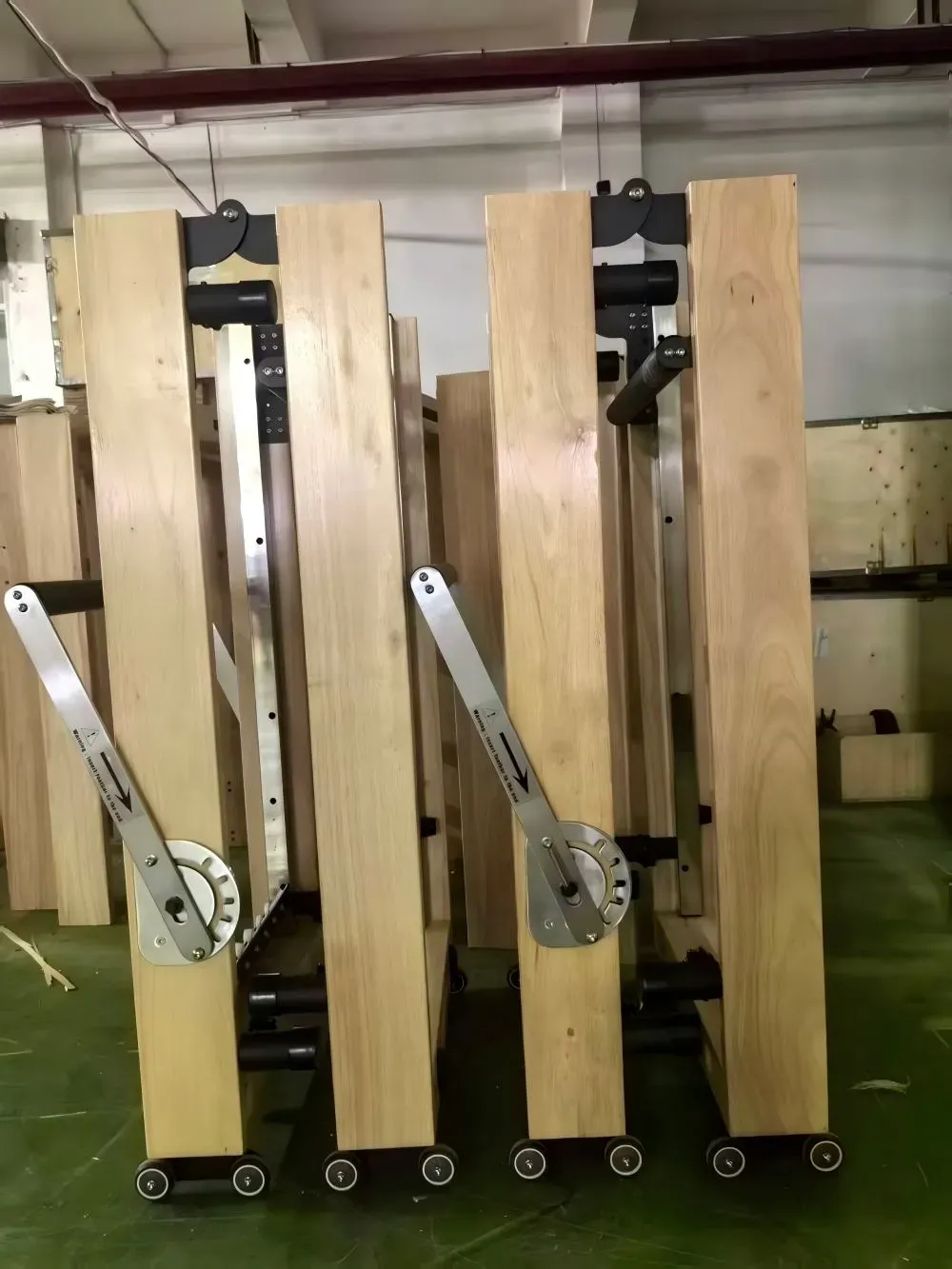
This ensures:
- Long-term structural stability
- Smooth, premium finish (comparable to oak)
- Odor-free studio experience
- Reliable performance across climates
FAQ: Rubberwood vs Oak for Pilates Equipment
Is rubberwood real hardwood or fake oak?
Rubberwood is a real hardwood. It is sometimes marketed as an “oak alternative,” but it is a different species.
Is rubberwood as strong as oak?
High-quality rubberwood (especially from Thailand) can provide similar strength for many applications, including Pilates equipment.
Why is rubberwood cheaper than oak?
Rubberwood is plantation-grown and more sustainable, making it more cost-efficient.
Does rubberwood crack easily?
Not if properly kiln-dried. Poor-quality rubberwood with high moisture content is more prone to cracking.
Final Verdict
If you are choosing between rubberwood and oak, the real decision is:
High-quality rubberwood (Thailand) vs inconsistent materials.
For Pilates equipment:
✔ Thailand rubberwood = stable, durable, “oak-like” finish
⚠️ China rubberwood = cost-saving but higher risk
Looking for a Reliable Pilates Equipment Manufacturer?
Material selection is only the beginning.
We provide:
- OEM & ODM Pilates equipment
- Material optimization consulting
- Premium finishing solutions
- Stable mass production