
Jun 26, 2026Product Knowledge & Guides
Pilates Reformer Parts Guide: Springs, Ropes & Maintenance
Learn how to maintain Pilates reformers, replace springs, fix noise, and choose the right spare parts.
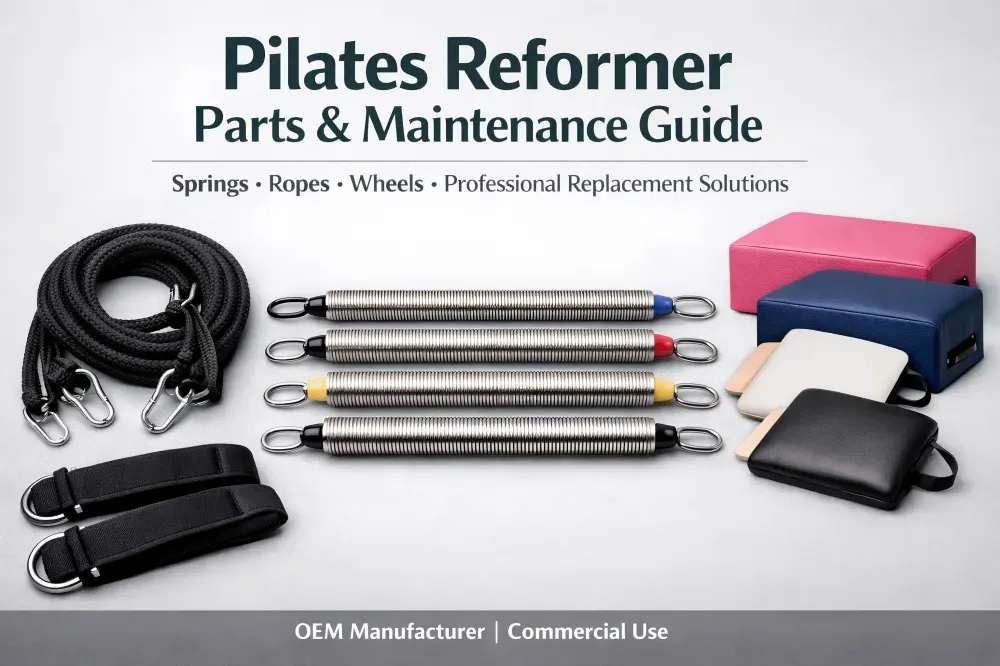
The Ultimate Guide to Pilates Equipment Maintenance: Keep Your Reformer Smooth & Silent
1. Introduction: The Hidden Cost of Poor Maintenance
For Pilates studios, equipment is not just an asset — it’s the foundation of your reputation.
A poorly maintained reformer can lead to:
- Unpleasant noise during classes
- Inconsistent resistance performance
- Safety risks for clients
- Shortened equipment lifespan
More importantly, clients notice. A noisy or jerky machine immediately signals low quality.
Regular maintenance is not a cost — it’s a long-term investment in your brand and client experience.
2. The Heart of the Machine: Reformer Springs
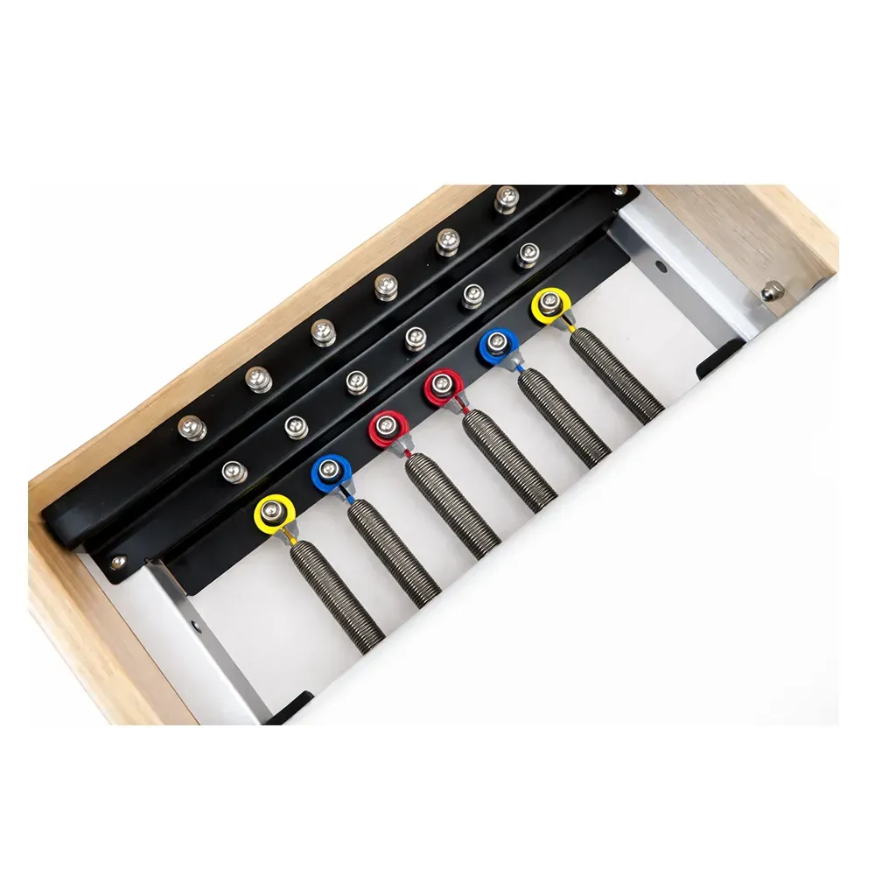
Why Springs Matter More Than You Think
Springs define the resistance curve, which directly affects training quality.
Two key technical factors:
- Wire Diameter (mm) → Determines resistance strength
- Spring Length (mm) → Affects stretch range and elasticity
Even small deviations can significantly change user experience.
Professional Insight: Material Makes the Difference
High-quality springs are typically made from:
- ASTM A228 Piano Wire
- Excellent fatigue resistance
- Consistent elasticity
- Longer service life
Low-grade steel springs may feel similar at first—but lose tension quickly and can become unsafe.
When Should You Replace Springs?
For commercial studios:
- Every 12–24 months (recommended)
- Immediately if you notice:
- Uneven resistance
- Visible deformation
- Surface rust or coating damage
Example Specification (Professional Standard)
“Our professional reformer springs follow a strict 2.8 × 29.8 × 472mm specification for heavy resistance (28KG). Incorrect sizing can alter resistance curves and compromise performance.”
3. Smooth Gliding: Wheels and Bearings
Common Problem: Noise & Jerky Movement
If your reformer is making noise, the issue is usually:
- Worn wheels
- Dust or hair buildup
- Dry or damaged bearings
Quick Troubleshooting Guide
Problem → Solution
- Squeaking noise → Clean rails + check bearings
- Jerky movement → Replace worn wheels
- Resistance inconsistency → Inspect alignment
Maintenance Tips
- Clean rails weekly
- Remove hair and dust from wheel tracks
- Avoid over-lubrication (can attract dirt)
4. Safety & Comfort: Ropes, Straps, and Upholstery
Ropes & Straps (High-Risk Wear Parts)
Check regularly for:
- Fraying
- Uneven tension
- Surface wear
Replacement tip:
Always replace in pairs to maintain balance.
Upholstery (Vinyl Surface)
- Clean daily using mild, non-corrosive cleaner
- Avoid alcohol-based chemicals
- Check for cracks or loosened stitching
A damaged surface not only looks unprofessional — it affects hygiene and comfort.
5. Compatibility Warning (Critical for Buyers)
This is where most buyers make expensive mistakes.
Not All Parts Are Universal
Even if two reformers look similar, differences exist in:
- Length (e.g. 470mm vs 472mm)
- Hook design
- Spring tension calibration
- Wheel size and track shape
Real Industry Insight
Manufacturers from different regions (e.g., Guangdong vs Zhejiang) often use different internal specifications.
That means:
A “standard spring” from one supplier may NOT fit another machine.
What You Should Always Measure
Before ordering parts:
- Spring length (mm)
- Wire diameter (mm)
- Hook type
- Wheel diameter
- Rail width
Precision = compatibility + safety.
6. Pro Maintenance Checklist (For Studio Owners)
Weekly
- Clean rails and frame
- Inspect ropes and straps
Monthly
- Check springs for wear
- Inspect wheels and bearings
Yearly
- Replace high-use springs
- Deep inspection of all moving parts
7. Conclusion: Maintenance Is a Competitive Advantage
Studios that maintain their equipment properly:
- Deliver better client experiences
- Reduce long-term costs
- Build stronger brand trust
And here’s the key:
👉 Buyers prefer suppliers who teach them how to maintain equipment, not just sell it.
That’s how you turn traffic into long-term customers.