
Jun 26, 2026Product Knowledge & Guides
Foldable Pilates Reformer with Tower: Stability, Space & Buying Guide (2026)
Discover the pros and cons of foldable Pilates reformers with towers. Explore smarter space-saving alternatives for better stability, durability, and long-term performance.
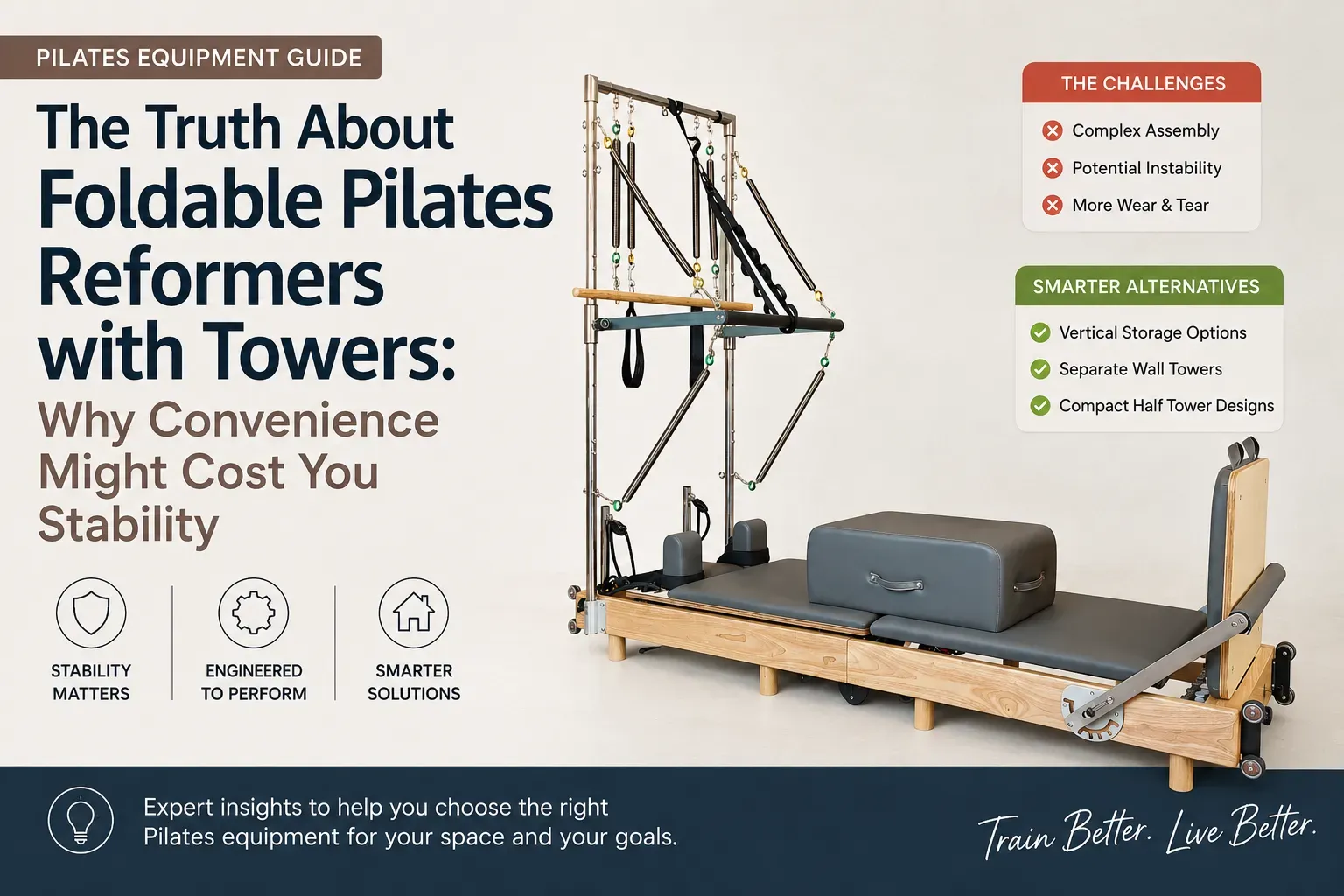
The Truth About Foldable Pilates Reformers with Towers: Why Convenience Might Cost You Stability
Introduction
As home Pilates continues to grow worldwide, more users are searching for equipment that combines professional functionality with space-saving convenience.
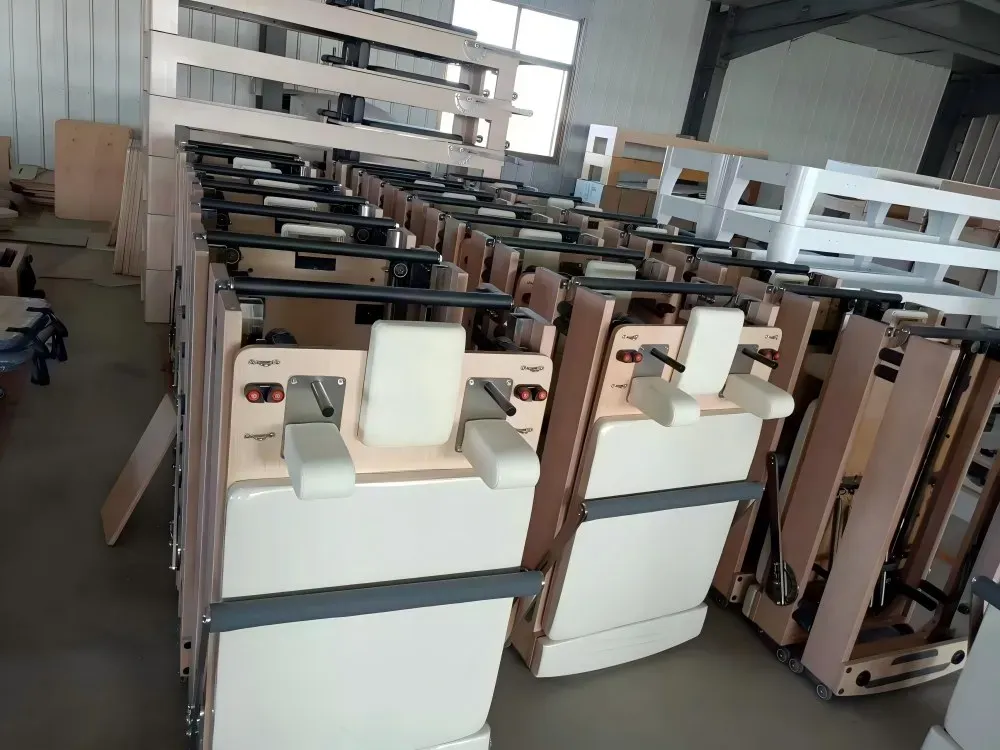
One search trend has become especially popular:
At first glance, it sounds like the perfect solution.
Users want:
- A compact machine
- Full-body training capability
- Cadillac-style exercises
- Easy home storage
- Professional studio experience
But from a manufacturing and structural engineering perspective, there is a hidden conflict inside this idea.
In reality, combining a foldable frame with a tower system often creates compromises in stability, durability, and long-term user experience.
This article explains why.
Not to discourage buyers — but to help users choose the right Pilates equipment based on how machines are actually built and used.
Why Users Want Foldable Reformers with Towers
The demand itself makes complete sense.
Most home Pilates users are trying to solve one major problem:
Limited space.
Many apartments, home gyms, and multifunction rooms simply cannot fit a full commercial reformer permanently.
At the same time, users still want advanced exercises such as:
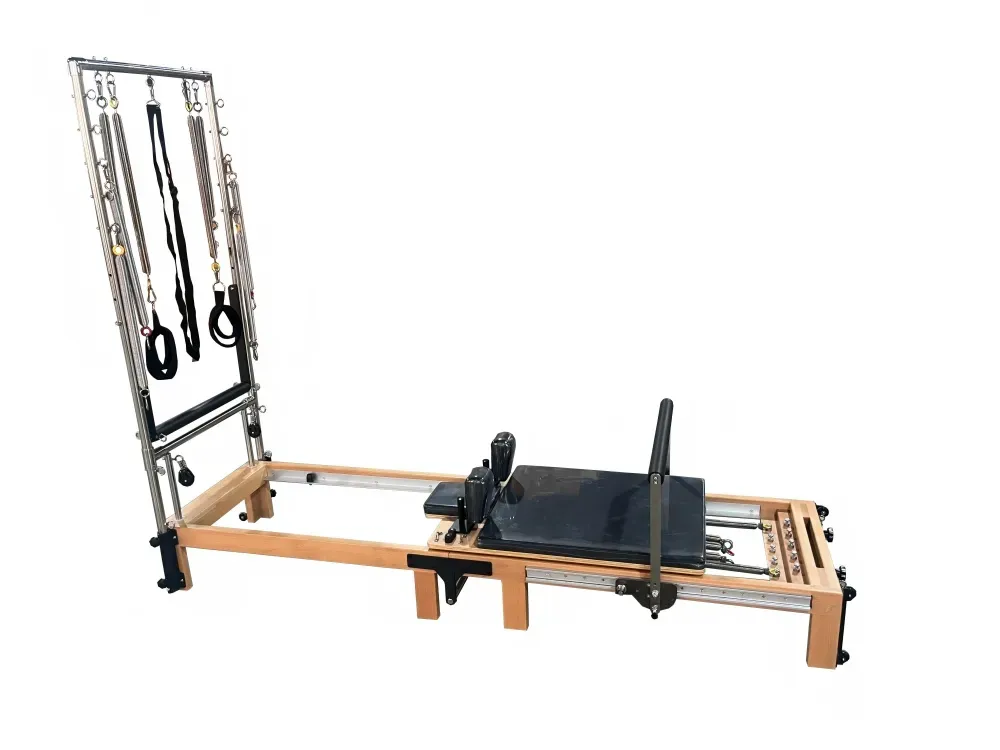
- Leg springs
- Arm springs
- Tower-assisted stretching
- Cadillac-inspired movements
- Rehabilitation exercises
- Vertical resistance training
So naturally, people search for:
“Can I have a reformer that folds AND includes a tower?”
The answer is:
Technically yes.
But structurally, there are important trade-offs.
The Structural Conflict Between Folding Frames and Towers
A Pilates reformer and a tower system place very different demands on a machine.
A Foldable Reformer Prioritizes:
- Mobility
- Compact storage
- Lightweight structure
- Hinged connection points
- Easy transportation
A Tower System Prioritizes:
- Rigidity
- Stability
- Vertical resistance
- High tension support
- Minimal frame movement
These two goals naturally conflict with each other.
Why Towers Create More Structural Stress
A standard reformer mainly handles horizontal movement.
But once a tower is added, the machine experiences:
- upward pulling force
- side tension
- rotational leverage
- repeated resistance loading
This changes the entire stress distribution of the frame.
The tower essentially turns the reformer into a semi-Cadillac system.
That means the machine requires:
- stronger joints
- reinforced support areas
- higher material precision
- better frame integrity
When folding hinges are introduced into this structure, stability can become compromised over time.
The Hidden Problem with Foldable Connection Points
From a manufacturing perspective, every folding mechanism introduces:
- additional joints
- moving hardware
- tolerance variation
- long-term wear points
In Pilates equipment, precision matters.
Especially during controlled movements where users expect:
- smooth carriage motion
- quiet operation
- stable spring resistance
- balanced alignment
Even slight frame movement can affect the workout experience.
This becomes more noticeable when a tower is attached.
Because tower springs continuously apply leverage to the upper structure, small movements at folding points may gradually lead to:
- wobbling
- squeaking
- instability
- loosened hardware
- frame misalignment
CNC Precision and Long-Term Durability
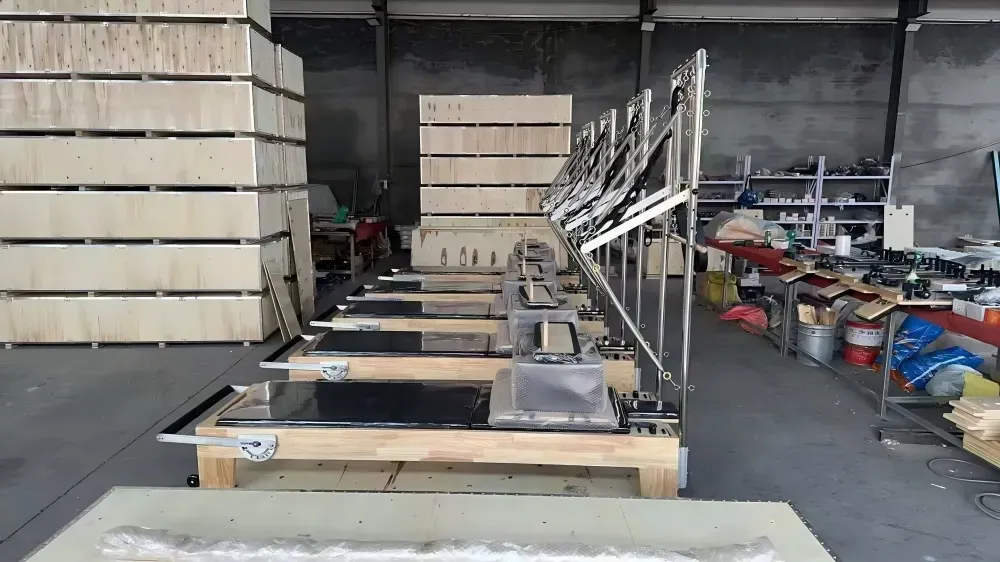
High-quality Pilates equipment relies heavily on CNC precision manufacturing.
In professional production environments, wood and metal components are machined with tight tolerances to ensure:
- alignment accuracy
- balanced movement
- structural consistency
- smooth glide performance
However, foldable designs naturally introduce more variables.
Over time:
- repeated folding
- transport vibration
- tower loading
- user assembly
can increase stress around hinge and connection areas.
This is especially important for wooden reformers, where long-term structural integrity depends on consistent load distribution.
From a factory engineering perspective, combining a folding frame with a high-tension tower system is always a compromise between portability and rigidity.
The Reality Most Home Users Discover Later
Many buyers imagine they will fold the machine after every workout.
But in real-world use, that rarely happens long term.
After the first few weeks, many users leave the reformer permanently assembled because:
- towers are heavy
- setup takes time
- spring adjustments become inconvenient
- repeated assembly reduces workout motivation
This is one of the biggest hidden truths in the home Pilates market.
Most users searching for “foldable reformers” are actually searching for:
- cleaner room layout
- space efficiency
- easier storage
- less visual bulk
Not necessarily frequent folding itself.
This distinction is extremely important when choosing equipment.
Is a Foldable Reformer with Tower Bad?
Not necessarily.
For some users, it can still be a practical solution.
Especially for:
- light home use
- beginner Pilates practice
- occasional workouts
- temporary fitness spaces
However, users should understand the trade-offs clearly before purchasing.
If your priorities are:
- maximum stability
- studio-level performance
- long-term durability
- advanced tower exercises
- heavy daily usage
then a fully foldable tower system may not be the ideal choice.
Better Alternatives for Space-Saving Pilates Studios
Instead of focusing only on “foldable,” many experienced users eventually choose smarter space-saving solutions.
1. Vertical Storage Reformers
Some Stackable reformers are designed to stand vertically for storage without introducing complex folding hinges.
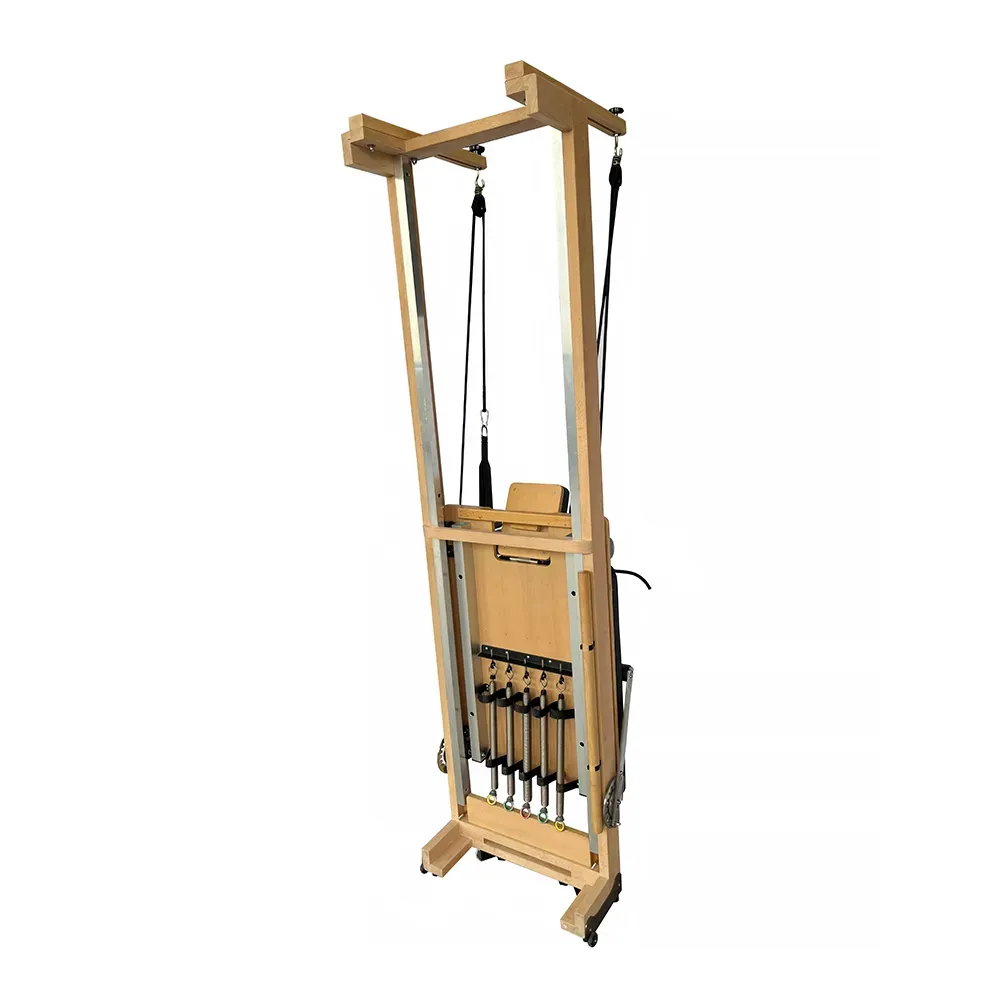
Advantages include:
- better frame rigidity
- faster setup
- improved durability
- cleaner appearance
This is often a better solution for serious home users.
2. Separate Wall Towers or Half Trapeze Systems
Another professional solution is combining:
- with a separate wall-mounted tower
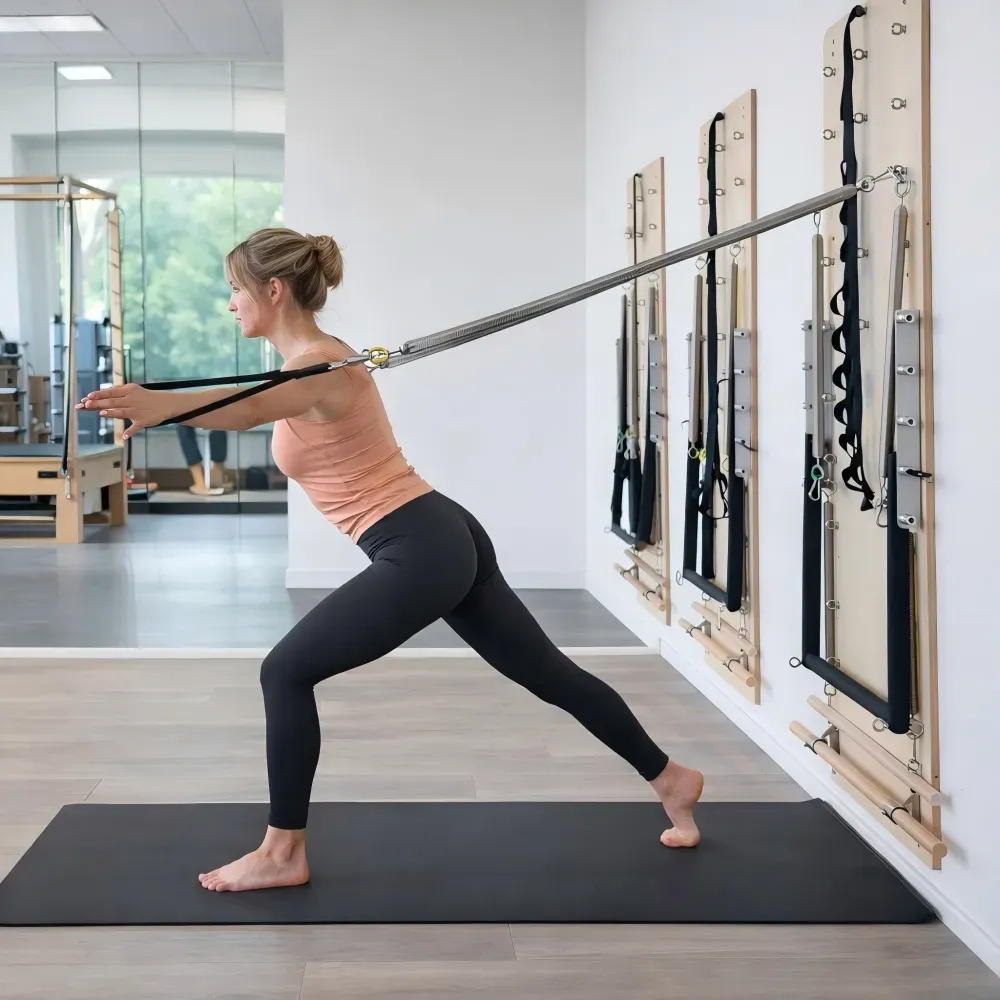
This approach provides:
- better structural stability
- more exercise flexibility
- safer spring loading
- easier room organization
Many professional studios prefer this setup because it separates carriage movement from vertical resistance systems.
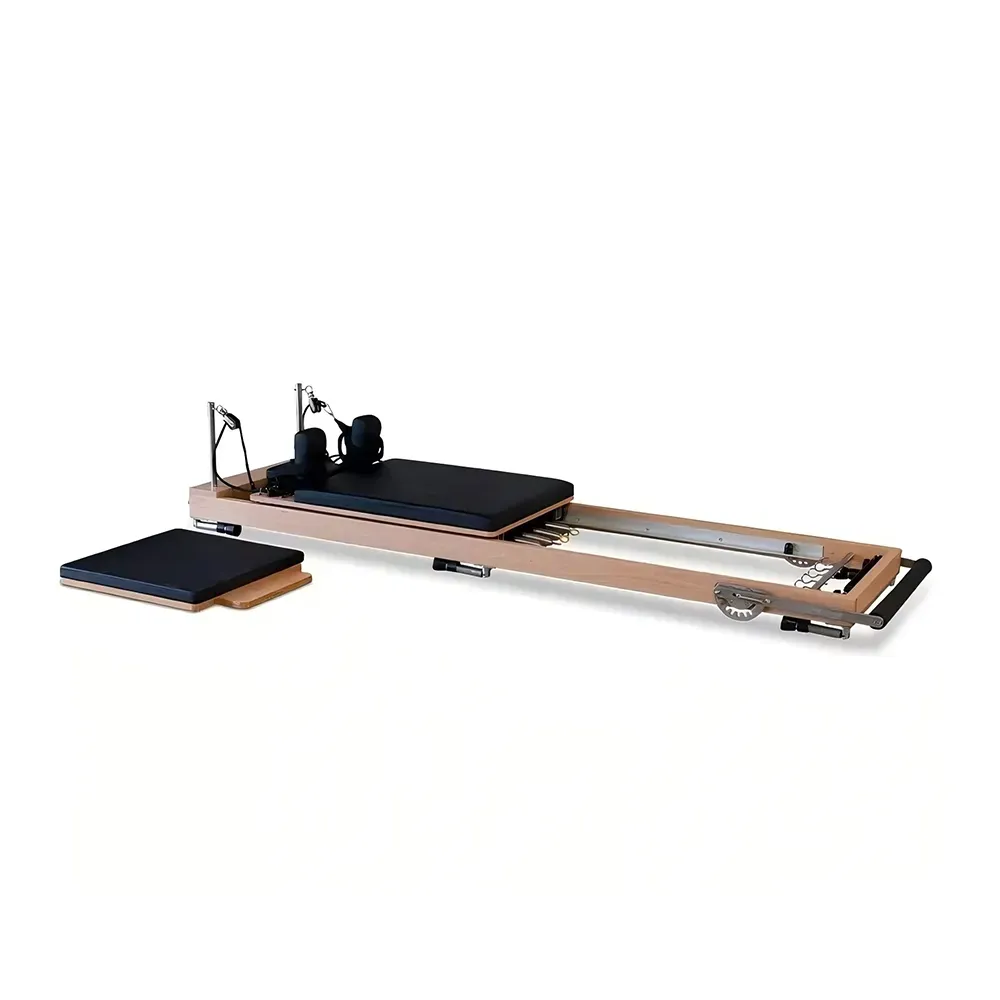
3. Compact Non-Foldable Half Tower Reformers
Some manufacturers now produce compact half tower reformers specifically designed for smaller spaces.
These machines prioritize:
- reduced footprint
- reinforced frame structure
- integrated stability
- smoother movement quality
For users who value performance, this is often the best balance between functionality and space efficiency.
What Professional Buyers and Studios Usually Prioritize
Commercial studios and experienced instructors typically focus less on folding convenience and more on:
- frame stability
- spring consistency
- movement precision
- long-term maintenance
- client safety
This is why most commercial Pilates studios still use:
- integrated frames
- reinforced structures
- non-foldable tower systems
Professional environments prioritize training quality over portability.
Final Thoughts
The idea of a foldable Pilates reformer with tower sounds attractive.
And for certain users, it can absolutely work.
But understanding the engineering reality behind Pilates equipment is important before making a purchase decision.
In manufacturing, every design involves trade-offs.
A folding frame improves portability.
A tower improves training functionality.
Combining both into one machine often means balancing convenience against structural rigidity.
For users who prioritize:
- long-term stability
- professional movement quality
- smoother performance
- lower maintenance
- studio-level experience
alternative space-saving solutions may provide a better investment over time.
The best Pilates equipment is not always the one with the most features.
It is the one that matches how you actually train, store, and use your machine in real life.
You have not enough Humanizer words left. Upgrade your Surfer plan.