
Aug 27, 2026Industry Insights & Trends
Commercial Reformer Pilates Trends for Gyms & Health Clubs
Discover how Reformer Pilates is expanding into gyms, health clubs, leisure centres and hotels, and what commercial equipment buyers should consider in 2026.
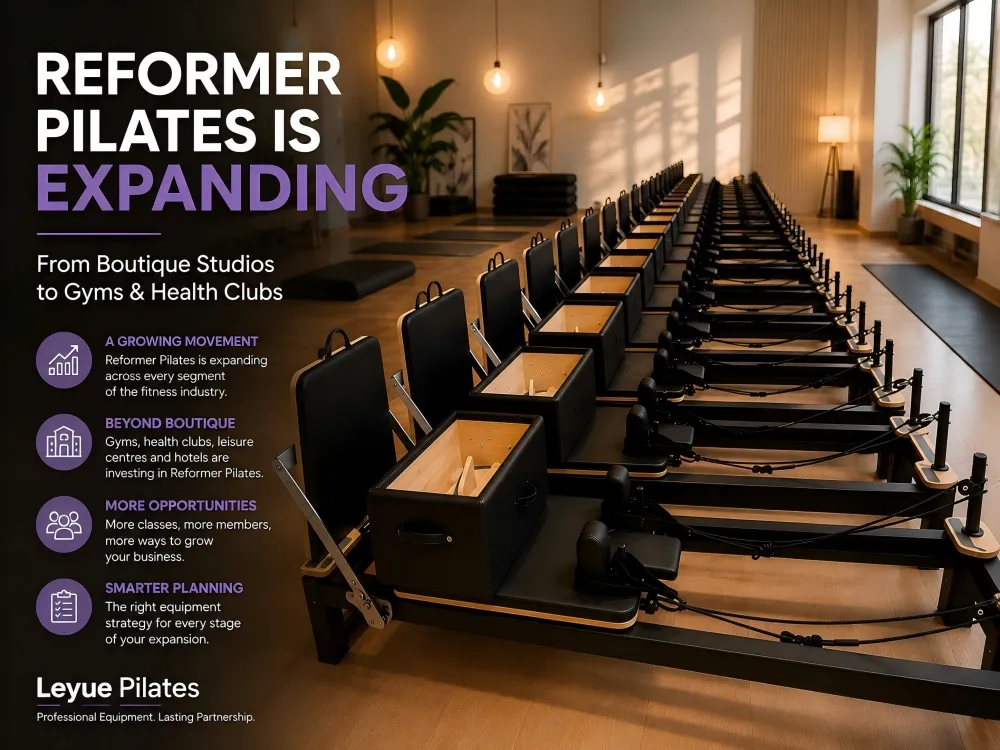
From Boutique Studios to Health Clubs: How Reformer Pilates Is Expanding in 2026
Reformer Pilates has traditionally been associated with boutique Pilates studios, private training spaces, and specialist rehabilitation environments.
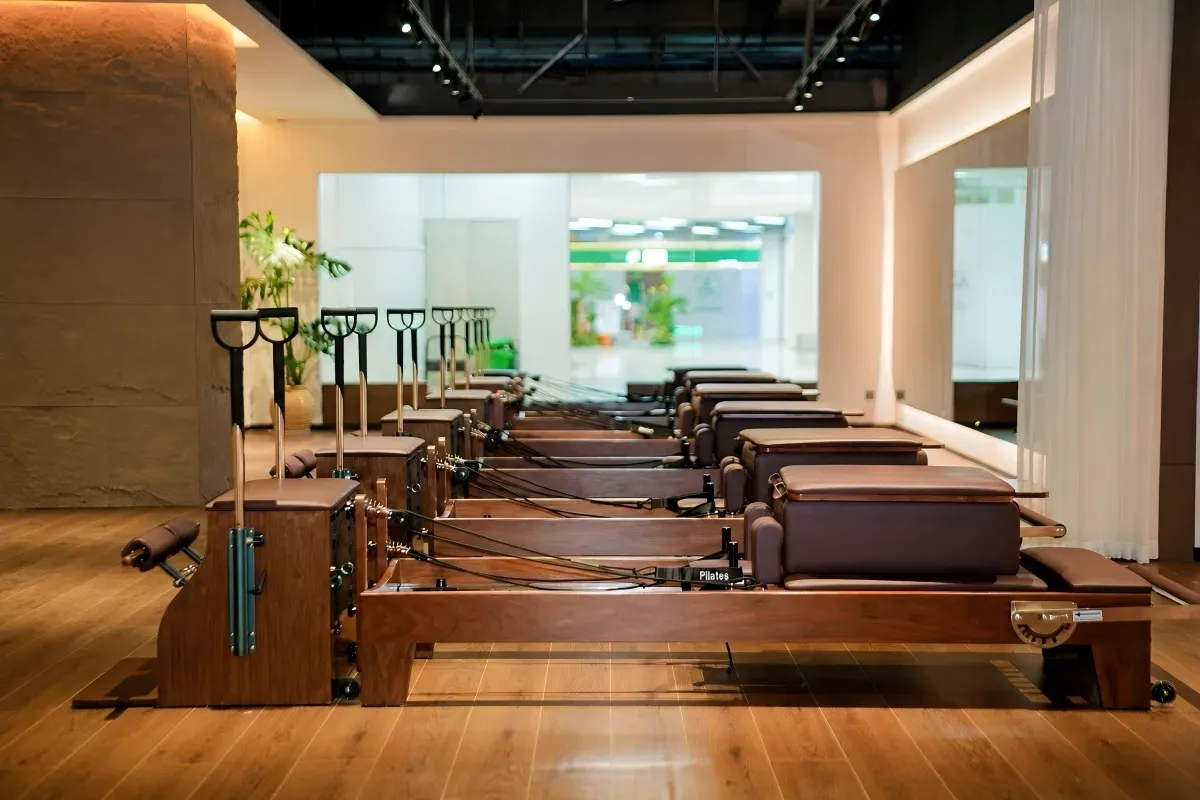
But in 2026, that picture is changing.
Reformer-based training is increasingly appearing in commercial gyms, health clubs, leisure centres, hotel wellness facilities, franchise studios, and premium home fitness spaces.
This expansion is changing not only where Pilates is practiced, but also how equipment is selected.
A boutique studio purchasing eight reformers may have very different priorities from a health club installing 18 machines, a hotel developing a premium wellness space, or a distributor building a retail product line.
For equipment buyers, the question is therefore no longer simply:
“Which Pilates reformer should we buy?”
A better question is:
“Which reformer configuration is most suitable for our business model, usage frequency, space, customers, and long-term expansion?”
This article explores how the commercial Reformer Pilates market is evolving in 2026 and what studio owners, gyms, health clubs, hotels, distributors, and multi-location operators should consider when planning their equipment purchases.
1. Reformer Pilates Is Moving Beyond Boutique Studios
Boutique studios remain an important part of the Pilates market, but they are no longer the only major buyers of reformer equipment.
Dedicated Reformer Pilates areas are increasingly appearing inside:
- Commercial gyms
- Premium health clubs
- Leisure centres
- Hotels and resorts
- Wellness clubs
- Franchise fitness concepts
- Multi-location Pilates brands
This represents an important shift for the equipment industry.
A traditional boutique Pilates studio may purchase 6–12 reformers and operate several instructor-led classes each day.
A larger health club, however, may dedicate an entire room to Reformer Pilates and require 15, 18, 20 or more machines operating repeatedly throughout the day.
The equipment requirements become very different.
Durability, batch consistency, easy adjustment, replacement parts and long-term supply become increasingly important as the number of machines and daily utilization increase.
For buyers planning a new facility, understanding these differences before ordering equipment can reduce both initial purchasing risk and long-term operating costs.
2. Why Are Gyms and Health Clubs Investing in Reformer Pilates?
One reason for the expansion is simple: Reformer Pilates can complement an existing fitness offering without directly replacing traditional strength or cardio training.
A health club may already offer:
- Strength training
- Functional fitness
- Indoor cycling
- Yoga
- HIIT
- Group fitness
Adding Reformer Pilates introduces another training experience that can appeal to members seeking low-impact movement, controlled resistance, mobility, core training and strength-focused exercise.
It can also allow operators to create smaller, more specialized group classes.
For some facilities, Reformer Pilates can become a premium membership benefit or separately charged service.
This creates an interesting business case for gyms.
Instead of competing directly with independent Pilates studios, they can integrate Pilates into a broader fitness and wellness ecosystem.
As this trend develops, equipment designed for high-frequency commercial use will become increasingly important.
Buyers considering this type of project can explore our commercial Pilates reformer equipment to compare different frame materials and configurations for studio and gym applications.
Home Pilates Is Creating Another Growth Opportunity
The expansion of Reformer Pilates is not limited to commercial studios and health clubs. At the same time, more consumers are looking for ways to bring a studio-style Pilates experience into their homes.
However, traditional commercial reformers are large and usually require a permanent training area. This has created growing opportunities for more space-efficient equipment, particularly foldable home reformers that can provide a full-size training platform while requiring significantly less storage space.
For Pilates equipment distributors and fitness brands, this creates another product segment alongside commercial studio equipment. Instead of serving only studio owners, suppliers can build product ranges for different markets:
- Commercial reformers for boutique studios and health clubs
- Premium reformers for professional instructors and home studios
- Foldable reformers for apartments and home fitness users
For buyers targeting this growing segment, our Foldable Pilates Reformer for Home combines a full-length carriage with a space-saving folding structure and is available in Beechwood, Maple and Oak configurations.
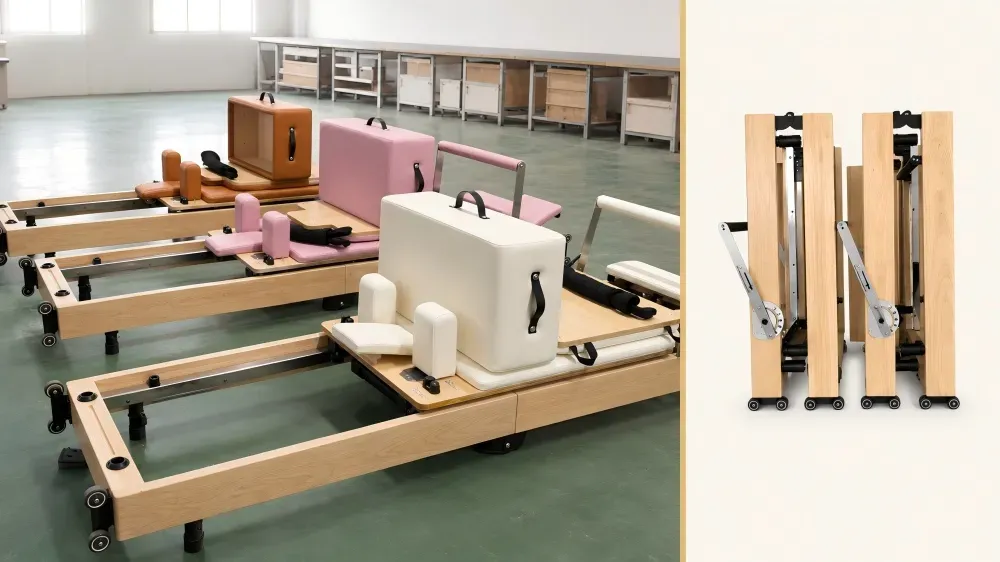
This diversification is important because the next phase of the Pilates equipment market may not be driven by one type of customer. Growth is increasingly coming from boutique studios, larger fitness facilities, distributors and home users at the same time.
3. How Many Reformers Does a Commercial Studio Need?
There is no universal number of reformers that every Pilates facility should install.
The right quantity depends on:
- Available floor space
- Class size
- Instructor model
- Local safety requirements
- Target membership
- Class schedule
- Budget
- Expected equipment utilization
However, several general project sizes are becoming common.
Facility Type | Typical Starting Configuration | Common Application |
|---|---|---|
Small boutique studio | 6–8 reformers | Small-group / semi-private classes |
Standard Pilates studio | 10–12 reformers | Regular group classes |
Larger boutique studio | 12–16 reformers | Higher class capacity |
Gym / health club | 15–20+ reformers | High-frequency commercial operation |
These figures should be treated as planning references rather than fixed rules.
For example, a premium studio may deliberately install fewer reformers to create more space between clients, while a high-volume fitness club may prioritize class capacity.
We discussed this topic in more detail in our guide to planning a 12–16 reformer Pilates studio, including equipment configuration and studio planning considerations.
Why this matters when requesting a quotation
Buyers sometimes request only a single-unit price during the early stages of a project.
For commercial projects, however, the total solution matters more.
A 15-machine project may require not only 15 reformers but also:
- Sitting boxes
- Jump boards
- Platform extenders
- Spare springs
- Replacement ropes
- Straps
- Carriage wheels
- Pulleys
- Hardware kits
Planning these components together can reduce future downtime and make international after-sales support easier.
4. Commercial Buyers Have Different Priorities From Home Users
A reformer that performs well during occasional home workouts does not necessarily meet the requirements of a machine used for multiple commercial classes every day.
For a professional facility, buyers should evaluate several areas beyond appearance and initial price.
Frame stability
The frame should remain stable during repeated carriage movement and different exercises.
This becomes especially important when the equipment is used by clients of different heights, weights and experience levels throughout the day.
Smooth and quiet carriage movement
Noise is becoming an increasingly important consideration, particularly for:
- Boutique studios
- Hotels
- Wellness centres
- Premium health clubs
Buyers should evaluate carriage movement, wheels, bearings, rails and overall structural vibration.
Whenever possible, ask the supplier for real, unedited operating videos, rather than relying only on product photographs.
Easy adjustment
In group classes, one machine may be used by several clients during the day.
Footbar positions, ropes, headrests and other adjustable components should therefore be intuitive and reliable.
Replacement parts
Springs, ropes, straps and wheels are consumable or wear components.
A commercial buyer should ask:
Will these parts still be available several years after the initial purchase?
For a studio with 15 machines, losing the use of even one reformer during a fully booked class can affect operating capacity.
5. Why Aluminum Reformers Work Well for Many Commercial Projects
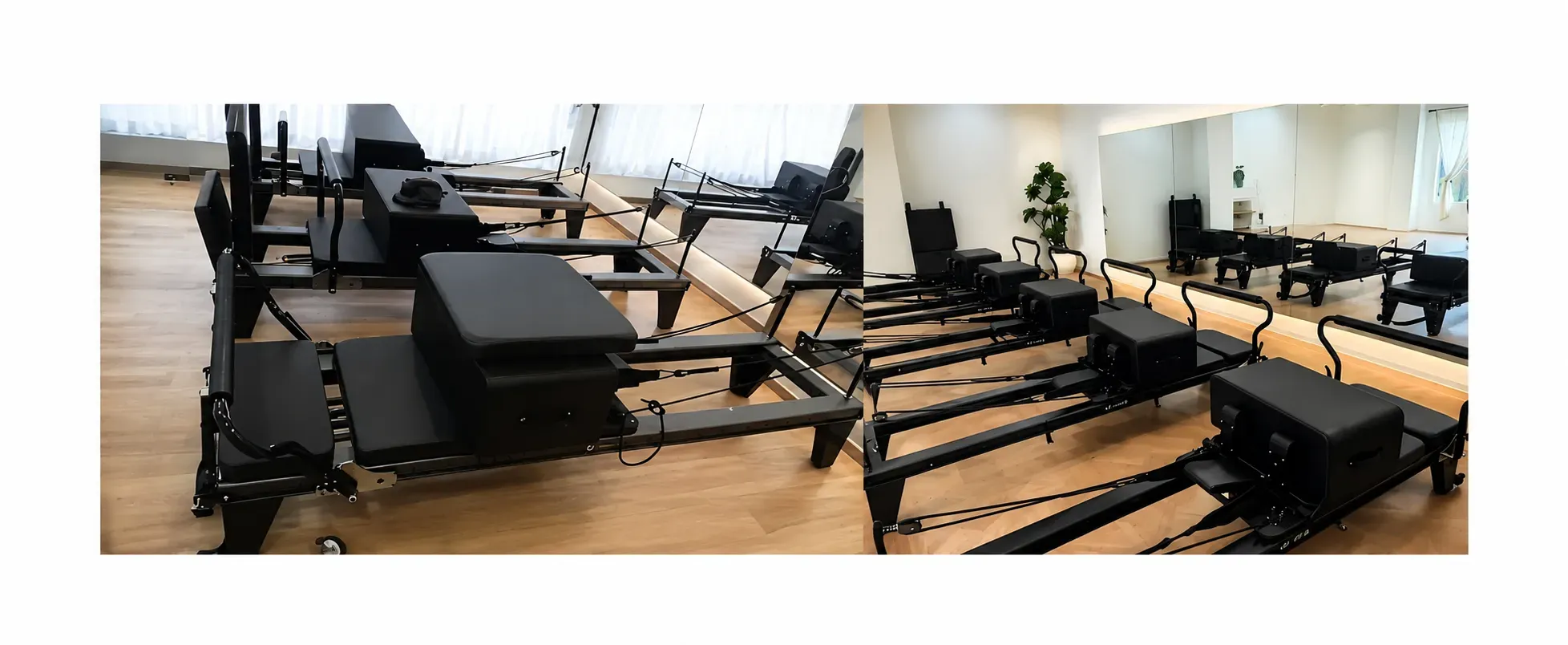
There is no single frame material that is best for every Pilates facility.
However, aluminum reformers have become a practical choice for many modern commercial studios and fitness facilities.
They can offer several advantages for larger projects:
Consistent production
For multi-machine installations, consistent frame dimensions and component positioning are important.
This becomes even more important for franchise and multi-location projects.
Commercial appearance
Black, white and custom-finished aluminum frames can integrate easily into modern fitness environments.
Maintenance
A well-designed aluminum structure can provide a practical balance between strength, maintenance and long-term commercial use.
Repeatability
If a gym opens a second location one year later, standardized aluminum models can be easier to reproduce consistently across different production batches.
Pilates studios, commercial gyms, health clubs, franchise projects and multi-location operators.
For larger projects, buyers should still compare the complete specification rather than evaluating the frame material alone.
Rails, carriage wheels, bearings, springs, upholstery, foam and adjustment mechanisms all contribute to the final user experience.
6. Premium Studios, Hotels and Wellness Clubs Have Different Priorities
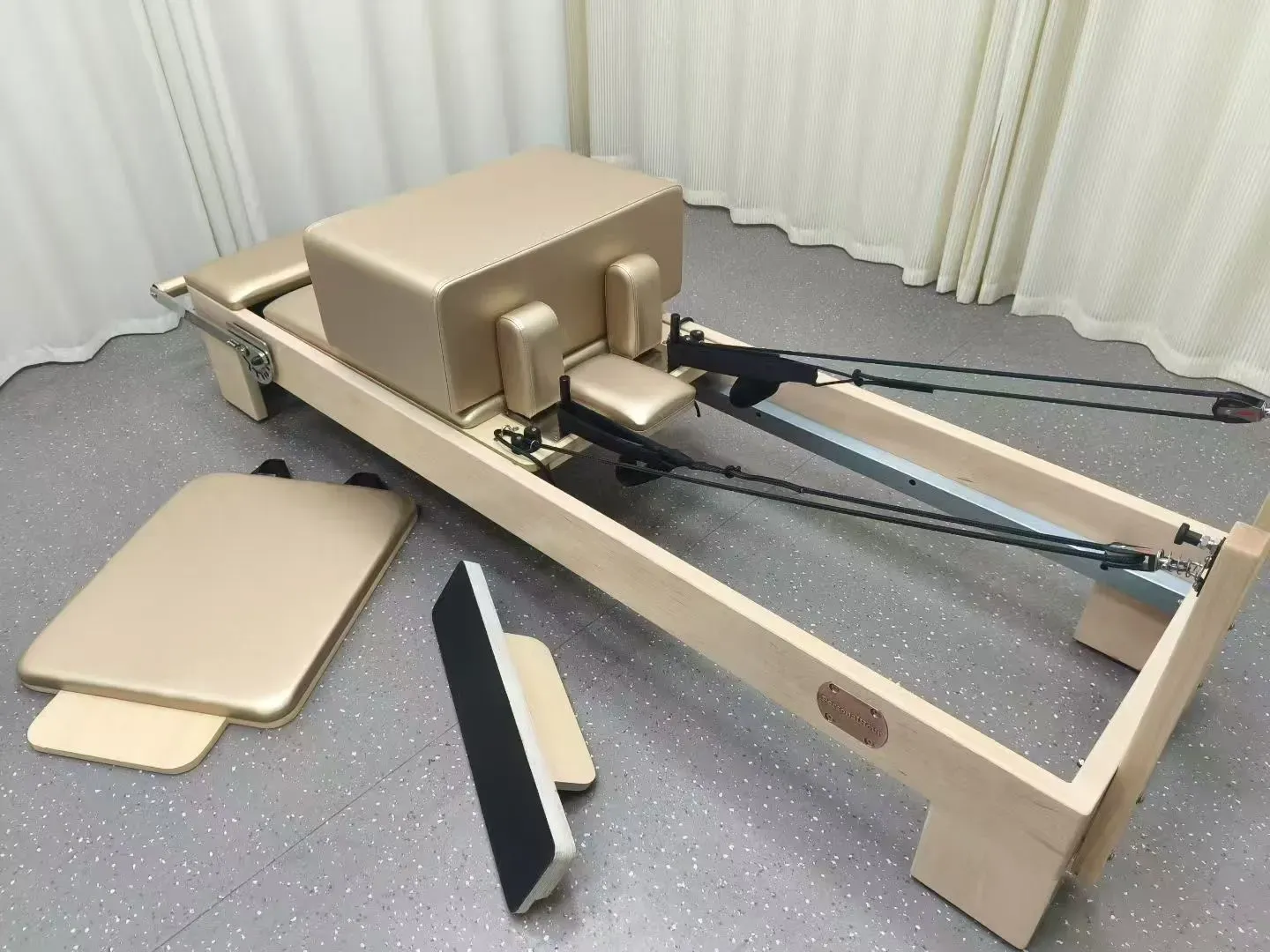
Not every commercial buyer should choose the same equipment.
A premium boutique studio or luxury hotel may place significantly more emphasis on interior design and customer experience.
For these environments, the reformer is not only exercise equipment.
It is also part of the space.
That makes factors such as the following increasingly important:
- Wood grain and finish
- Upholstery texture
- Upholstery color
- Frame color
- Quiet operation
- Surface finishing
- Visual consistency
- Overall interior compatibility
This is one reason why maple and other premium wooden reformers remain popular in boutique and wellness environments.
Natural wood combined with beige, cream, brown or other neutral upholstery can create a softer appearance than traditional commercial gym equipment.
Buyers planning this type of project can compare our wooden and commercial Pilates reformer options when deciding between wooden and aluminum frame systems.
The correct choice should depend on the positioning of the facility—not simply which material is more expensive.
7. Virtual and Self-Guided Pilates Could Influence Future Equipment Design
Another interesting development is the gradual introduction of virtual and on-demand instruction into Reformer Pilates environments.
Some fitness operators are experimenting with combinations such as:
Instructor-led classes during peak hours + Virtual or on-demand sessions during other periods
This may allow operators to increase equipment utilization without scheduling an instructor for every session.
If this model grows, it could influence future equipment requirements.
A reformer used in a partially self-guided environment should ideally have:
- Intuitive adjustments
- Clearly identified spring resistance
- Easy-to-understand safety labels
- Consistent machine configuration
- Clear setup instructions
Digital integration does not necessarily require expensive screens built into every machine.
A much simpler solution can sometimes work.
For example, an OEM customer can add a branded QR code to the machine or instruction card.
The QR code can link users to:
- Exercise tutorials
- Safety instructions
- Studio training videos
- Membership platforms
- Apps
- Brand websites
For private-label equipment companies, this creates an additional connection between the physical product and their digital content.
8. Spare Parts Should Be Planned Before the Studio Opens
Spare parts are often discussed only after equipment has already been installed.
For commercial facilities, this is not ideal.
A better approach is to identify the most important wear components during the initial equipment purchase.
Depending on the machine design, a commercial spare parts package might include:
- Reformer springs
- Carriage wheels
- Ropes
- Straps
- Pulleys
- Common bolts and hardware
- Frequently adjusted components
The appropriate quantity depends on the number of machines and expected usage.
A six-machine boutique studio may require only a small spare kit.
A 20-machine health club may benefit from keeping a more comprehensive inventory on site.
For international buyers, this can be particularly valuable because shipping a small replacement component individually by express courier can sometimes cost more than the component itself.
A simple principle for commercial operators
Spare parts planning should begin when the equipment is purchased—not when the first machine goes offline.
This is especially important for facilities operating several classes per day.
9. Multi-Location Operators Need More Than a Good First Order
The rapid expansion of Pilates franchise concepts creates another challenge for equipment purchasing.
Imagine a brand opening its first studio with 12 reformers.
Twelve months later, it opens another three locations.
The operator may expect the new machines to match the originals in:
- Frame dimensions
- Upholstery color
- Springs
- Footbar design
- Carriage height
- Ropes
- Hardware
- Branding
This requires more than simply keeping a product name in a catalogue.
For repeat commercial projects, suppliers should maintain clear product specifications and component records.
Buyers should therefore ask prospective manufacturers:
Can you reproduce the same configuration for our future locations?
This is particularly important for franchise studios, distributors and regional Pilates chains.
Long-term consistency can ultimately be more valuable than obtaining the lowest possible price on the first order.
10. Commercial Reformer vs. Foldable Home Reformer
The expansion of Reformer Pilates is happening at both ends of the market.
Commercial facilities are installing more machines, while consumers are increasingly interested in practicing Pilates at home.
But the purchasing criteria are different.
A commercial reformer typically prioritizes:
durability → stability → adjustment → maintenance → spare parts.
A home reformer may prioritize:
compact storage → foldability → appearance → easy installation → packaging.
This is why distributors should avoid trying to serve every customer with one reformer model.
A more complete product portfolio may include:
Foldable Home Reformer
For home users, online retail and compact spaces.
Economic Commercial Reformer
For price-sensitive studios and developing markets.
Commercial Aluminum Reformer
For mainstream studios, gyms and health clubs.
Premium Wooden Reformer
For boutique studios, hotels and wellness facilities.
Reformer with Tower
For professional studios requiring a broader exercise range.
For distributors building a complete product portfolio, our Pilates equipment collection includes commercial, wooden, aluminum and specialized equipment configurations.
11. What Should Buyers Ask Before Ordering Commercial Reformers?
Before choosing a supplier, commercial buyers should look beyond the quotation total.
A useful supplier evaluation should include at least these questions:
Is the machine designed for commercial use?
Ask about the intended usage and main structural materials.
What is included in the warranty?
Clarify whether the warranty applies differently to:
- Frame
- Springs
- Wheels
- Bearings
- Ropes
- Upholstery
Are replacement parts available?
Ask not only whether spare parts are available today, but whether the supplier intends to support the model long term.
Can the same configuration be reordered?
This is essential for franchises and expanding studios.
Can the supplier provide real operating videos?
Videos can help buyers evaluate:
- Carriage noise
- Wheel movement
- Spring noise
- Vibration
- Footbar adjustment
- General operation
What is the packed volume?
For international projects, CBM can significantly affect the landed cost.
A slightly cheaper machine with inefficient packaging may ultimately cost more after international freight.
Can the equipment be customized?
Commercial buyers may require:
- Custom upholstery colors
- Frame colors
- Logo plates
- Upholstery branding
- Branded manuals
- Custom packaging
How will the equipment be delivered?
For a 12–20 machine project, buyers should understand whether the quotation is:
EXW / FOB / CIF / DDP
and whether unloading, customs clearance and final delivery are included.
12. Equipment Selection Should Follow the Business Model
The growth of Reformer Pilates does not mean every facility should buy the same machine.
A 20-reformer health club and an eight-reformer luxury boutique studio may both operate commercial Pilates classes, but their priorities can be completely different.
A useful purchasing process therefore starts with five questions:
1. Who are your customers?
2. How many classes will the machines operate each day?
3. How many reformers will the space accommodate comfortably?
4. Is your positioning economic, mainstream or premium?
5. Do you plan to open additional locations?
Once these questions are clear, choosing frame material, machine configuration and accessories becomes much easier.
The Future of Commercial Reformer Pilates
Reformer Pilates is no longer a niche equipment category limited to specialist boutique studios.
Its expansion into gyms, health clubs, leisure centres, hotels, franchise concepts and home fitness is creating a broader and more sophisticated equipment market.
For commercial buyers, this means the purchasing decision is also becoming more professional.
Initial machine price will always matter.
But for a studio operating equipment every day, other factors can become equally important:
Commercial durability Smooth and quiet operation Consistent specifications Replacement parts Repeat-order availability International shipping efficiency
As the market becomes more institutional and multi-location operators continue to expand, manufacturers will increasingly be evaluated not simply by whether they can produce a reformer, but by whether they can support the equipment throughout its commercial lifecycle.
Planning a Commercial Pilates Studio?
Leyue Pilates manufactures wooden, aluminum, foldable and customized commercial Pilates equipment for studios, gyms, distributors and international fitness projects.
If you are planning a new Pilates facility, you can send us your:
- Floor plan
- Expected reformer quantity
- Preferred equipment style
- Target market
- Custom color or branding requirements
- Destination country
- Target opening date
We can help evaluate the equipment configuration, accessories, spare parts, preliminary packing requirements and international shipping options for your project.
Explore our Pilates equipment collection or contact Leyue Pilates for a commercial project quotation.