
Aug 12, 2026Product Knowledge & Guides
How Many Reformers Does a Pilates Studio Need?
Planning a Pilates studio? Compare 6–10, 12–16 and 17–24 reformer setups, space planning, equipment packages and studio layouts.
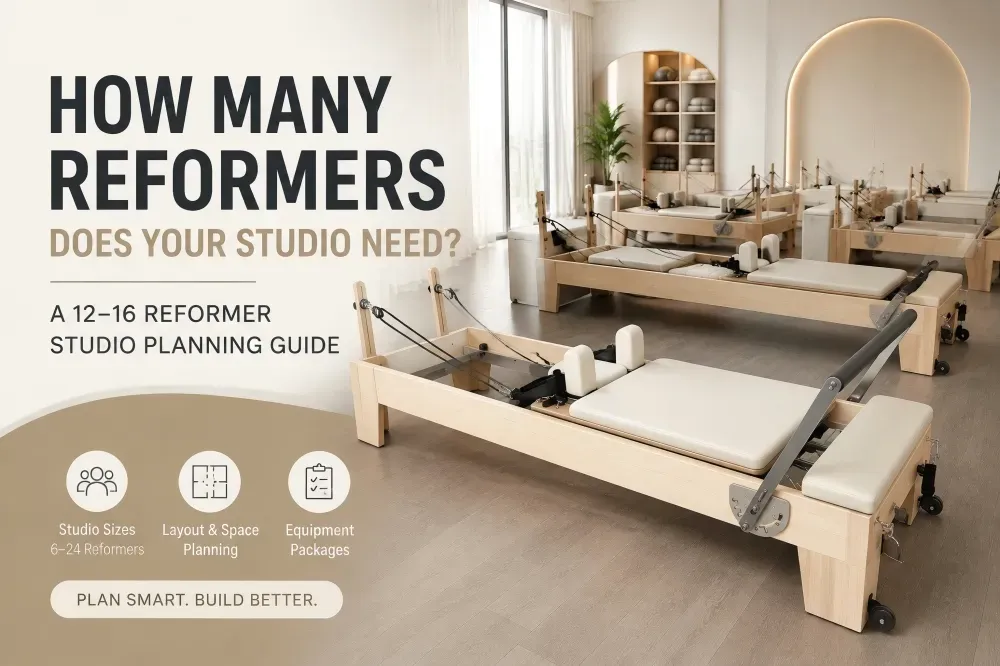
How Many Reformers Does a Pilates Studio Need?
Planning a Pilates studio involves much more than choosing a reformer model.
One of the first questions new studio owners ask is:
How many reformers do I actually need?
For many boutique Pilates studios, 12–16 reformers can provide an effective balance between class capacity, equipment investment, instructor management, and the overall studio experience.
However, there is no single number that works for every studio.
A private or small-group studio may operate successfully with 6–10 reformers, while a larger group-training facility may require 17–24 or more.
The right number depends on several factors:
- Your studio size and floor plan
- Group class capacity
- Target customer and class format
- Equipment budget
- Expected class occupancy
- Instructor workflow
- Private or semi-private training requirements
- Future expansion plans
Before ordering equipment, it is therefore better to start with your business model and available space, rather than simply asking how many machines can fit into the room.
1. How Many Reformers Do Different Pilates Studios Need?
A useful starting point is to divide studios into three general sizes.
Studio Type | Typical Reformer Quantity | Suitable For |
|---|---|---|
Small / Starter Studio | 6–10 | Private, semi-private and small-group training |
Boutique Reformer Studio | 12–16 | Dedicated group Reformer classes |
Large / Multi-format Studio | 17–24+ | Higher-capacity classes and multi-format training |
These numbers are planning references rather than fixed rules.
For example, a premium studio charging higher rates for smaller classes may deliberately choose eight reformers even when the room could accommodate twelve.
Another operator may prefer 16 machines because its business model depends on higher-volume group classes.
The important calculation is not simply:
How many reformers can fit?
It is:
How many reformers can the studio use efficiently and consistently?
2. Why 12–16 Reformers Can Work Well for Boutique Studios
For many dedicated group Reformer studios, the 12–16 machine range is particularly interesting.
It provides meaningful class capacity while still allowing the operator to maintain the more controlled environment associated with boutique fitness.
Better Revenue Potential per Class
Consider a simple example.
If the average class price is $30 per participant:
Class Size | Revenue at Full Capacity |
|---|---|
8 clients | $240 |
10 clients | $300 |
12 clients | $360 |
16 clients | $480 |
This is only a simplified example—actual pricing, occupancy, instructor costs, rent, membership structure, and operating expenses vary significantly by market.
But it demonstrates why equipment quantity matters.
Four additional reformers do not simply mean four additional machines.
They potentially represent four additional bookable spaces in every full class.
At the same time, more machines only create value when demand exists.
A 12-machine studio operating at consistently high occupancy may be financially healthier than a 16-machine studio regularly running half-full classes.
3. Start With Your Class Model
Before choosing the number of reformers, determine how you plan to use them.
A modern Pilates studio may generate revenue from several different class formats.
Group Reformer Classes
These are usually the core offering for boutique Reformer studios.
A 12–16 machine configuration can provide enough capacity for group classes while maintaining a more personalized environment than large-format fitness classes.
Private Pilates
One-to-one sessions can be offered during off-peak hours or in a separate training area.
Semi-Private Sessions
Two or three clients can train together while receiving more individual attention.
Beginner / Introductory Classes
Smaller introductory sessions can help new clients become comfortable with equipment settings, spring resistance, and basic movements before joining regular group classes.
Pilates + Strength
Some newer studios are expanding beyond traditional Reformer programming by combining Pilates principles with resistance, strength, and performance-focused training.
This is also where Hybrid Reformers become increasingly relevant.
The key point is:
The commercial value of a reformer should not be measured only by the number of standard group classes it supports.
A flexible studio can use the same equipment across different class formats throughout the day.
4. How Much Space Does Each Pilates Reformer Need?
This is one of the most important questions when planning a new studio.
The dimensions of the machine itself are only the starting point.
You also need to consider:
- Space between reformers
- Instructor circulation
- Client access
- Footbar and platform access
- Exercise movements extending beyond the machine
- Cleaning and maintenance access
- Emergency routes
- Local accessibility and building requirements
For this reason, studio planning should always use the actual dimensions of the reformer model being purchased.
A typical commercial Reformer may be approximately 2.3–2.5 meters long, but the total operating area required will be larger than the physical machine footprint.
Don't Maximize Machine Count at the Expense of Usability
It can be tempting to fit one or two additional machines into the room.
But if the spacing becomes too narrow, instructors may struggle to move between clients, members may feel crowded, and certain exercises may become difficult to perform comfortably.
For a commercial studio:
Good circulation is more valuable than maximum equipment density.
5. Example: Planning a 12-Reformer Boutique Studio
A 12-machine studio can be a strong configuration for a dedicated boutique Pilates business.
One possible arrangement is:
6 Reformers + Instructor / Circulation Zone + 6 Reformers
However, the final arrangement should depend on the shape of the room, entrances, columns, windows, mirrors, and other architectural features.
A basic 12-Reformer equipment package could include:
Main Equipment
- 12 Commercial Reformers
- 12 Sitting Boxes
- 12 Jumpboards
Group Accessories
- 12 Pilates Rings
- 12 Mini Balls
- 12 Resistance Band Sets
- 12 Pilates Mats
- Foam Rollers
- Yoga Blocks
- Light Dumbbells
- Stretching Straps
Spare Parts
- Spare Spring Set
- Replacement Ropes
- Replacement Straps
- Spare Wheels
- Frequently Used Hardware
For an international equipment order, adding basic spare parts to the initial shipment is particularly useful.
Shipping a small replacement component separately by international courier can sometimes cost more than the component itself.
6. When Does a 16-Reformer Studio Make Sense?
Moving from 12 to 16 reformers can significantly increase class capacity.
However, the additional four machines should be justified by both space and demand.
A 16-reformer configuration may be appropriate when:
- Group classes are the primary business model
- The local market can support larger class sizes
- The studio has sufficient floor space
- Instructor visibility remains good
- There is enough circulation between machines
- The additional equipment does not compromise the premium studio experience
For a new operator without an existing customer base, purchasing more machines simply because the room can accommodate them may not always be the best decision.
This is why studio capacity planning and equipment purchasing should be considered together.
7. Which Reformer Is Best for a 12–16 Machine Studio?
Once the quantity is established, the next question is which type of Reformer best fits the studio.
There is no single answer.
Different equipment suits different commercial concepts.
Commercial Aluminum Reformers
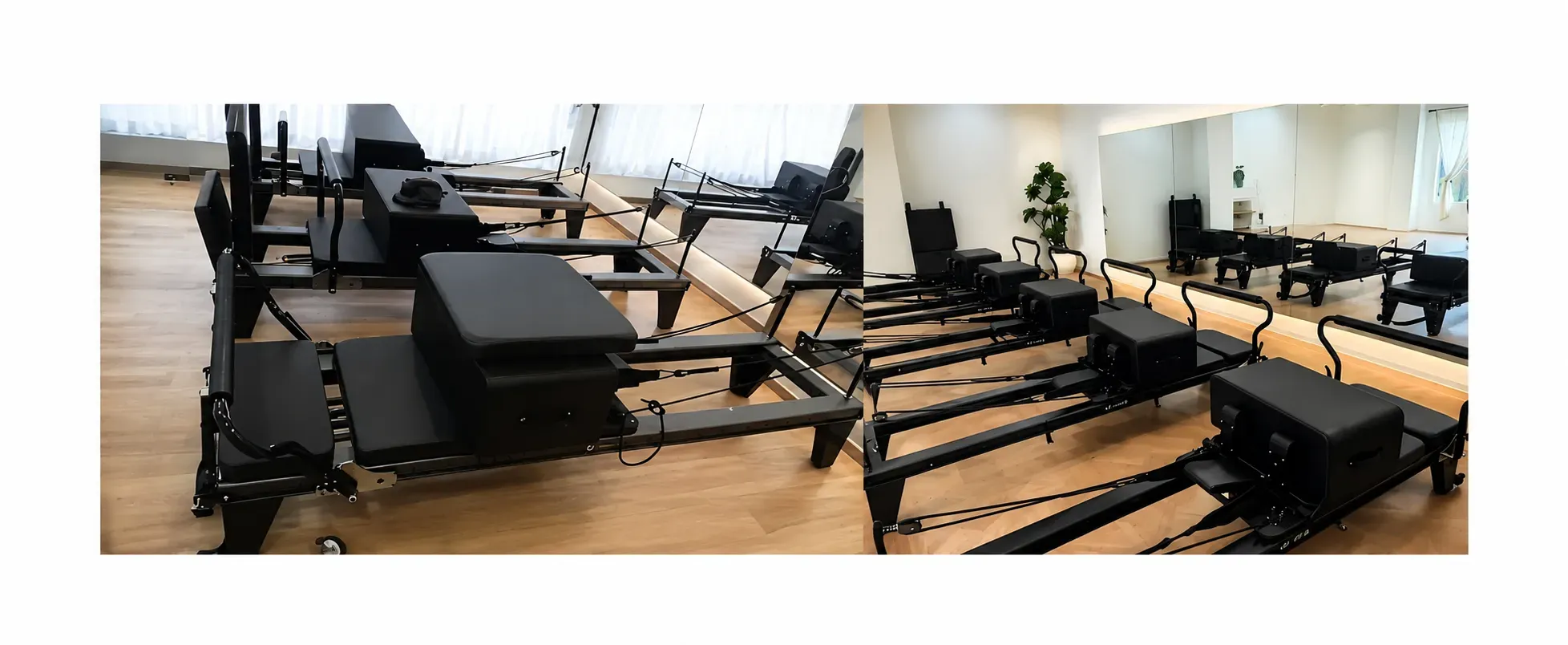
- High-frequency group classes
- Contemporary Pilates studios
- Gyms and fitness clubs
- Commercial training environments
- Multi-location operators
They offer a modern appearance and can be easier to standardize across multiple studio locations.
For studios expecting intensive daily use, commercial durability and replacement-part availability should be prioritized over appearance alone.
Premium Wooden Reformers
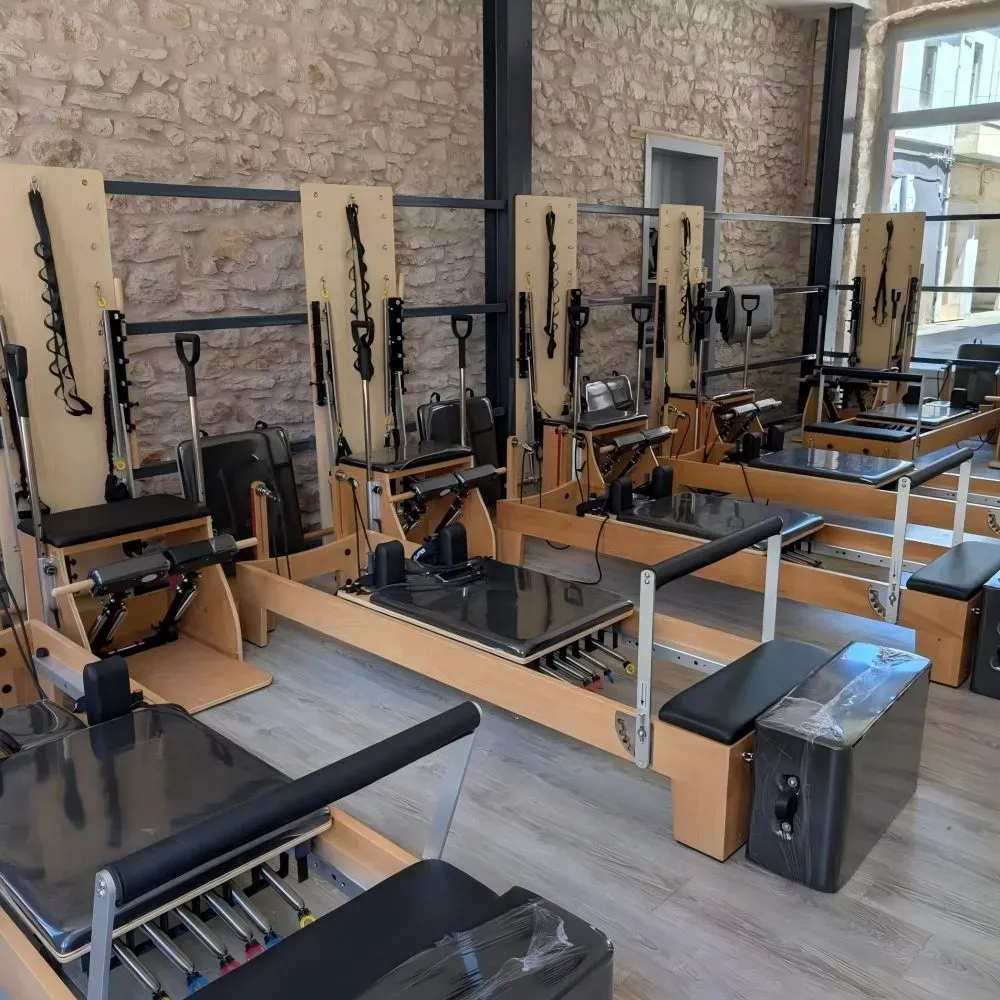
- Boutique Pilates studios
- Luxury hotels
- Wellness centers
- Premium private studios
- Interior-design-focused projects
Natural wood finishes can make the equipment part of the studio's overall visual identity.
Popular options include:
Maple | Natural Oak | Walnut Finish | Solid Walnut
Upholstery colors can also be coordinated with the studio interior.
For example:
Light wood + off-white upholstery
creates a softer wellness-oriented atmosphere, while:
Walnut + black upholstery
can create a stronger luxury or contemporary appearance.
For premium studios, equipment selection is therefore not only a technical decision.
It is also part of the brand experience.
8. When Should You Consider a Hybrid Reformer?
Not every new studio plans to offer only traditional Pilates.
Some operators are developing concepts that combine:
Pilates + Strength + Functional Training + High-Intensity Resistance
For these studios, a Hybrid Reformer may provide greater programming flexibility.
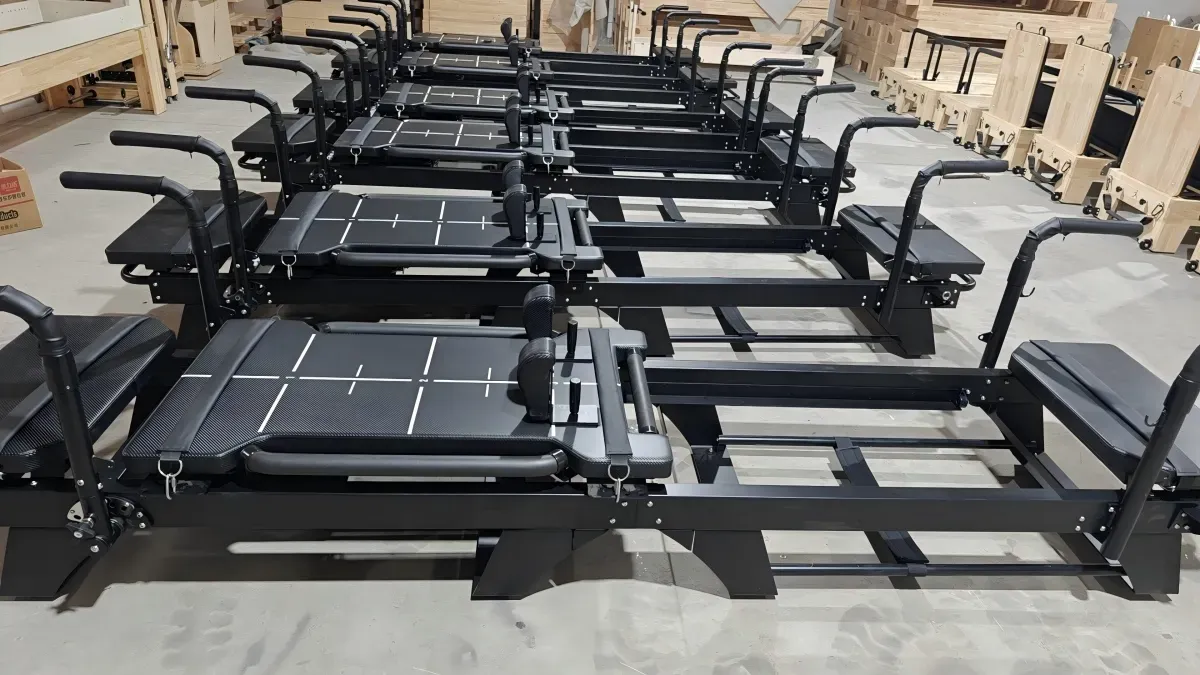
- Larger front and rear platforms
- Multiple standing positions
- Additional handle positions
- Wider resistance configurations
- Extended carriage movement
- Strength-oriented exercises
- Multiple body-position options
The commercial advantage is not simply having more features.
It is:
More class formats from the same studio footprint.
For an operator paying premium commercial rent, the ability to use one training area for multiple class concepts can be valuable.
However, Hybrid Reformers are not automatically the best choice for every studio.
A studio focused primarily on classical or traditional Reformer Pilates may be better served by a conventional commercial Reformer.
The equipment should follow the training concept, not the trend.
9. Don't Budget Only for the Reformers
One of the most common mistakes in new studio planning is calculating the budget based only on machine prices.
The real equipment budget should include:
Reformer Equipment
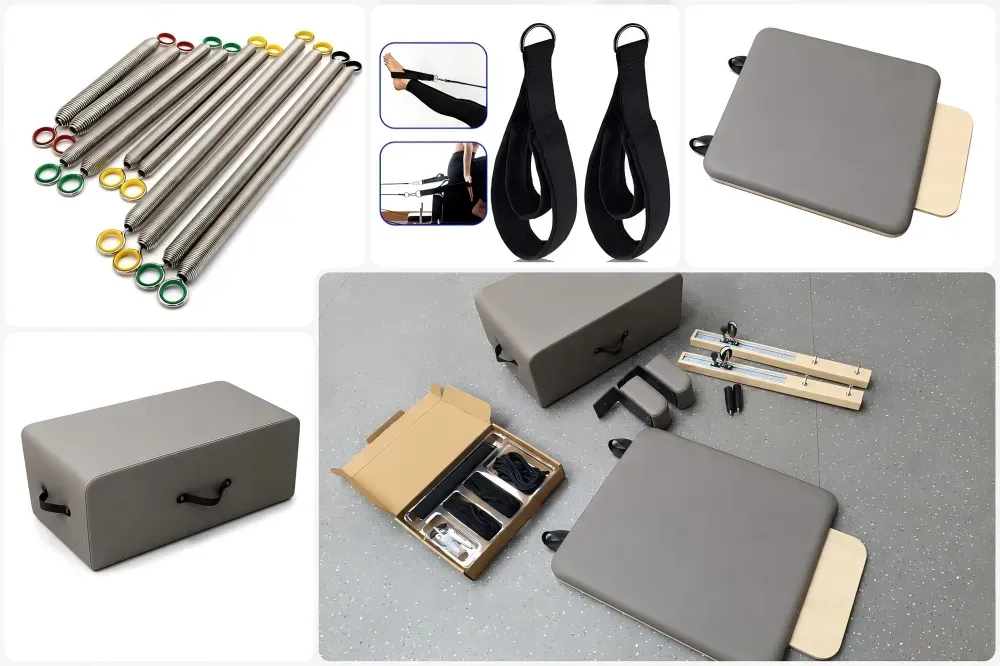
- Reformers
- Sitting Boxes
- Jumpboards
- Platform Extenders where required
Pilates Accessories
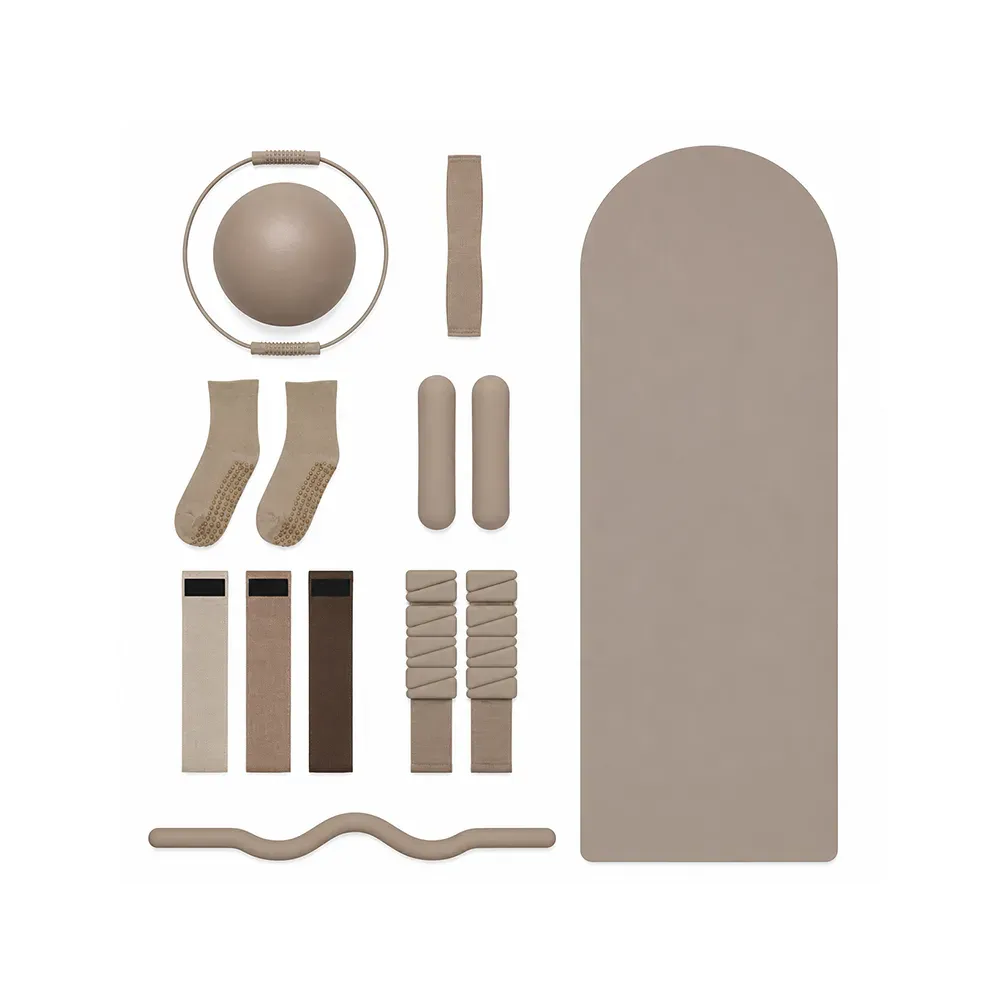
- Rings
- Balls
- Resistance bands
- Mats
- Foam rollers
- Yoga blocks
- Stretching straps
- Dumbbells
Studio Furniture
Depending on the project:
- Reception desk
- Storage cabinets
- Lockers
- Accessory racks
- Benches
Branding & Customization
- Logo
- Upholstery color
- Frame color or wood finish
- Customized accessories
- Packaging or private-label requirements
Spare Parts
Basic maintenance components should also be included in the initial budget.
This gives the studio owner a much more realistic picture of the total equipment investment.
10. Plan the Studio Layout Before Placing the Final Order
This is especially important for 12–16 machine projects.
Before production begins, prepare a floor plan showing:
- Room length and width
- Doors
- Windows
- Columns
- Mirrors
- Reception
- Storage
- Changing areas
- Toilets
- Emergency exits
Then add the actual equipment dimensions.
This helps determine whether 12, 14, or 16 machines are genuinely practical.
It can also reveal issues that are difficult to identify from the total square footage alone.
For example, a large room may still have limited usable training space because of structural columns, irregular walls, or multiple entrances.
A Better Purchasing Process
Instead of:
Choose machine → Order quantity → Plan layout
a better sequence is:
Define Business Model → Review Floor Plan → Select Equipment → Confirm Quantity → Finalize Layout → Order
This reduces the risk of purchasing too many machines—or choosing a model that does not work well with the available space.
11. Plan International Shipping Before Production
For internationally sourced Pilates equipment, logistics should be considered before the order is finalized.
A 12–16 Reformer project represents a substantial shipment.
Before ordering, confirm:
- Packing dimensions per machine
- Number of packages
- Gross weight
- Total shipment CBM
- Shipping method
- Destination port or delivery address
- Customs clearance requirements
- Import taxes and duties
- Delivery vehicle requirements
- Unloading requirements
Pay Particular Attention to Final Delivery
Commercial Reformers can be large and heavy.
Before requesting door delivery, confirm:
Can a large delivery truck access the building?
Is a forklift required?
Who is responsible for unloading?
Will the reformers fit through the entrance?
Is there an elevator if the studio is above ground level?
A shipping quotation alone does not answer these questions.
For studio projects, delivery planning is part of equipment planning.
12. Should You Order All 12–16 Reformers at Once?
For a confirmed studio project, ordering all machines together can offer several advantages:
- Consistent frame finish
- Matching upholstery
- Identical spring configuration
- Consistent branding
- Same production batch
- Simplified shipping
- Lower freight cost per unit in many cases
It can also make future maintenance easier because the machines share the same configuration.
However, not every project needs to start with 12–16 units.
A hotel, rehabilitation center, gym, or first-time operator testing local demand might begin with:
6–8 Reformers
and expand later.
If expansion is planned, ask the manufacturer whether the same specifications, colors, upholstery, springs, and components can be reproduced in future orders.
This becomes especially important for multi-location and franchise studios.
13. What Should You Ask a Pilates Equipment Manufacturer?
Before selecting a supplier for a commercial studio project, ask more than just:
“What is your price?”
A professional equipment evaluation should include:
- Is the Reformer designed for commercial use?
- What materials are used for the frame and major components?
- What spring options are available?
- What warranty is provided?
- Which parts are covered by the warranty?
- Are replacement parts available internationally?
- Can upholstery and frame colors be customized?
- Can the studio logo be added?
- Can the same specifications be reproduced for future orders?
- What are the packed dimensions and gross weight?
- What is the production lead time?
- What export packaging is used?
- What shipping terms are available?
- Can the manufacturer assist with preliminary equipment planning?
For professional studios, after-sales parts availability and specification consistency can be just as important as the initial equipment price.
14. Example Equipment Package: 12 vs. 16 Reformers
Equipment | 12-Reformer Studio | 16-Reformer Studio |
|---|---|---|
Commercial Reformers | 12 | 16 |
Sitting Boxes | 12 | 16 |
Jumpboards | 12 | 16 |
Pilates Rings | 12 | 16 |
Mini Balls | 12 | 16 |
Resistance Band Sets | 12 | 16 |
Pilates Mats | 12 | 16 |
Spare Springs | Recommended | Recommended |
Spare Rope / Strap Kit | Recommended | Recommended |
Custom Logo | Optional | Optional |
Custom Upholstery | Optional | Optional |
Preliminary Equipment Layout | Recommended | Recommended |
The final package should always be adjusted according to the studio's class format.
A traditional Reformer studio will not necessarily require the same equipment package as a Pilates + Strength or Hybrid Reformer studio.
15. Think Beyond Your First Studio
This is particularly important for operators planning to build a brand rather than a single location.
Your first studio establishes the equipment specification that may later be repeated across additional locations.
Consider standardizing:
- Reformer model
- Frame finish
- Upholstery color
- Spring configuration
- Accessories
- Logo position
- Spare parts
- Equipment spacing
- Studio package
Creating a repeatable specification makes future purchasing much easier.
Instead of redesigning every new location from zero, the operator can develop a standardized:
10-Reformer, 12-Reformer or 16-Reformer Studio Package
This is particularly valuable for Pilates chains, franchise concepts, distributors, hotels, and investors planning multiple locations.
So, How Many Reformers Does Your Studio Really Need?
There is no universal answer.
As a general planning reference:
6–10 Reformers
Suitable for smaller studios, private training, semi-private sessions, and lower-capacity group classes.
12–16 Reformers
A strong option for many boutique studios focused on commercial group Reformer classes.
17–24+ Reformers
More appropriate for larger facilities, higher-volume concepts, or multi-format studios where demand supports the additional capacity.
But the final decision should not be based on machine count alone.
Consider:
Business Model + Floor Plan + Class Capacity + Expected Occupancy + Equipment Type + Budget + Logistics + Future Expansion
The goal is not to fit the maximum number of reformers into a room.
The goal is to create a studio where the equipment, space, instructors, and business model work together efficiently.
Planning a New Pilates Studio?
Leyue Pilates provides commercial Pilates equipment and OEM/ODM solutions for boutique studios, gyms, hotels, distributors, and multi-location Pilates businesses.
Our studio equipment solutions can include:
- Commercial wooden and aluminum Reformers
- Hybrid Reformers
- Towers and Cadillacs
- Chairs and barrels
- Pilates accessories
- Custom colors and upholstery
- OEM / private-label branding
- Spare parts
- Export packaging
- International shipping support
If you are planning a 6–10, 12–16, or 17–24+ Reformer studio, send us your floor plan, target equipment quantity, preferred equipment style, and planned opening date.
We can help you evaluate the equipment configuration, preliminary layout, customization, packing, and shipping requirements before the final order.
Plan Your Pilates Studio