
Jun 26, 2026Product Knowledge & Guides
Why Do Pilates Studios Choose Different Reformer Configurations?
Why do some Pilates studios choose all-black reformers while others prefer wood-accent designs? Explore the factors behind different equipment preferences.
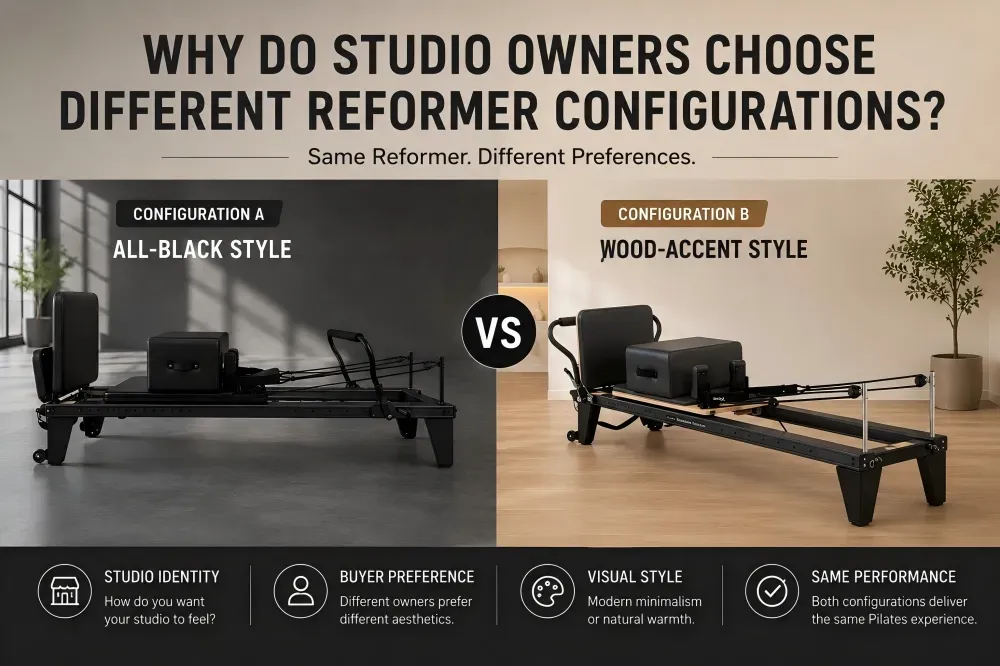
Why Do Pilates Studios Choose Different Reformer Configurations?
A few months ago, a customer was walking through our factory when he stopped in front of two aluminum reformers.
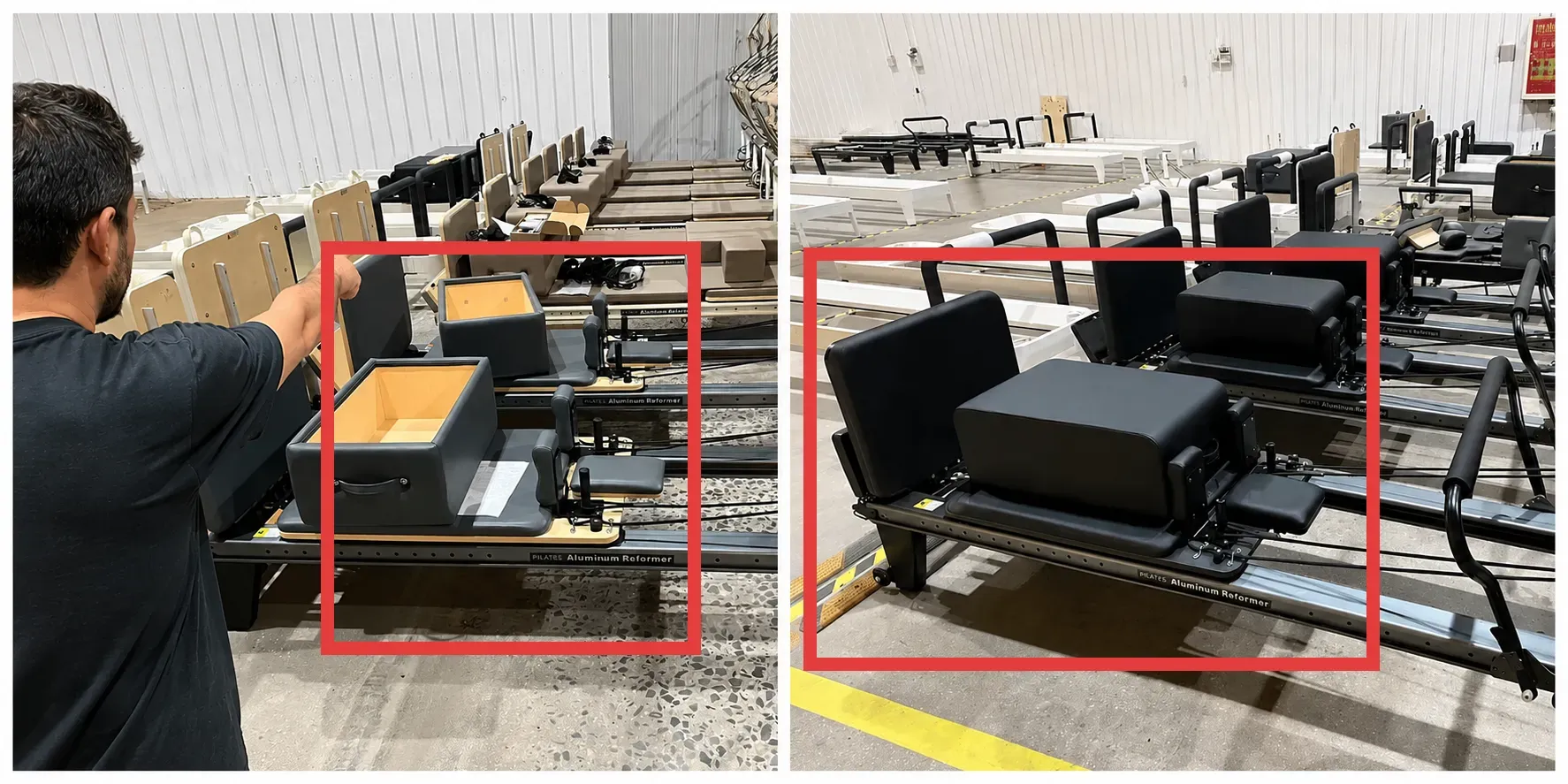
He pointed at them and asked:
"Sophia, these two machines do exactly the same thing, right?"
I smiled and said:
"Yes."
Same aluminum frame.
Same rail system.
Same spring setup.
Same carriage travel.
Same Pilates exercises.
Then he asked a second question:
"So why do some buyers choose this one, while others choose that one?"
Honestly, that's a much more interesting question.
After supplying Pilates equipment to studio owners, distributors, and Pilates brands for many years, I've noticed something:
Most buying decisions aren't driven by functionality alone.
They're driven by preference.
They're driven by studio identity.
And they're driven by the experience a studio owner wants to create for clients.
Let's talk about why.
The Truth: Most Reformer Configurations Perform the Same Job
This is probably the most important point in this entire article.
Many buyers assume that different-looking reformers must offer different functionality.
In reality, that's often not the case.
The two reformers we're discussing here are built on the same aluminum reformer platform.
They share:
- The same frame structure
- The same rail system
- The same spring resistance setup
- The same carriage movement
- The same core Pilates exercises
One is configured with an all-black appearance.
The other combines black upholstery with natural wood accents.
From a performance perspective, they're nearly identical.
From a visual perspective, they're completely different.
And that's where buying decisions become interesting.
Why Appearance Matters More Than Many Buyers Expect
When studio owners compare reformers, the conversation usually starts with specifications.
Questions like:
- What springs are included?
- What is the frame material?
- What warranty do you provide?
- What certifications do you have?
These are important questions.
But there is another question that often gets overlooked:
How does this equipment fit the environment you're trying to create?
Think about it.
The reformers are usually the largest objects inside a Pilates studio.
Clients notice them immediately.
Before they experience the carriage glide.
Before they feel the springs.
Before they attend their first class.
They see the equipment.
And that first impression becomes part of your brand.
Why Some Studio Owners Prefer All-Black Reformers
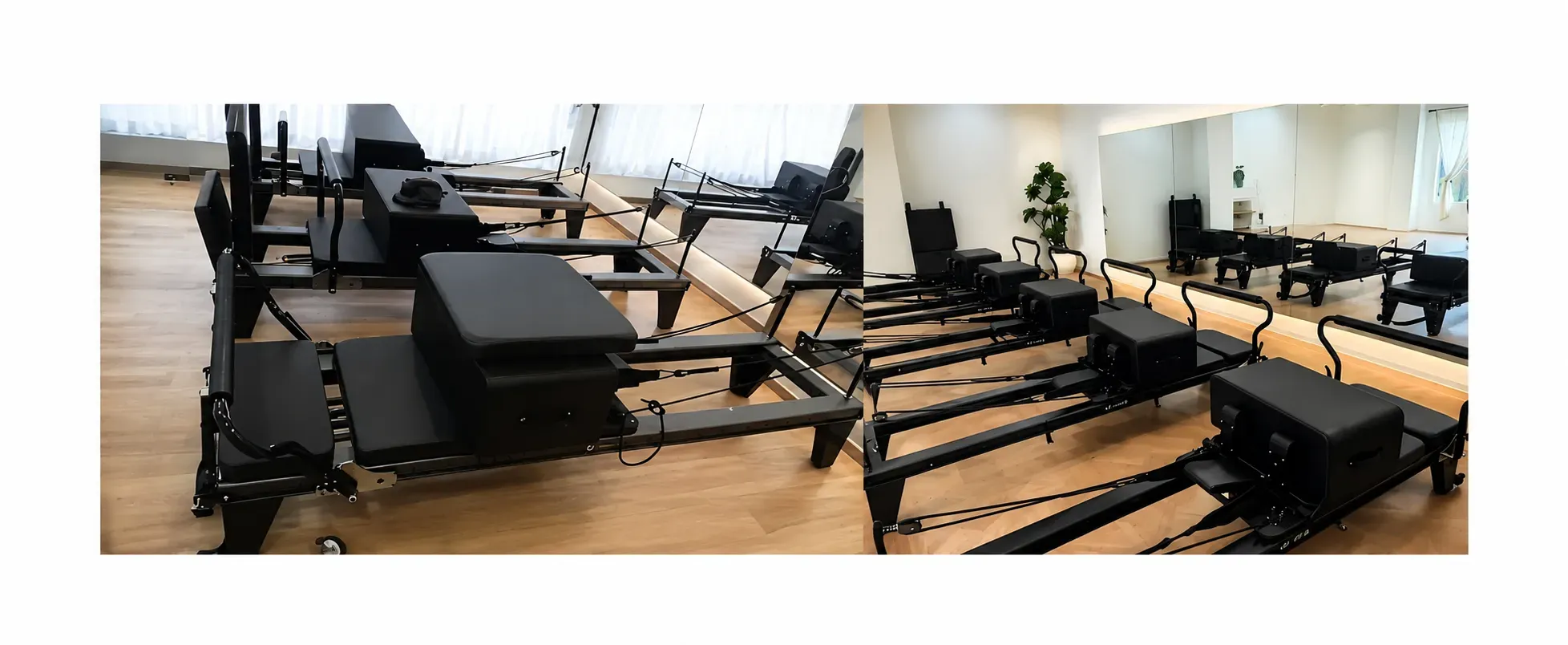
Not because they're stronger.
Not because they last longer.
Simply because some buyers prefer the look.
The all-black configuration often creates an impression of:
- Modernity
- Simplicity
- Minimalism
- Premium positioning
When paired with dark flooring, large mirrors, black accents, and contemporary interiors, the equipment feels like a natural extension of the studio design.
Many boutique fitness brands are moving toward cleaner and more minimalist aesthetics.
For those businesses, the all-black configuration often fits perfectly.
The equipment doesn't just serve a training purpose.
It becomes part of the visual identity of the studio.
Why Others Still Choose Wood-Accent Configurations
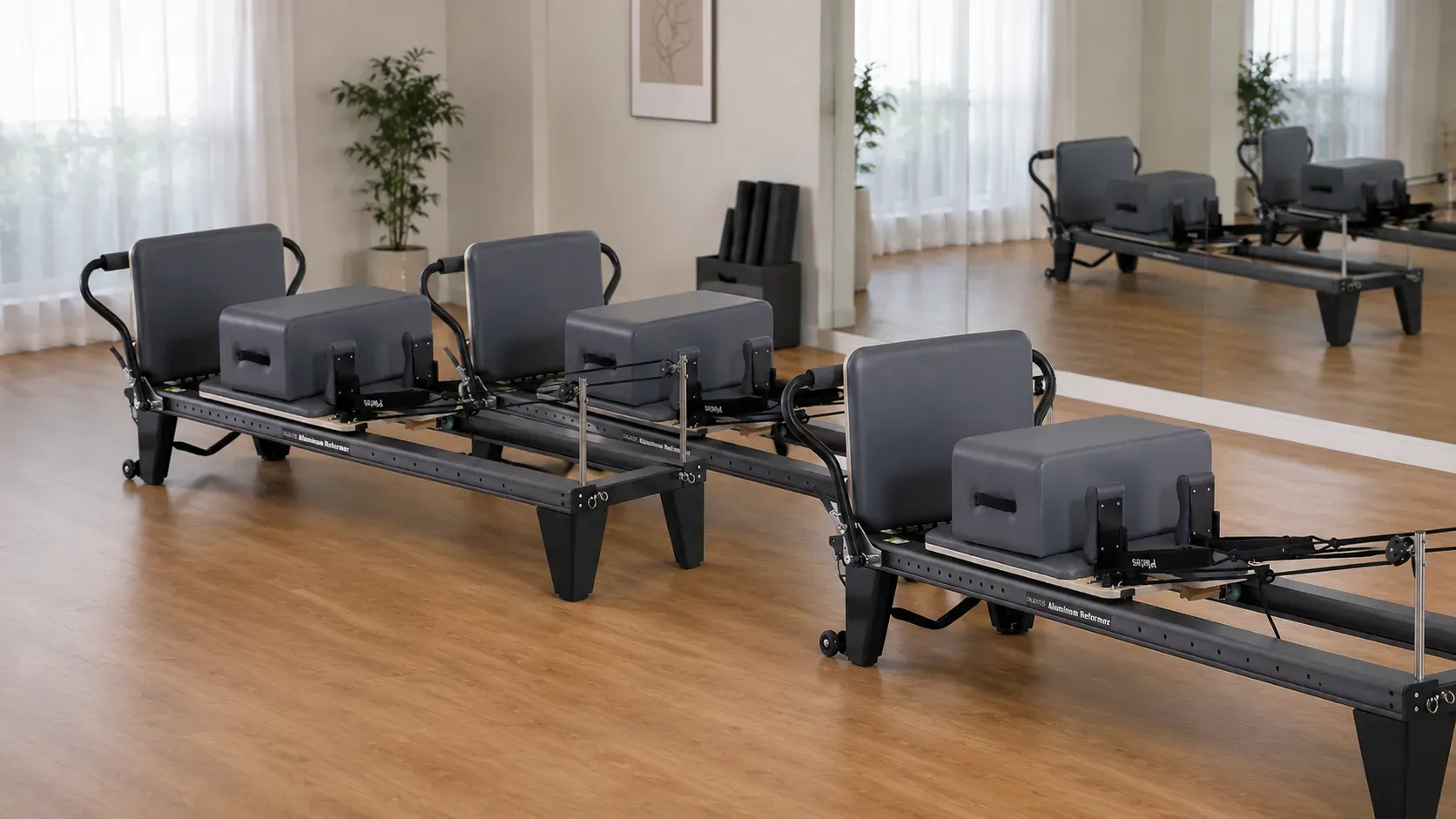
And honestly, I understand why.
Wood changes the feeling of a space.
It introduces warmth.
It softens the appearance of the equipment.
It creates a more welcoming atmosphere.
Some studio owners don't want their space to feel dramatic or ultra-modern.
They want clients to feel relaxed, comfortable, and connected to the traditional roots of Pilates.
Natural wood elements often help communicate that message.
The equipment feels less industrial and more inviting.
Again, neither approach is right or wrong.
They're simply expressing different ideas.
What Experienced Buyers Usually Focus On
One thing I've noticed over the years is that experienced buyers often think differently from first-time buyers.
New buyers tend to focus almost entirely on specifications.
Experienced buyers still care about specifications, but they also think about:
- Studio branding
- Client perception
- Interior design
- Marketing photos
- Social media presentation
They understand that equipment becomes part of the customer experience.
The reformer isn't just a machine.
It's part of the environment clients interact with every day.
That's why two buyers can purchase the same reformer platform and choose completely different configurations.
There Is No Universal "Best" Configuration
This is where many buyers expect a simple answer.
Which one is better?
Which one sells more?
Which one should I choose?
The truth is, there isn't a universal answer.
If there were, every Pilates studio would look exactly the same.
But they don't.
Some studios thrive with modern black interiors.
Others build successful businesses around warm, natural aesthetics.
Both approaches work.
Both attract loyal clients.
Both can support a profitable Pilates business.
The best configuration is the one that aligns with your studio's identity and the experience you want to create.
The Question I Usually Ask Buyers
When customers ask me which configuration I recommend, I usually ask them a question first:
"How do you want people to feel when they walk into your studio?"
The answer often reveals far more than any technical specification.
Because in the end, you're not simply buying Pilates equipment.
You're building an environment.
You're shaping a brand.
And every design decision contributes to that experience.
The reformer is just one piece of the puzzle.
But it's a piece your clients will see every single day.
Choose the configuration that reflects the experience you want to create.
In my experience, that's usually the right decision.
Frequently Asked Questions
FAQ 1: Do all-black reformers perform better than wood-accent reformers?
No.
If the frame, rail system, springs, and carriage structure are the same, performance is essentially identical.
The difference is primarily visual rather than functional.
FAQ 2: Are wood-accent reformers less durable?
Not necessarily.
The durability of a reformer depends more on the frame construction, rail quality, spring system, upholstery quality, and manufacturing standards than on decorative wood accents.
FAQ 3: Which configuration is more popular?
There is no clear winner.
Preferences vary by studio concept, interior design style, and brand positioning.
Some buyers prefer modern all-black equipment, while others prefer the warmth of wood-accent designs.
FAQ 4: Do clients care about reformer appearance?
In our experience, yes.
Clients may not compare spring specifications, but they do notice the overall look and atmosphere of a studio.
Equipment appearance contributes to the first impression of your business.
FAQ 5: Should I choose equipment based on my studio design?
Absolutely.
Your reformers will likely be the largest visual elements in your studio.
Choosing a configuration that complements your interior design can help create a more cohesive and professional environment.
FAQ 6: Is one configuration better for commercial studios?
Both are suitable for commercial use.
The better choice depends on your branding, client expectations, and studio aesthetic rather than on commercial performance.
FAQ 7: Can I customize the appearance of a Pilates reformer?
Yes.
Many manufacturers offer customization options, including upholstery colors, wood finishes, frame colors, logo placement, and other branding elements.
FAQ 8: What matters more: appearance or performance?
Performance should always meet your operational requirements first.
Once performance, durability, and quality standards are satisfied, appearance becomes an important factor because it influences how clients perceive your studio and brand.
Final Thoughts
The customer who asked that question in our factory expected a technical answer.
Instead, the answer was surprisingly simple.
The two reformers performed the same job.
The difference wasn't functionality.
It was preference.
And that's often how equipment decisions are made in the real world.
Not because one option is objectively better.
But because one option feels more aligned with the business you're trying to build.