
Jun 26, 2026Product Knowledge & Guides
7 Benefits of a Solid Wood Pilates Reformer Machine
Discover 7 benefits of a solid wood Pilates reformer machine for stability, quiet performance, and durability.
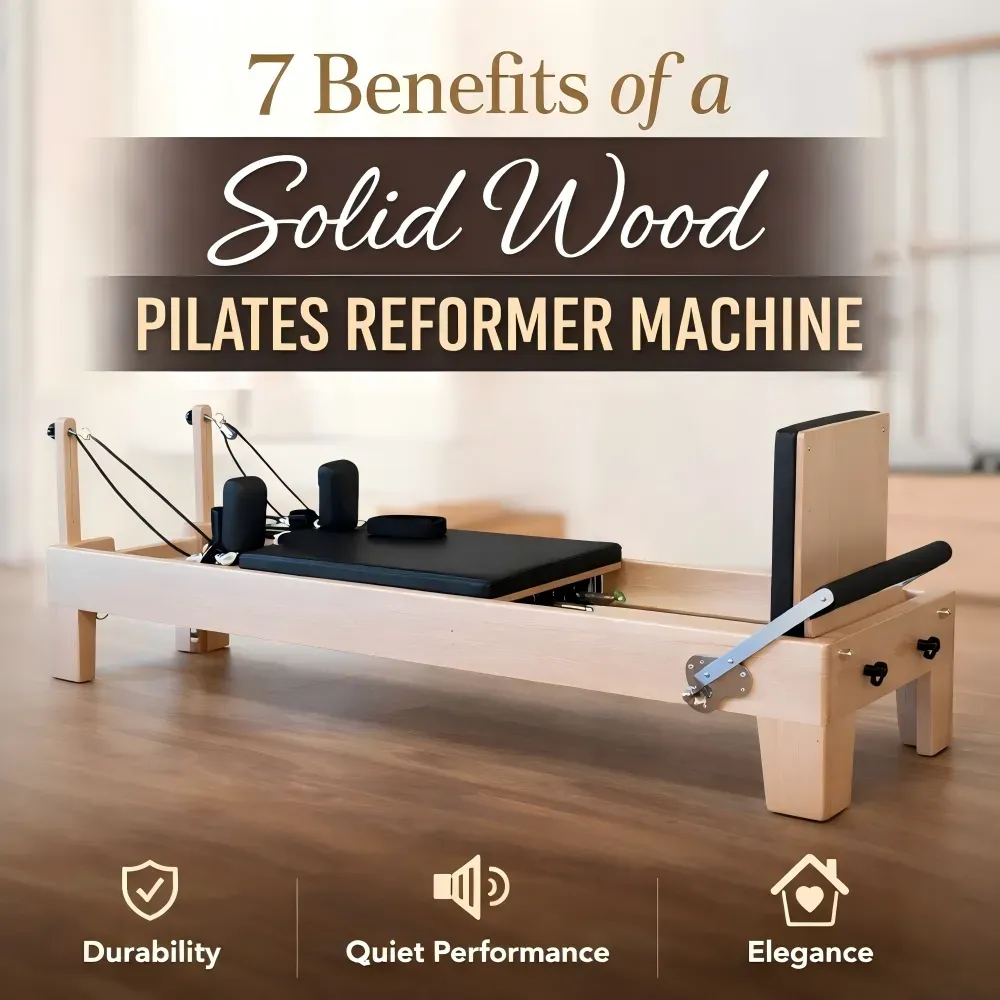
Why professional studios and luxury home gyms still choose timber over aluminum.
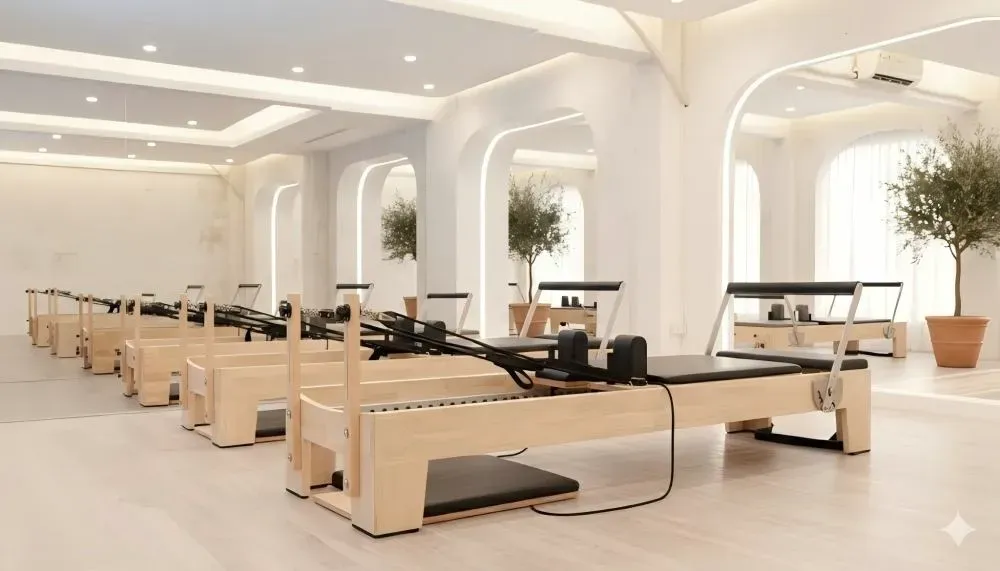
Are you tired of the metallic vibration, cold touch, and mechanical noise of aluminum reformers?
After 20 years of manufacturing solid wood Pilates reformers for studios and distributors worldwide, we’ve seen one consistent truth:
Material matters more than most people realize.
A reformer is not just fitness equipment — it is the foundation of movement precision, control, and long-term durability.
Let’s explore why serious practitioners and professional studios continue to choose solid wood.
Introduction: Why Material Choice Still Matters in 2026
When Joseph Pilates first designed the reformer, it was built primarily from wood. That wasn’t accidental. Wood offers natural strength, resilience, and stability that aligns with the philosophy of controlled, mindful movement.
Over the past two decades, we have specialized exclusively in manufacturing solid wood Pilates reformers for professional studios and distributors worldwide. Throughout these years, we have witnessed industry trends shift toward metal and aluminum frames due to cost and mass production advantages.
However, in high-end studios and long-term commercial use, solid hardwood consistently proves to be the superior choice for stability, comfort, and longevity.
Here are the top seven reasons why.
1. Superior Shock Absorption
Solid hardwood — especially Hard Maple and Beech — has a natural fiber structure that absorbs micro-vibrations.
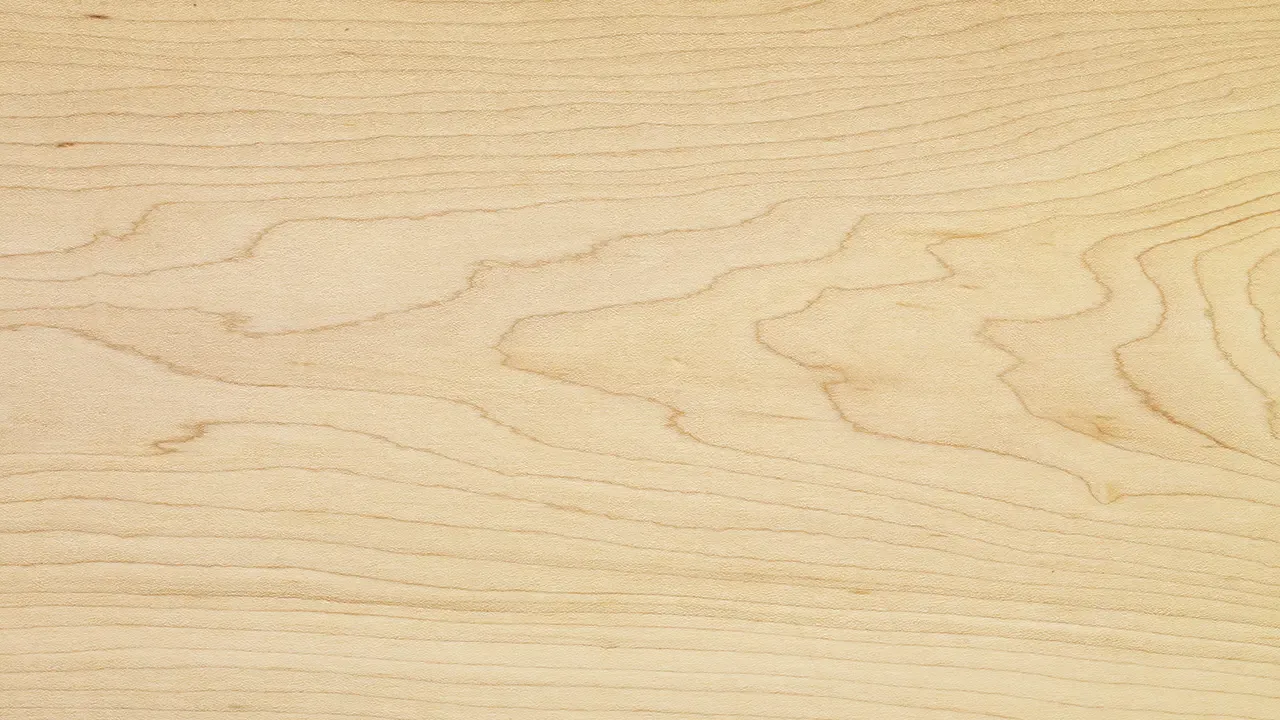
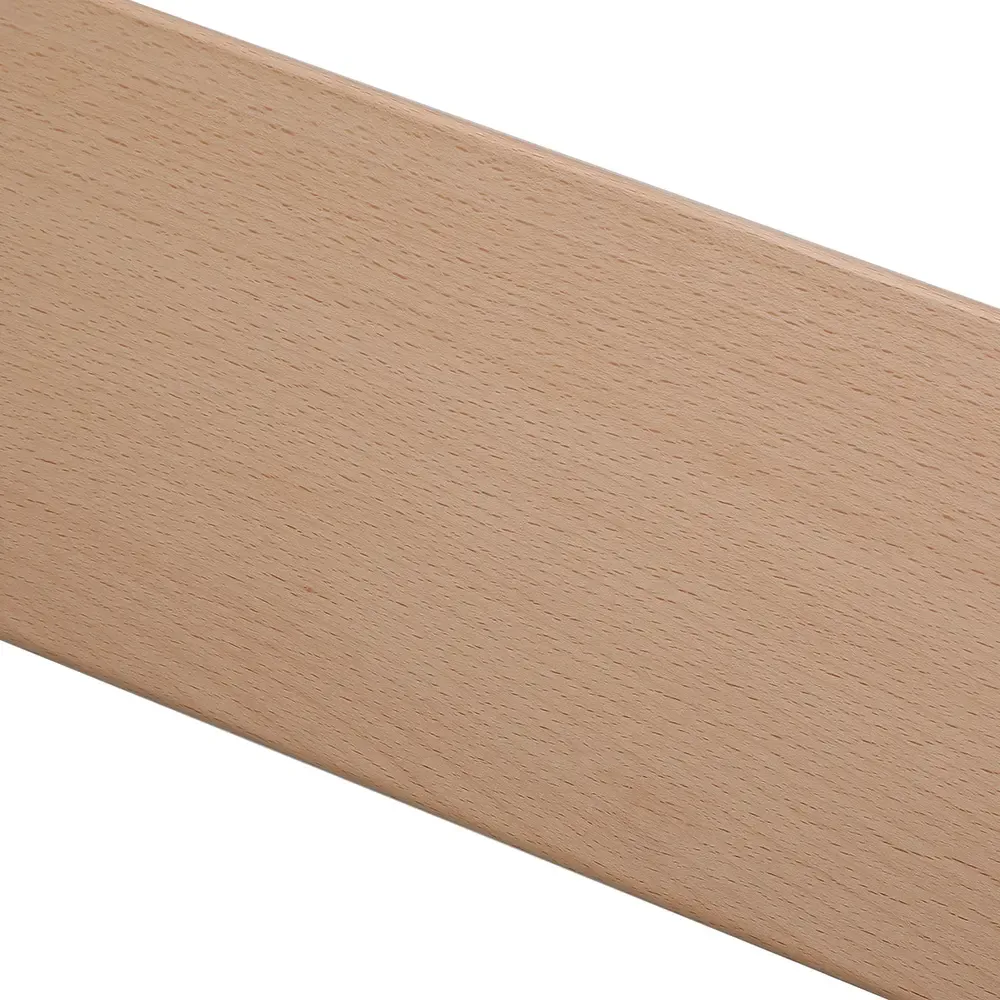
Unlike aluminum frames, which can transfer or amplify vibration, wood dampens it.
Result:
- Smoother carriage glide
- More controlled resistance feedback
- Reduced joint stress
- Better movement precision
For advanced practitioners, this subtle difference significantly improves body awareness and stability.
2. Whisper-Quiet Performance
One of the most common complaints about metal reformers is mechanical noise.
Metal frames may create:
- Resonance vibration
- Structural echo
- Connection friction noise over time
Solid wood naturally reduces sound transmission.
In professional studios, this means:
- A calmer training environment
- No distraction during breathwork
- A more premium client experience
In home gyms, it means early morning workouts without disturbing family members.
3. Unmatched Structural Stability
Weight is often misunderstood.
While aluminum is lighter, solid hardwood provides:
- Lower center of gravity
- Higher structural density
- Greater torsional stability
After 20 years of structural testing and export experience, we’ve found that properly engineered hardwood frames remain stable even under high-intensity, high-frequency commercial use.
For studios running 6–8 classes daily, stability is not optional — it’s essential.
4. Organic Tactile Comfort
Pilates is about connection — not machinery.
Solid wood offers:
- Warm touch (never cold like metal)
- Natural surface feel
- Visual softness
Clients subconsciously feel more relaxed when training on wood compared to industrial metal frames.
This psychological comfort improves overall training quality.
5. Timeless Aesthetic & Interior Integration
A wooden reformer doesn’t look like gym equipment.
It looks like crafted furniture.
For:
- Boutique studios
- Luxury home gyms
- Wellness centers
- High-end rehabilitation clinics
Wood integrates naturally into modern, minimalist, or Scandinavian-style interiors.
It elevates brand positioning instantly.
6. Long-Term Durability & Refinish Potential
Cheap metal frames can:
- Corrode
- Chip
- Show oxidation over time
High-quality hardwood can:
- Be refinished
- Be polished
- Maintain structural integrity for decades
We have studio clients still using reformers manufactured over 15 years ago.
Wood ages gracefully. Metal often does not.
7. Eco-Friendly & Health-Conscious Choice
Modern Pilates practitioners value sustainability.
Premium solid wood reformers use:
- FSC-certified hardwood (if sourced responsibly)
- Water-based, non-toxic coatings
- Low-VOC finishing processes
This aligns with:
- Eco-conscious studios
- Wellness-focused consumers
- Sustainable brand positioning
In contrast, low-cost metal frames may involve high-energy industrial processing and chemical coatings.
Manufacturer’s Advice: How to Identify a High-Quality Wooden Reformer
Not all wooden reformers are equal.
Here’s what to check:
1. Wood Type
- Hard Maple → strongest, tight grain, premium durability
- Beech → cost-effective, stable, widely used in Europe
2. Frame Thickness
Thicker is not always better — but proper engineering matters.
3. Joint Construction
Look for:
- Reinforced internal steel brackets
- Precision CNC cutting
- Multi-layer lamination for stress areas
4. Surface Finish
High-quality reformers use:
- Smooth sanding
- Multi-layer protective coating
- No visible cracks or uneven grain
After 20 years in production, we choose hardwood not for marketing — but because it consistently outperforms in real-world use.
Conclusion: It’s Not Just a Machine — It’s a Long-Term Investment
Choosing between aluminum and solid wood is not simply about price.
It’s about:
- Training quality
- Client experience
- Brand positioning
- Longevity
- Environmental values
If you’re building a serious studio or a premium home gym, solid wood remains the gold standard.
Ready to Elevate Your Practice?
Explore our handcrafted solid wood reformer collection and discover how 20 years of manufacturing experience translates into performance and durability.
FAQ Section
Q1: Is a wooden Pilates reformer as durable as aluminum?
Yes — and often more durable when engineered properly. High-density hardwood such as maple offers excellent load-bearing capacity and fatigue resistance. Many professional studios use wooden reformers for years under high-frequency daily operation.
Q2: Does a wooden reformer require more maintenance?
No. Basic maintenance includes:
- Wiping with a dry cloth
- Avoiding excessive humidity
- Periodic bolt tightening
Unlike metal, wood does not rust. Surface refinishing is possible after many years if needed.
Q3: Which wood is best for a Pilates reformer?
Hard Maple is considered the premium choice due to its density and tight grain structure. Beech is a cost-effective alternative widely used in commercial equipment manufacturing.
Q4: Is a solid wood reformer suitable for professional studios?
Absolutely. Many boutique and high-end studios prefer wood due to its stability, aesthetics, and client experience benefits. When properly engineered, wooden reformers easily handle high-frequency commercial use.
Q5: Is a wooden reformer better for home use?
Yes. It integrates better with home interiors, operates quietly, and provides a warmer aesthetic compared to industrial metal frames.