
Oct 25, 2026Product Knowledge & Guides
Pilates Equipment Manufacturer: Quality & Reliable Delivery
Learn why quality, reliable delivery, secure packaging, and clear communication matter when choosing a Pilates equipment manufacturer for your business.
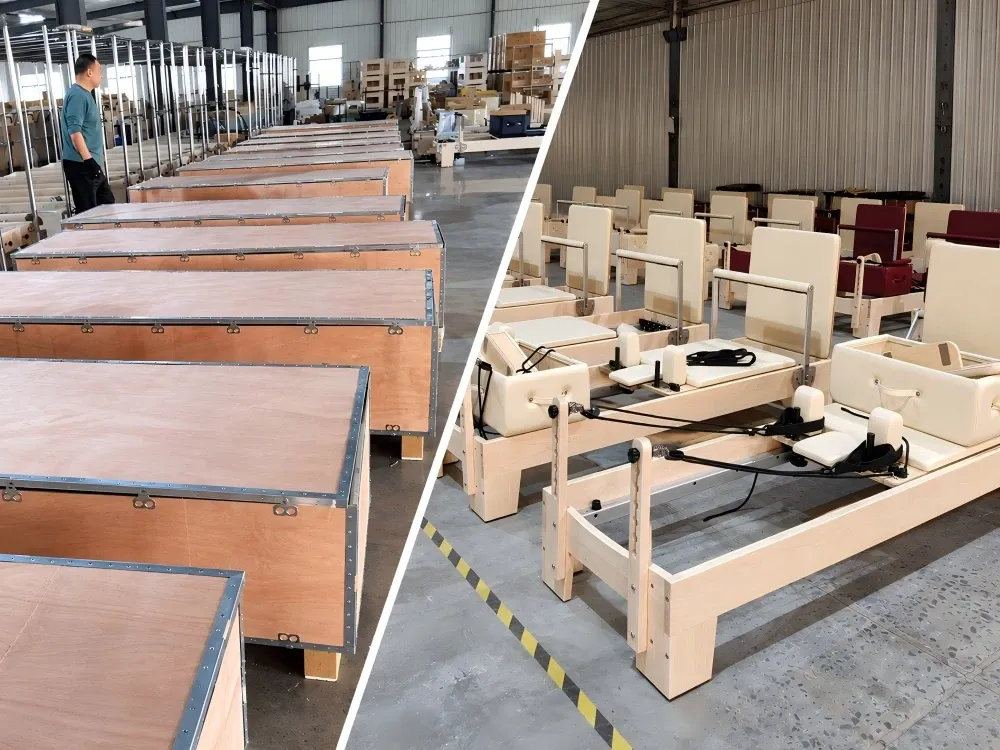
When sourcing Pilates reformers, chairs, Cadillacs, and studio equipment from overseas manufacturers, importers and distributors often focus on product quality, specifications, customization options, and factory pricing.
However, there is another factor that can have an equally significant impact on their business: delivery reliability.
For a Pilates equipment distributor, a delayed shipment is more than a logistics inconvenience. It can disrupt a studio opening, affect a customer's business plans, increase operational costs, and damage relationships that took years to build.
And when something goes wrong, it is usually the distributor—not the overseas manufacturer—who must explain the situation to the end customer.
This is why choosing the right Pilates equipment manufacturer should involve more than comparing product catalogs and quotations.
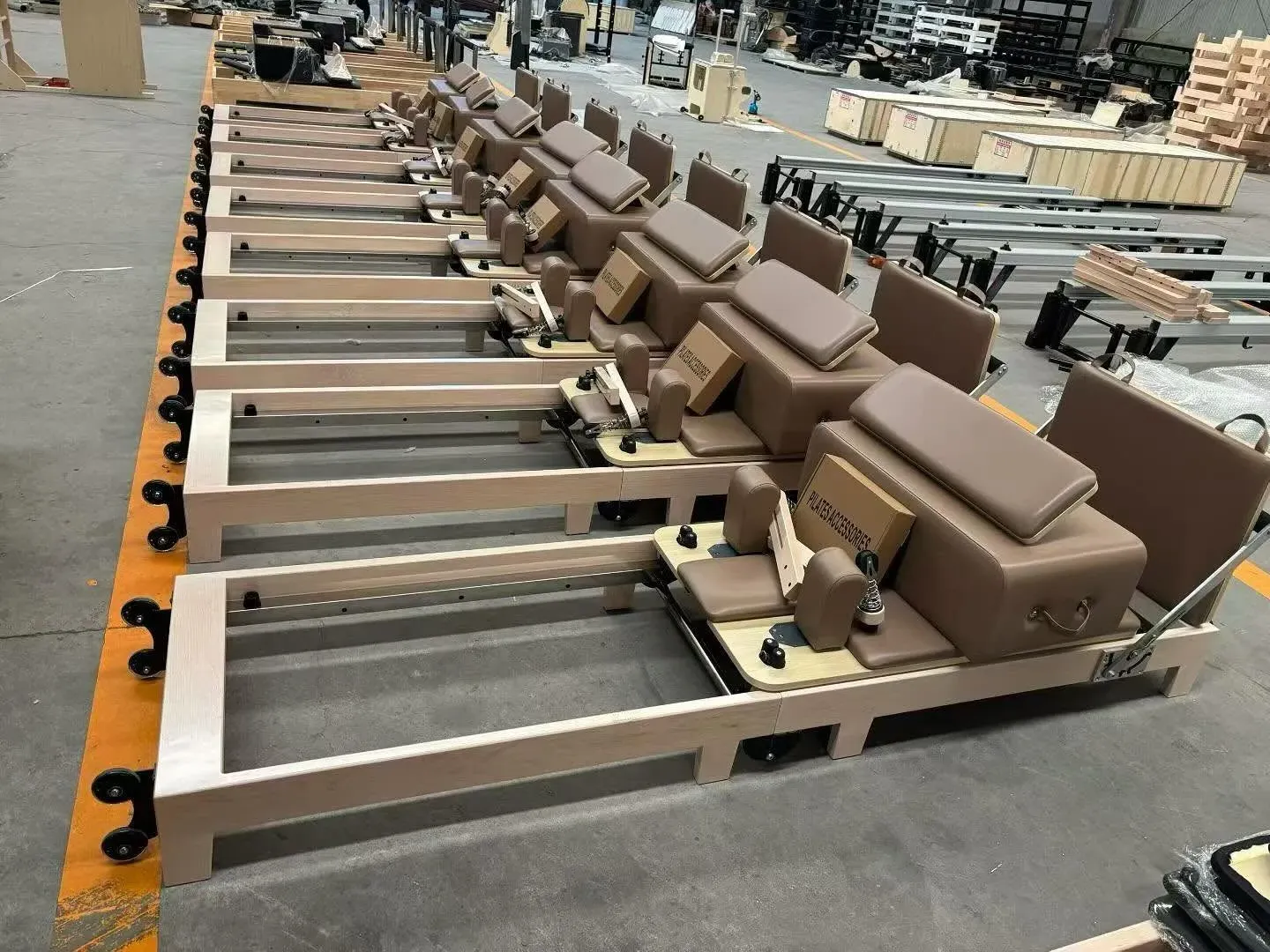
Consistent manufacturing quality, realistic production schedules, secure export packaging, shipment visibility, and transparent communication all contribute to a successful long-term supply relationship.
1. The Real Cost of Delayed Pilates Equipment Shipments
For distributors and equipment importers, the true cost of a delayed shipment often extends far beyond additional freight charges.
Consider a typical commercial Pilates studio project.
A studio owner orders several reformers, chairs, and accessories in preparation for a scheduled opening. The distributor coordinates equipment specifications, confirms the order, and provides an estimated delivery timeline based on information received from the manufacturer and logistics provider.
If the equipment arrives significantly later than expected, several problems may follow.
Delayed Studio Openings
New Pilates studios often coordinate equipment delivery with renovation schedules, instructor recruitment, marketing campaigns, and membership sales.
A delayed equipment shipment may prevent the studio from opening as planned, potentially creating additional expenses and lost revenue opportunities.
Increased Customer Service Pressure
When delivery dates change unexpectedly, distributors must respond to customer inquiries, explain delays, and manage expectations.
Without accurate shipment information from the manufacturer or freight forwarder, providing meaningful updates becomes difficult.
Damage to Brand Reputation
Customers usually associate their purchasing experience with the company that sold them the equipment.
Even when a delay originates elsewhere in the supply chain, the distributor's reputation may be affected.
Lost Repeat Business and Referrals
For many Pilates equipment distributors, long-term growth depends on repeat purchases and customer recommendations.
An unsatisfactory delivery experience can weaken those relationships, even when the equipment itself meets quality expectations.
The key takeaway: A competitive factory price has limited value if unreliable order execution puts customer relationships at risk.
2. Why Product Quality Alone Is Not Enough
Product quality remains one of the most important considerations when selecting a Pilates reformer manufacturer.
Commercial equipment must provide structural stability, smooth carriage movement, consistent spring resistance, comfortable upholstery, and dependable performance during regular use.
For example, a professional maple wood Pilates reformer requires careful attention to frame construction, rail alignment, moving components, and finishing quality.
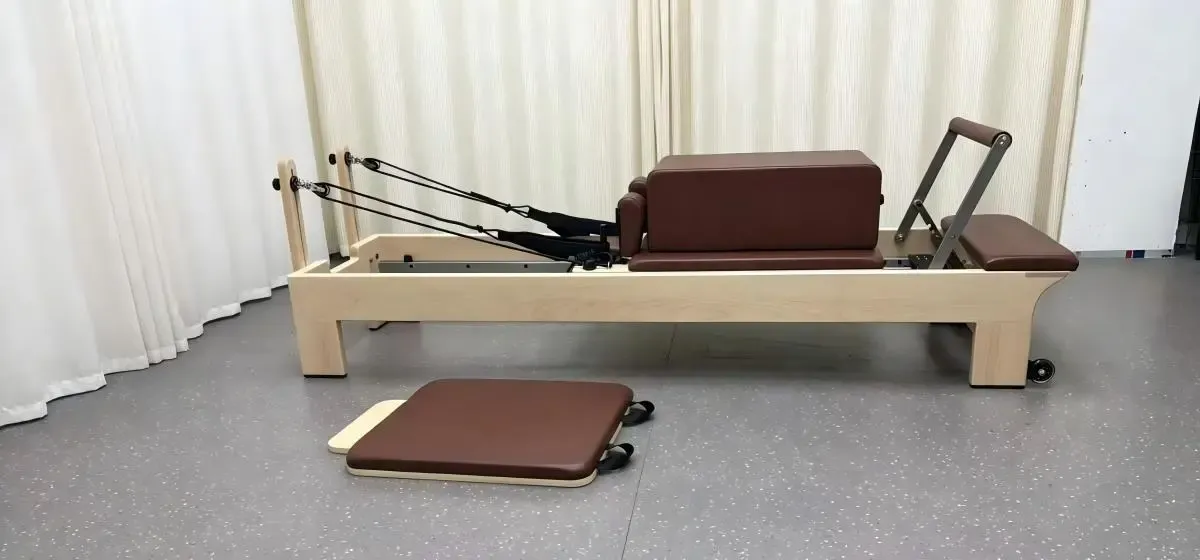
However, manufacturing a good product is only one part of the supply process.
The equipment must also be inspected, packaged, documented, and transported appropriately.
A reformer may leave the factory in excellent condition but still experience damage during international transportation if the packaging is unsuitable.
Likewise, even high-quality equipment can create a negative purchasing experience when delivery expectations are poorly managed.
For importers and distributors, supplier evaluation should therefore cover four essential areas:
- Manufacturing quality: Materials, construction, functionality, and consistency.
- Order execution: Production planning, specifications, and inspection procedures.
- Export preparation: Protective packaging, accessories, labeling, and shipping documents.
- Delivery coordination: Realistic transit estimates, shipment updates, and problem resolution.
A dependable manufacturing partner should understand how these elements work together.
3. Understanding Production Lead Times vs. Shipping Transit Times
One of the most common sources of misunderstanding in international equipment purchasing is the difference between production lead time and total delivery time.
These terms should never be treated as interchangeable.
Production Lead Time
Production lead time generally refers to the period required to manufacture and prepare an order after the necessary specifications, payment arrangements, and production requirements have been confirmed.
It may vary depending on:
- Equipment models and order quantities.
- Material availability.
- Upholstery color and branding requirements.
- OEM or ODM modifications.
- Factory production schedules.
- Inspection and packaging requirements.
Standard models may require less preparation than extensively customized equipment, but actual production schedules should always be confirmed for each order.
Shipping Transit Time
Transit time generally refers to the transportation period between defined logistics points.
Depending on the shipping arrangement, a quoted transit estimate may not include every stage of the delivery process.
For international Pilates equipment orders, additional stages may include:
- Factory pickup and domestic transportation.
- Export documentation and customs procedures.
- Waiting for vessel or rail departure.
- International transportation.
- Import customs clearance.
- Destination warehouse processing.
- Final delivery to the customer's address.
A shipping estimate should clearly identify which stages are included.
Total Door-to-Door Delivery Time
For customers purchasing under DDP (Delivered Duty Paid) arrangements, it is particularly important to understand the expected timeline through final delivery.
DDP defines responsibilities for delivery, import clearance, duties, and associated costs under the agreed terms. It does not automatically guarantee a specific transit duration.
Unloading arrangements, installation, and special delivery requirements should also be clarified before shipment.
A reliable supplier should distinguish between estimated transit time and a guaranteed delivery commitment.
International transportation can be affected by customs inspections, port congestion, weather, carrier schedules, and other factors outside the manufacturer's direct control.
Providing realistic estimates is generally more valuable than promising an unusually short delivery period without sufficient supporting information.
4. Export Packaging: An Often Overlooked Part of Equipment Quality
Pilates reformers and other large studio apparatus require careful packaging because of their dimensions, weight, and mechanical components.
Wooden frames, aluminum rails, upholstered surfaces, pulleys, and spring systems may require different forms of protection.
A suitable export packaging plan should consider the equipment's structure, transportation method, and handling conditions.
What Should Importers Check Before Shipment?
Structural Protection
The equipment should be secured to reduce unwanted movement inside the package.
Surface Protection
Wooden finishes, metal components, and upholstered surfaces should be protected against scratches, pressure marks, and abrasion.
Component Organization
Accessories, springs, ropes, straps, and removable parts should be organized and protected to reduce the risk of loss or damage.
Packaging Strength
Cartons, wooden crates, pallets, and internal protective materials should be selected according to product weight and expected handling conditions.
Package Identification
Each package should be clearly identified to support warehouse handling, customs documentation, and final delivery.
For larger commercial studio projects, it is also important to confirm package dimensions, gross weights, total shipment volume, and unloading requirements before transportation.
These details can affect freight quotations, delivery arrangements, and overall landed costs.
5. Why Pre-Shipment Inspection Matters for Wholesale Pilates Equipment
For distributors purchasing multiple reformers or complete studio equipment packages, discovering a problem after international delivery can be expensive and time-consuming.
Pre-shipment inspection helps identify potential issues while the equipment is still accessible at the factory.
A practical inspection process should include several checkpoints.
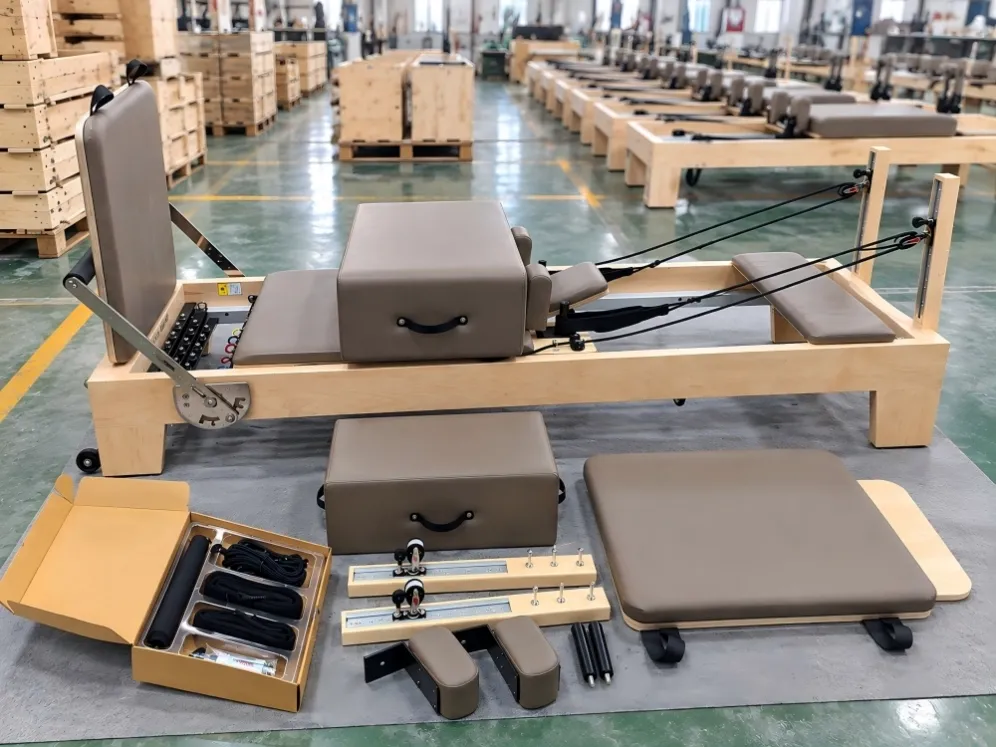
Product Specifications
Verify the agreed model, frame material, dimensions, upholstery color, branding, and accessory configuration.
Mechanical Functionality
Check carriage movement, rail alignment, footbar adjustment, spring connections, pulleys, and other applicable moving components.
Appearance and Finishing
Inspect visible surfaces, upholstery stitching, wood finishing, metal components, and assembly details.
Accessories and Spare Parts
Confirm that the agreed accessories and replacement components are included in the shipment.
For example, items such as Pilates reformer springs, ropes, jump boards, and other accessories should be checked against the order specifications.
Packaging Verification
Review the final packaging arrangement, package quantities, dimensions, and identification labels.
Photos and videos can provide useful documentation, particularly for overseas customers who cannot attend the inspection in person.
However, photos and videos should supplement—not replace—appropriate physical inspection and functional testing.
For higher-value or technically complex orders, independent third-party inspection may also be worth considering.
6. Transparent Communication Is Essential When Shipping Delays Occur
Even with careful planning, international shipments can experience unexpected delays.
No manufacturer or freight forwarder can control every factor affecting international transportation.
What distinguishes a dependable supplier is not the complete absence of problems, but how those problems are communicated and managed.
When a shipment is delayed, importers need more than a general statement that the logistics provider is working on the issue.
Whenever the information is available, useful updates should address:
- The latest confirmed shipment status.
- The last verified cargo location or logistics milestone.
- The reported reason for the delay.
- The actions being taken by the relevant parties.
- The latest estimated delivery date, including any uncertainty.
- When the next update can reasonably be expected.
Not every logistics provider offers continuous real-time tracking, especially when shipments pass between different carriers or warehouses.
Nevertheless, manufacturers and sourcing partners can help by following up with their logistics providers, sharing verified updates, and explaining what remains uncertain.
Transparent communication does not eliminate delays, but it helps distributors manage customer expectations and make informed decisions.
This is particularly important for distributors who supply equipment to commercial studios with fixed opening schedules.
7. Five Questions to Ask Before Choosing a Pilates Equipment Manufacturer
Before selecting a new supplier—or expanding an existing partnership—Pilates equipment importers should ask questions that go beyond the quoted unit price.
Question 1: How Do You Verify Product Quality Before Shipment?
Ask whether the manufacturer performs assembly inspections, functional checks, and packaging verification.
Request examples of inspection documentation when available.
Question 2: How Are Production and Delivery Timelines Calculated?
Clarify when the production period begins and whether shipping estimates include customs clearance and final delivery.
Ask how schedule changes are communicated.
Question 3: What Packaging Options Are Available?
Discuss whether cartons, wooden crates, or other protective packaging methods are appropriate for the equipment and destination.
Confirm package dimensions and weights before finalizing the shipping plan.
Question 4: How Are Shipping Problems Handled?
Ask who coordinates with the freight forwarder, how shipment updates are obtained, and what happens when delivery estimates change.
The goal is to understand the supplier's communication process before a problem occurs.
Question 5: Can the Supplier Support Long-Term Product Development?
A distributor's requirements may expand beyond the initial order.
For example, a business that initially imports reformers may later require Pilates Wunda Chairs, Reformers with Towers, replacement parts, and customized equipment collections.
Working with a supplier that understands OEM requirements, product consistency, and coordinated purchasing can simplify future sourcing.
However, the scope of manufacturing and third-party sourcing services should always be clearly defined.
8. Building Long-Term Trust Through Consistent Service
Long-term supplier relationships are rarely built through a single competitive quotation.
They develop through repeated experiences of consistent quality, clear communication, and responsible order management.
For Pilates equipment distributors, an effective manufacturing partnership should support business growth rather than create additional uncertainty.
This includes understanding the distributor's market positioning, customer expectations, product requirements, and delivery responsibilities.
It also means recognizing that a supplier's performance can directly influence the distributor's reputation.
A reliable partner should be willing to discuss realistic timelines, explain limitations, document agreed specifications, and address problems when they arise.
Trust should be earned through actual performance, not simply through marketing claims.
For importers evaluating a new manufacturer, starting with a sample or smaller initial order can be a practical way to assess product quality, packaging, communication, and delivery coordination before committing to larger purchasing volumes.
9. How Leyue Pilates Supports International Equipment Buyers
At Leyue Pilates, we understand that overseas distributors, private-label brands, and commercial studio buyers need more than equipment specifications and factory quotations.
They need a sourcing partner that recognizes the importance of product consistency, order preparation, and clear communication.
Our Pilates equipment range includes wooden and aluminum reformers, tower systems, chairs, barrels, and studio accessories.
Through our OEM and private-label equipment services, we support customers with suitable product configurations, material selections, upholstery colors, branding options, and project requirements.
Our approach to international orders emphasizes several important steps.
Confirming Order Specifications
We work with customers to clarify equipment models, materials, colors, accessories, and applicable customization requirements before production.
Supporting Pre-Shipment Review
We can provide product photos and videos for customers to review equipment appearance, configuration, and packaging before shipment.
Coordinating Export Packaging
Packaging arrangements are reviewed according to equipment characteristics and shipping requirements.
Discussing Realistic Delivery Options
We assist customers in evaluating available shipping arrangements, including DDP services to supported destinations, with timelines and delivery conditions confirmed for each project.
Supporting Long-Term Equipment Supply
We work with distributors and studio buyers who require ongoing product supply, coordinated equipment selections, and OEM customization.
Our goal is to help customers establish a practical, transparent, and sustainable equipment sourcing process.
10. Final Thoughts: Choose a Supplier Who Protects Your Business, Not Just Your Budget
When evaluating a Pilates equipment manufacturer, product quality and competitive pricing are essential—but they are not the complete picture.
Reliable order execution, suitable packaging, realistic delivery planning, and transparent communication can be just as important to a distributor's long-term success.
A delayed shipment may be temporary, but the damage to customer confidence can last much longer.
For this reason, importers should evaluate manufacturing partners based on their ability to support the entire purchasing process, from product specifications and quality checks to export preparation and delivery coordination.
The best supplier relationship is not simply the one that offers the lowest factory price. It is the one that helps your business deliver consistent value to its customers over time.
Looking for a Reliable Pilates Equipment Manufacturing Partner?
Whether you are sourcing equipment for a new studio, expanding your wholesale product range, or developing a private-label Pilates collection, Leyue Pilates can help you explore suitable manufacturing and sourcing options.
Share your equipment requirements, estimated quantities, customization preferences, and delivery destination with our team.
We will help you review the available options and discuss a practical sourcing plan for your project.