
Aug 4, 2026Product Knowledge & Guides
How to Choose a Walnut Pilates Reformer Manufacturer
Learn how to choose a walnut Pilates reformer manufacturer based on commercial durability, studio ROI, customization, delivery, quality control, warranty and spare-parts support.
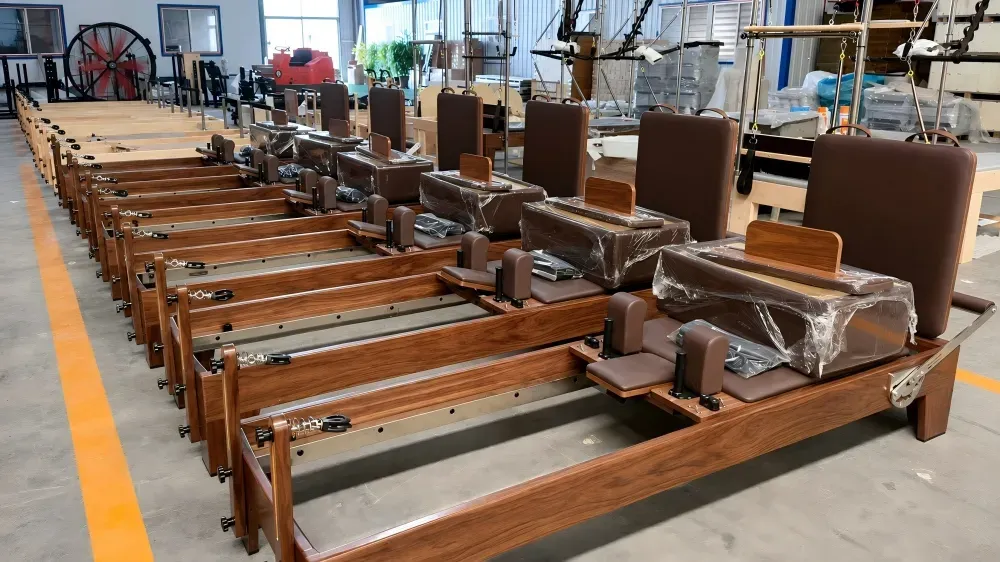
Choosing a walnut Pilates reformer manufacturer is not simply a matter of comparing machine prices.
Walnut Pilates reformers in production at a commercial Pilates equipment factory
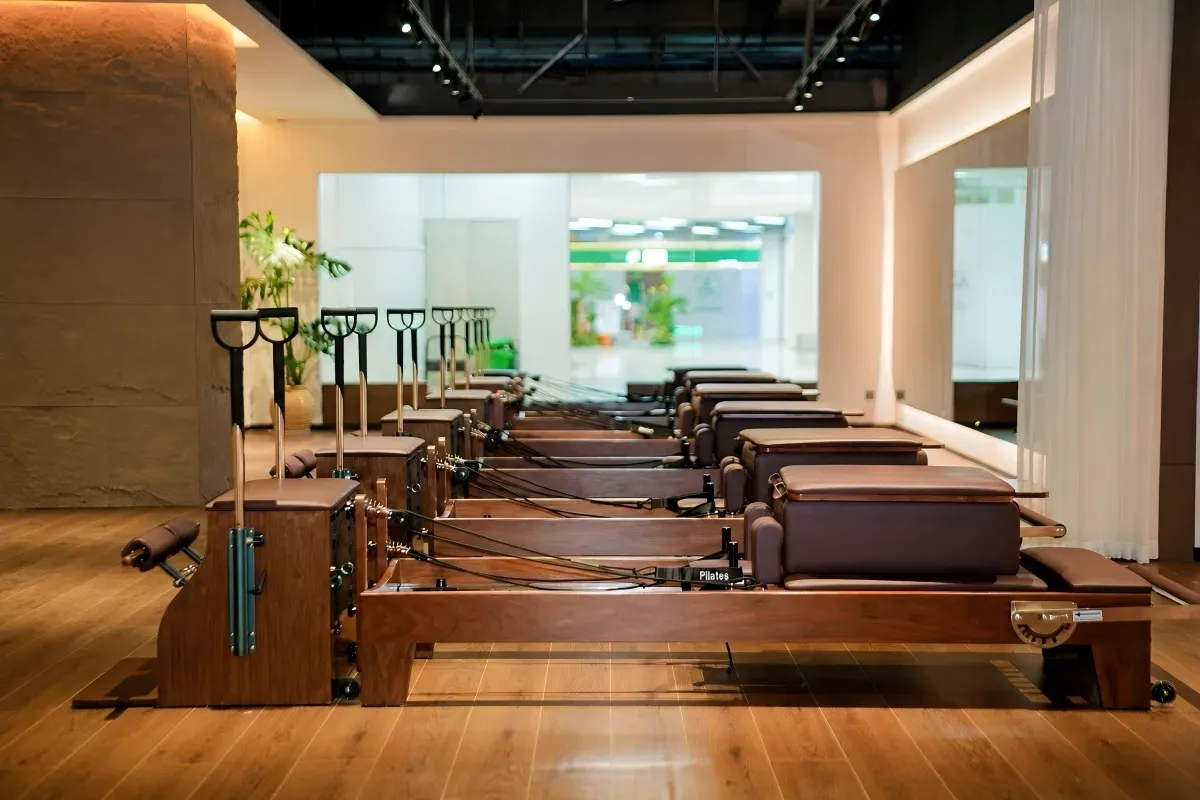
For a commercial Pilates studio, reformers directly influence class capacity, instructor efficiency, maintenance costs, customer experience and the overall appearance of the space. For distributors and private-label brands, the manufacturer also affects product consistency, delivery schedules, warranty claims and long-term brand reputation.
A lower factory price may appear attractive at the beginning. However, unstable equipment, delayed delivery, inconsistent finishes or unavailable replacement parts can create much higher costs after the studio opens.
The right manufacturer should not only supply an attractive walnut reformer. It should also help protect your investment through reliable commercial performance, controlled production, realistic delivery planning and long-term after-sales support.
This guide explains how studio owners, distributors and Pilates brands can evaluate a walnut Pilates reformer manufacturer from both a product and business perspective.
1. Start With Your Studio or Business Model
Before comparing manufacturers, define how the equipment will be used.
Different business models require different product configurations and levels of manufacturing support.
Boutique Pilates Studios
Boutique studios often place greater importance on:
- A premium walnut appearance
- Coordinated studio interior design
- Quiet and smooth carriage movement
- Consistent wood and upholstery colors
- Comfortable user-contact surfaces
- Custom logos and brand details
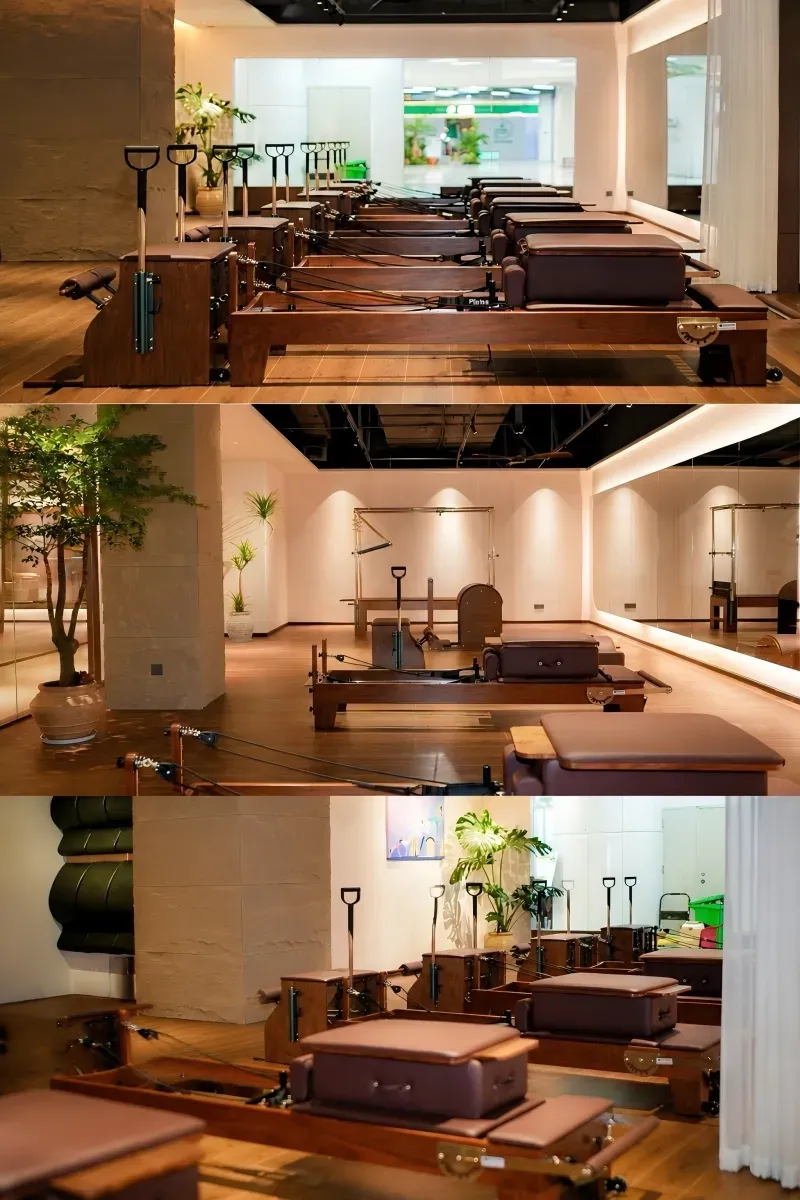
For these projects, the reformer is not only a piece of exercise equipment. It is also part of the customer experience and visual identity of the studio.
High-Volume Group Studios
Studios operating multiple group classes each day should focus on:
- Commercial frame stability
- Fast and convenient adjustments
- Consistent resistance across all machines
- Easy maintenance
- Replaceable wear parts
- Reliable performance under frequent use
A reformer that performs well in a home environment may not necessarily be suitable for repeated daily classes.
Distributors and Private-Label Brands
Dealers, distributors and OEM brands should also evaluate:
- Batch-to-batch consistency
- Custom branding capabilities
- Packaging quality
- Production capacity
- Quality-control records
- Reorder consistency
- Long-term replacement-parts availability
Understanding your business model makes it easier to identify which manufacturer can support your project beyond the first order.
2. Calculate the Total Cost, Not Only the Factory Price
The purchase price is only one part of a studio equipment investment.
The actual cost may include:
- Equipment price
- Customization
- Export packaging
- International shipping
- Import duties and taxes
- Local delivery
- Installation
- Maintenance
- Replacement parts
- Equipment downtime
Two walnut reformers may look almost identical in online photographs but have very different internal structures, rail systems, springs, upholstery and quality-control standards.
If a lower-priced reformer frequently develops problems with its wheels, springs, ropes or footbar, the studio may have to remove the machine from classes while waiting for replacement parts. This can reduce class capacity, inconvenience instructors and affect the customer experience.
The cheapest reformer is therefore not always the most cost-effective reformer for a commercial studio.
When comparing quotations, consider the expected service life, maintenance requirements and availability of technical support—not just the initial unit price.
3. Confirm What “Walnut Reformer” Actually Means
The term “walnut reformer” does not always describe the same material.
It may refer to:
- Genuine solid walnut
- Maple, beech, oak or another hardwood with a walnut-colored finish
- Walnut veneer applied over another material
- Lower-grade wood treated with a dark stain
These options can look similar in photographs, but their cost, grain, color consistency and manufacturing requirements are different.
Ask the manufacturer to confirm:
- The exact base wood
- Whether the frame is solid wood or veneer
- The wood grade
- The finishing process
- Whether genuine solid walnut is available
- How color consistency is controlled across multiple machines
- Whether raw-material and production photographs can be provided
A professional manufacturer should clearly explain the material instead of using “walnut” only as a general marketing term.
For a detailed comparison, read our guide: Walnut Finish vs. Solid Walnut: Which Walnut Pilates Reformer Should You Choose?
4. Verify Commercial-Grade Construction
A premium walnut appearance does not automatically mean that a reformer is suitable for commercial use.
Commercial studios need equipment that remains stable, smooth and easy to operate through repeated daily classes.
Frame Stability
Ask the manufacturer about:
- Frame material and thickness
- Internal reinforcement
- Main connection points
- Maximum recommended user weight
- Stability testing
- Footbar and tower stability
- Noise or movement during use
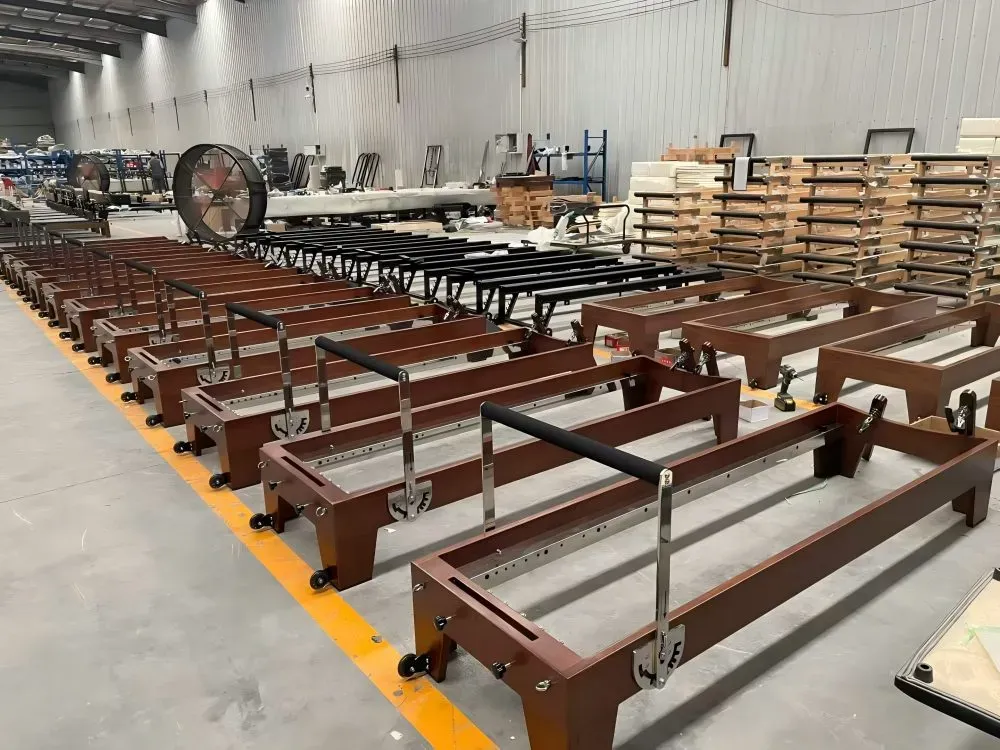
Pay particular attention to the areas where the legs, frame, rail and footbar are connected. These sections experience repeated loading and are important to long-term stability.
Carriage and Rail System
The carriage system has a significant influence on how the reformer feels during a class.
Check:
- Rail material and alignment
- Wheel and bearing quality
- Carriage travel distance
- Side-to-side carriage movement
- Noise level
- Ease of wheel replacement
- Cleaning and maintenance requirements
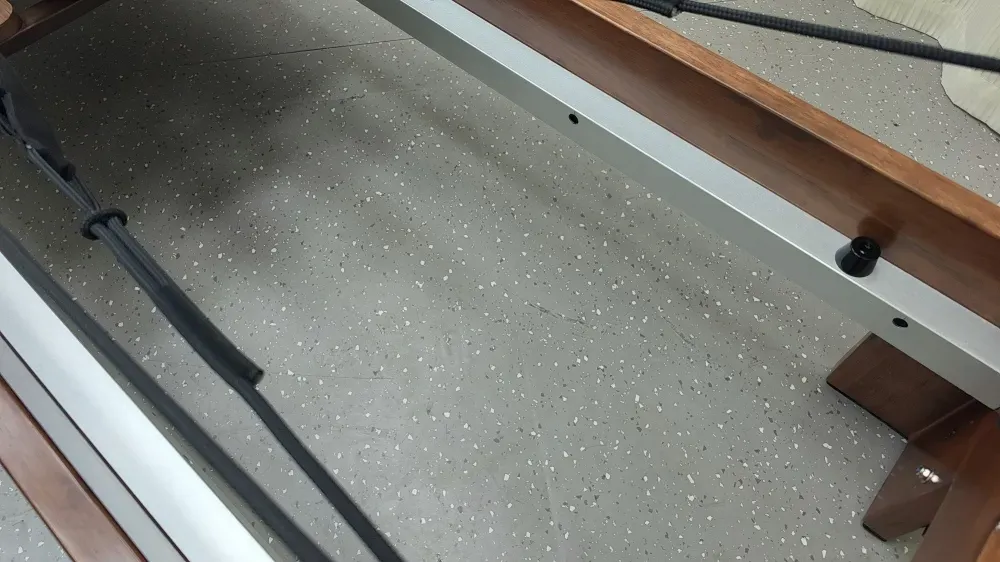
Ask for a video showing the carriage moving slowly along the complete rail. A close-up video can reveal more than a general promotional video filmed from a distance.
Instructor Adjustment Efficiency
For group classes, the speed and simplicity of adjustments matter.
Evaluate whether instructors can easily adjust:
- Footbar position
- Rope length
- Headrest
- Shoulder rests
- Spring resistance
- Pulley height
Small adjustment delays may appear unimportant when testing one reformer. Across multiple exercises and several classes each day, however, they can affect class flow and instructor efficiency.
5. Evaluate Springs, Ropes and Wear Parts
Springs should not be evaluated only by their country of origin.
A complete assessment should include:
- Number of springs
- Resistance configuration
- Resistance consistency
- Surface and corrosion protection
- Fatigue testing
- Connection method
- Recommended replacement cycle
- Availability of matching replacements
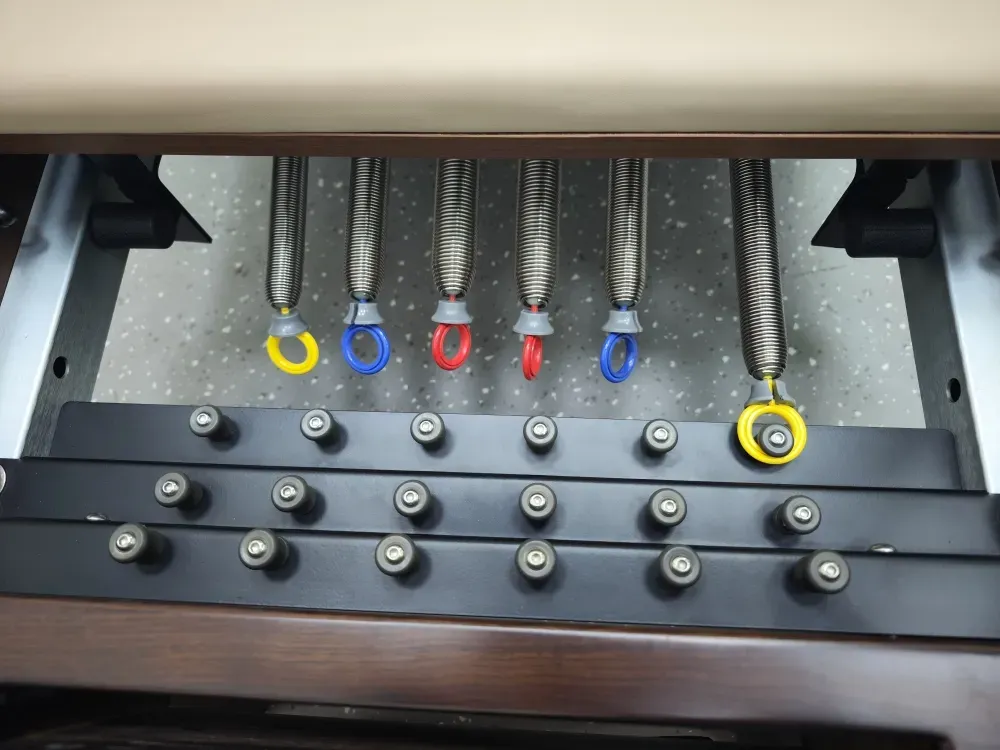
Also inspect the ropes, straps, pulleys, carabiners and adjustment components.
These parts receive frequent contact and movement. Even when the main frame remains in excellent condition, wear parts may eventually need to be replaced.
Before ordering, ask the manufacturer which parts are considered consumable and whether it keeps them in stock for long-term after-sales service.
6. Inspect Upholstery and User-Contact Surfaces
Upholstery affects comfort, appearance, cleaning and maintenance.
A commercial reformer should use upholstery and padding suitable for frequent studio use.
Check:
- Upholstery material
- Abrasion resistance
- Sweat and moisture resistance
- Ease of cleaning
- Foam density
- Stitching quality
- Carriage comfort
- Shoulder-rest padding
- Color consistency
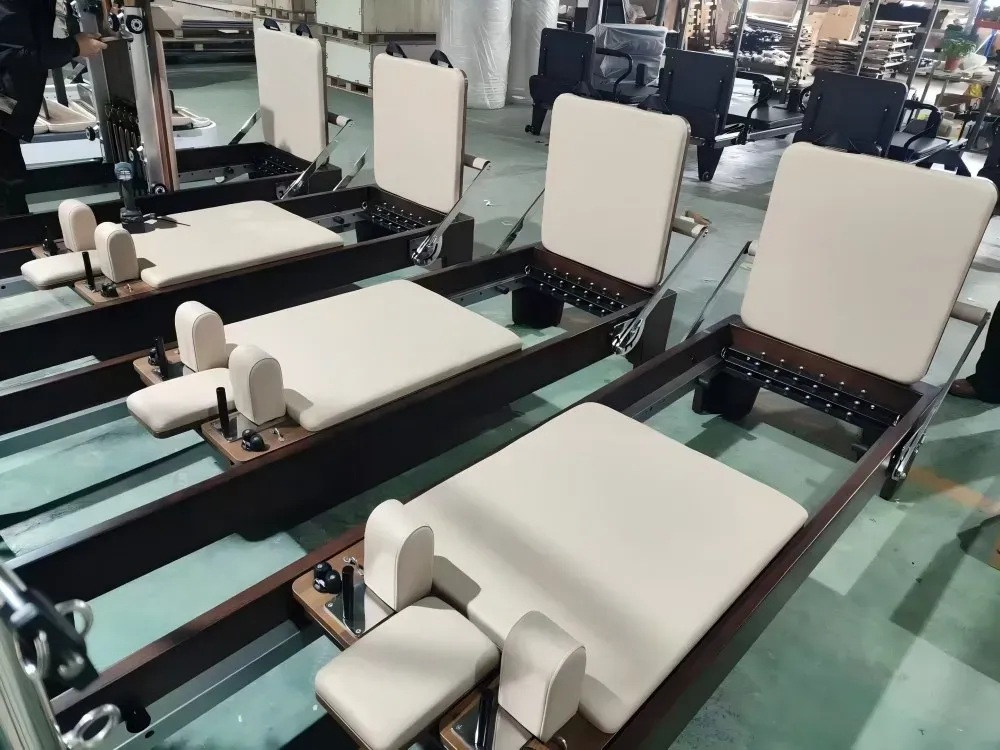
For a studio purchasing several machines, ask the manufacturer how it controls upholstery color across the complete order.
If you plan to reorder in the future, confirm whether the selected color and material will remain available.
7. Evaluate Complete Studio Supply Capability
Many studios need more than reformers.
A manufacturer that can supply a coordinated equipment package may help simplify purchasing, branding, shipping and after-sales communication.
A complete walnut Pilates equipment collection may include:
- Walnut Pilates Reformer
- Reformer with Tower
- Cadillac or Trapeze Table
- Wunda Chair
- Ladder Barrel
- Spine Corrector
- Sitting Box
- Jumpboard
- Foot platform extender
- Pilates rings, balls, mats and other accessories
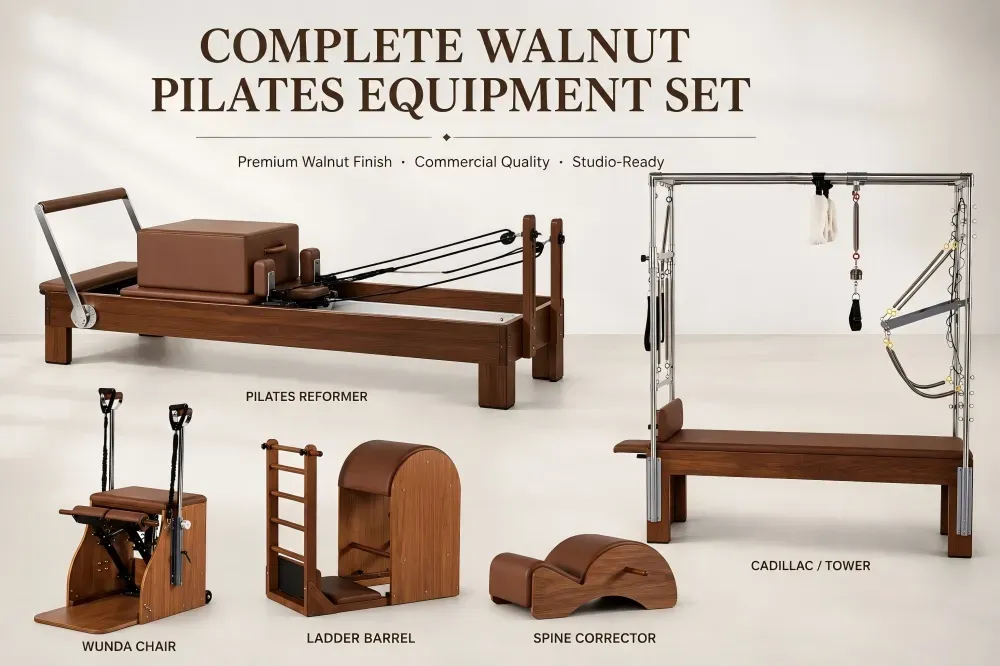
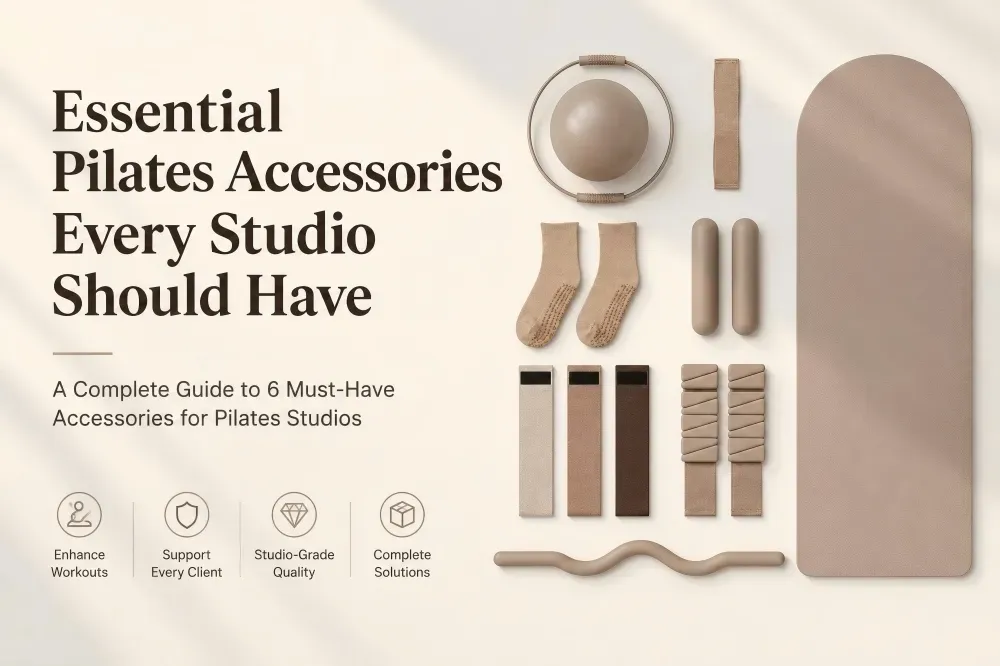
Working with one manufacturer for a complete studio package can provide several advantages:
- More consistent wood finishes
- Coordinated upholstery colors
- Matching logos and nameplates
- Fewer suppliers to manage
- Combined production and shipping
- One point of contact for after-sales support
Ask the manufacturer to prepare a studio package quotation rather than requesting prices for individual machines only.
The quotation should clearly show the configuration, included accessories, packaging information and available customization for each product.
8. Assess Customization Without Operational Complexity
Customization can help a Pilates studio or equipment brand stand out, but more customization is not always better.
Overly complex designs may:
- Increase the minimum order quantity
- Extend the production time
- Make replacement parts harder to obtain
- Cause inconsistency between production batches
- Increase future maintenance costs
A capable manufacturer should help you balance brand differentiation with practical operation.
Common customization options include:
- Walnut color and finish
- Upholstery color
- Logo application
- Metal nameplates
- Spring configuration
- Ropes and straps
- Carabiners
- Accessories
- Product manuals
- Private-label packaging
Before bulk production, approve physical color samples, material references or a sample machine whenever possible.
Effective customization should strengthen the studio’s identity without making production, maintenance or future reordering unnecessarily complicated.
9. Verify the Manufacturer’s Production Capabilities
A product catalog alone cannot confirm whether a supplier controls the manufacturing process.
Ask the supplier to provide recent evidence of its production capabilities, such as:
- Factory videos
- Woodworking areas
- Frame processing
- Rail installation
- Upholstery production
- Assembly lines
- Functional testing
- Quality-control areas
- Finished equipment
- Export packaging
- Container loading
You can also ask:
Which manufacturing processes are completed in-house, and which components are outsourced?
Outsourcing certain components is common in manufacturing. The more important question is whether the supplier has clear specifications, incoming-material inspections and consistent control over outsourced parts.
If an on-site visit is not practical, request a live video factory tour. This allows you to see current production conditions and ask questions in real time.
10. Review the Quality-Control Process
“Strict quality control” is a common statement, but buyers should ask what the process actually includes.
A structured inspection system should cover several stages.
Incoming-Material Inspection
The manufacturer should inspect materials and components before production, including:
- Wood condition
- Metal parts
- Aluminum rails
- Springs
- Wheels and bearings
- Upholstery materials
- Hardware
In-Process Inspection
Checks during production may include:
- Frame dimensions
- Connection points
- Rail alignment
- Surface finishing
- Upholstery workmanship
- Assembly accuracy
Functional Inspection
Before packaging, the completed reformer should be tested for:
- Frame stability
- Carriage movement
- Footbar locking
- Spring resistance
- Rope and pulley operation
- Headrest adjustment
- Shoulder-rest installation
- Unusual noise
Appearance and Final Inspection
The final inspection should also check:
- Wood color consistency
- Surface scratches
- Upholstery condition
- Logo position
- Hardware completeness
- Accessories
- Manuals
- Packaging labels
For bulk orders, ask whether the manufacturer can provide inspection photographs, videos or a final inspection report before shipment.
11. Check Product Standards and Documentation
Certifications and test reports can help buyers evaluate whether a product has been assessed against relevant equipment standards.
However, do not rely only on a certificate image displayed on a website.
Confirm:
- Which product model was tested
- Which standard was used
- Whether the standard applies to commercial equipment
- Which testing organization issued the report
- Whether the company name matches the supplier
- Whether the report is still relevant to the current configuration
Leyue Pilates manufactures equipment for professional studio applications and provides relevant product documentation for qualified projects upon request.
If certification is required for your market, insurance provider, distributor or commercial facility, communicate this requirement before placing the order.
12. Evaluate Delivery Reliability
Delivery planning is especially important for new studios because equipment delays can affect instructor training, photography, pre-opening classes and the official opening date.
Ask the manufacturer to confirm:
- Standard production time
- Peak-season production time
- Time required for customization
- Raw-material availability
- Packaging completion date
- Export port
- Shipping options
- Estimated transit time
- Production update process
- Procedures for handling delays
Your order schedule should include:
- Production time
- International transit time
- Customs clearance
- Local delivery
- Installation and inspection
- A reasonable contingency period
Avoid planning the equipment arrival only a few days before opening.
A realistic production and delivery plan is more valuable than an unrealistically short lead-time promise.
If your studio has a fixed opening date, provide the date and full delivery address when requesting a quotation. An experienced manufacturer can then recommend an appropriate order deadline and shipping method.
13. Check Packaging and International Shipping Experience
A walnut reformer requires protection from impact, pressure, moisture and surface scratches during international transport.
Ask how the manufacturer protects:
- Wooden frame surfaces
- Upholstered sections
- Aluminum rails
- Footbars
- Moving components
- Corners and connection points
- Accessories
The supplier should also provide:
- Package dimensions
- Net and gross weight
- Number of packages
- Packing list
- Loading plan when required
- Shipping marks
- Photographs before dispatch
Accurate packaging information is necessary for calculating freight, warehouse handling and final delivery costs.
For studio projects, also confirm whether delivery includes unloading, moving equipment into the building or carrying equipment upstairs. These services are often not included in standard international shipping quotations.
14. Confirm Warranty and Spare-Parts Support
No commercial equipment should be evaluated only on the assumption that nothing will ever need maintenance.
The more useful question is how quickly the supplier can help restore the machine to normal use.
Ask:
- How long is the frame warranty?
- How long are components covered?
- What is excluded from the warranty?
- What evidence is required for a claim?
- Who pays for replacement-part shipping?
- Are repair and installation videos available?
- Which spare parts are normally kept in stock?
- How quickly can replacement parts be dispatched?
- Will compatible parts remain available for future orders?
Common replacement and maintenance parts may include:
- Springs
- Wheels
- Bearings
- Ropes
- Straps
- Pulleys
- Carabiners
- Upholstery components
- Footbar hardware
For commercial studios, it may be practical to order a small spare-parts kit with the initial equipment shipment.
Leyue Pilates currently provides a three-year warranty for commercial frames and a one-year warranty for parts, subject to the applicable warranty terms. We also maintain replacement-part support for long-term studio operation.
15. Compare Quotations on the Same Basis
A meaningful price comparison requires the same materials, configuration and trade terms.
Use the following checklist when comparing manufacturers:
Comparison Item | What to Confirm |
|---|---|
Wood material | Solid walnut, walnut-finished hardwood or veneer |
Commercial suitability | Frame stability, user weight and intended frequency |
Rail system | Rail, wheel and bearing specifications |
Springs | Quantity, resistance configuration and origin |
Upholstery | Material, foam and color |
Included accessories | Box, jumpboard, extender and straps |
Customization | Finish, upholstery, logo, nameplate and packaging |
Production time | Standard and peak-season lead times |
Packaging | Method, dimensions and gross weight |
Trade term | EXW, FOB, CIF, DDU or DDP |
Warranty | Separate coverage for frame and parts |
Spare parts | Availability, pricing and dispatch time |
A quotation with a lower unit price may exclude accessories, export packaging, customization or after-sales support included in another supplier’s offer.
Request a detailed configuration sheet before making the final comparison.
16. Warning Signs to Watch For
Be cautious if a supplier:
- Does not identify the actual wood material
- Focuses only on offering the lowest price
- Provides only rendered images or catalog photographs
- Cannot show frame, rail or carriage details
- Cannot provide current production videos
- Gives incomplete packaging information
- Uses general certificates that do not match the product
- Does not specify included accessories
- Promises an unrealistic production time
- Has no clear warranty process
- Cannot supply replacement parts
- Refuses a factory visit or live video inspection
One warning sign does not automatically mean that a supplier is unreliable. However, several unclear answers together may indicate a higher purchasing risk.
Questions to Ask a Walnut Reformer Manufacturer
Before selecting a supplier, ask these questions:
- What wood is used underneath the walnut finish?
- Is genuine solid walnut available?
- Is this model designed for frequent commercial use?
- What is the recommended maximum user weight?
- What rails, wheels, bearings and springs are used?
- Which manufacturing processes are completed in-house?
- Can you provide current factory and quality-control videos?
- Which standards or test reports apply to this model?
- How do you control wood and upholstery color consistency?
- What customization options and minimum quantities are available?
- What is included in the quoted configuration?
- What are the standard and peak-season production times?
- How is the equipment protected for international shipping?
- What are the warranty terms?
- Which replacement parts are kept in stock?
Clear and specific answers make it easier to compare manufacturers objectively.
A Practical Manufacturer Evaluation Checklist
You can score potential suppliers using the following weighting:
Evaluation Area | Suggested Weight |
Commercial performance | 25% |
Quality consistency | 20% |
Delivery reliability | 15% |
Warranty and spare parts | 15% |
Complete studio capability | 10% |
Customization | 10% |
Price | 5% |
The weighting can be adjusted for your project, but price should not be considered separately from product configuration, delivery risk and after-sales support.
Why Work With Leyue Pilates?
Founded in 2007, Leyue Pilates manufactures commercial Pilates equipment for studios, distributors and private-label brands worldwide.
We provide walnut-finish reformers for commercial studio projects, as well as custom solid-walnut solutions for customers seeking a more exclusive natural wood option.
Our goal is not simply to supply individual machines. We help customers create coordinated equipment packages that balance studio appearance, commercial performance, delivery planning and future maintenance.
Commercial Studio Solutions
Our equipment is developed for professional environments where stability, smooth movement, convenient adjustment and consistent daily performance are essential.
Complete Studio Packages
We manufacture coordinated reformers, reformers with towers, Cadillacs, chairs, ladder barrels, spine correctors and Pilates accessories for complete studio projects.
Customization Without Operational Complexity
Customers can customize wood finishes, upholstery colors, logos, nameplates, configurations and packaging. Our team helps evaluate customization choices based on production feasibility, order quantity, delivery time and future after-sales requirements.
Quality and After-Sales Support
We manage key manufacturing and inspection processes, provide export packaging and support customers with replacement parts and technical guidance after delivery.
Explore our Commercial Walnut Pilates Reformer to learn more about available configurations and customization options.
Looking for a Walnut Pilates Reformer Manufacturer?
Choosing the right manufacturer is about more than finding an attractive machine at a competitive price.
A reliable manufacturing partner should help you reduce product, delivery and maintenance risks while supporting the visual identity and daily operation of your studio.
Tell us your:
- Required equipment and quantity
- Preferred walnut material or finish
- Upholstery color
- Logo and customization requirements
- Studio opening date
- Destination country and delivery address
Leyue Pilates can recommend a suitable equipment configuration and prepare a project quotation for your studio, distribution business or private-label brand.
Request a Studio Project Quote