
Jun 26, 2026Product Knowledge & Guides
Commercial Pilates Equipment Manufacturer Guide
Looking for a reliable Pilates equipment manufacturer? Discover how to choose commercial wooden and aluminum reformers built for long-term studio success.
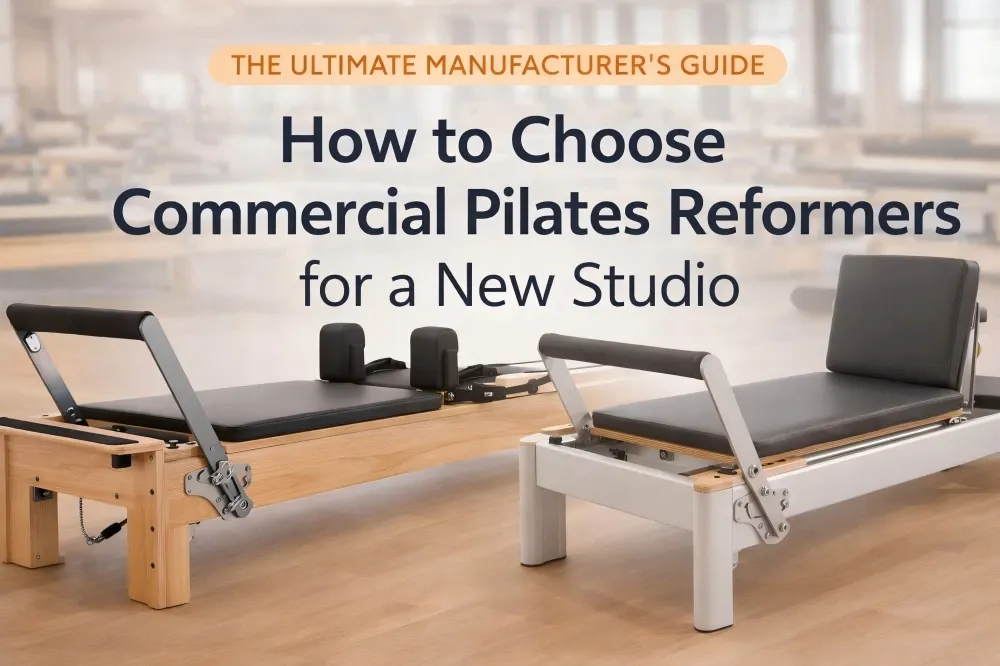
Opening a Pilates studio is more than purchasing machines — it is choosing the right Pilates equipment manufacturer to support your long-term business success.
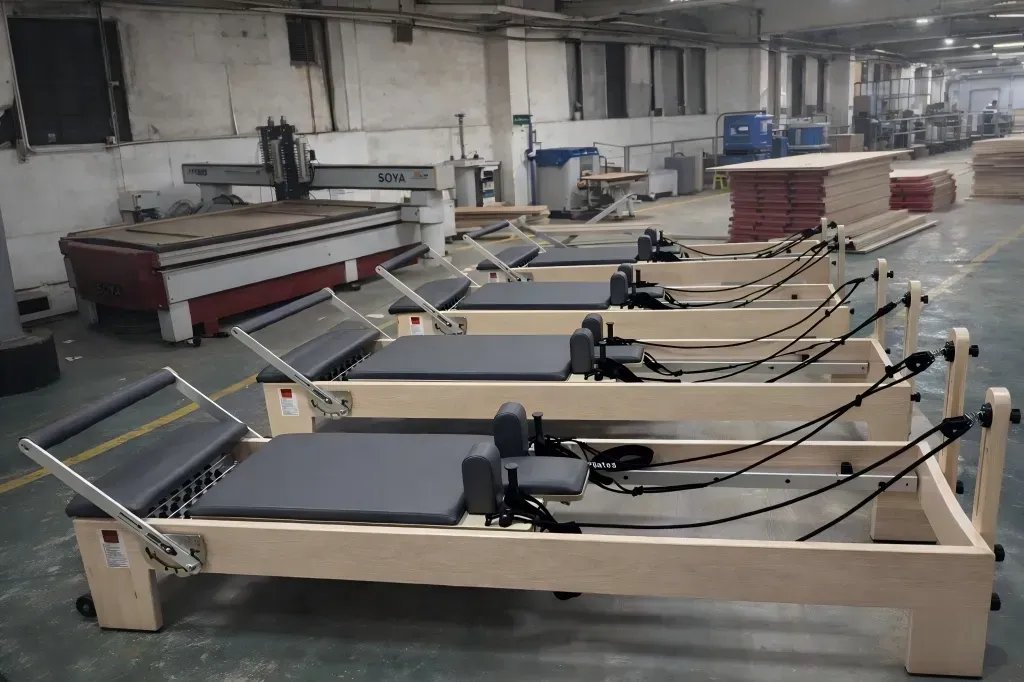
As a direct factory producing both solid hardwood and aerospace-grade aluminum reformers, we understand the engineering, durability standards, and business realities behind commercial Pilates equipment.
This guide will help studio owners understand what truly defines a professional Pilates equipment manufacturer — and how to select commercial reformers built for long-term performance.
1. What Defines a Real Pilates Equipment Manufacturer?
Many suppliers call themselves “manufacturers,” but in reality they are trading companies.
A true Pilates equipment manufacturer should:
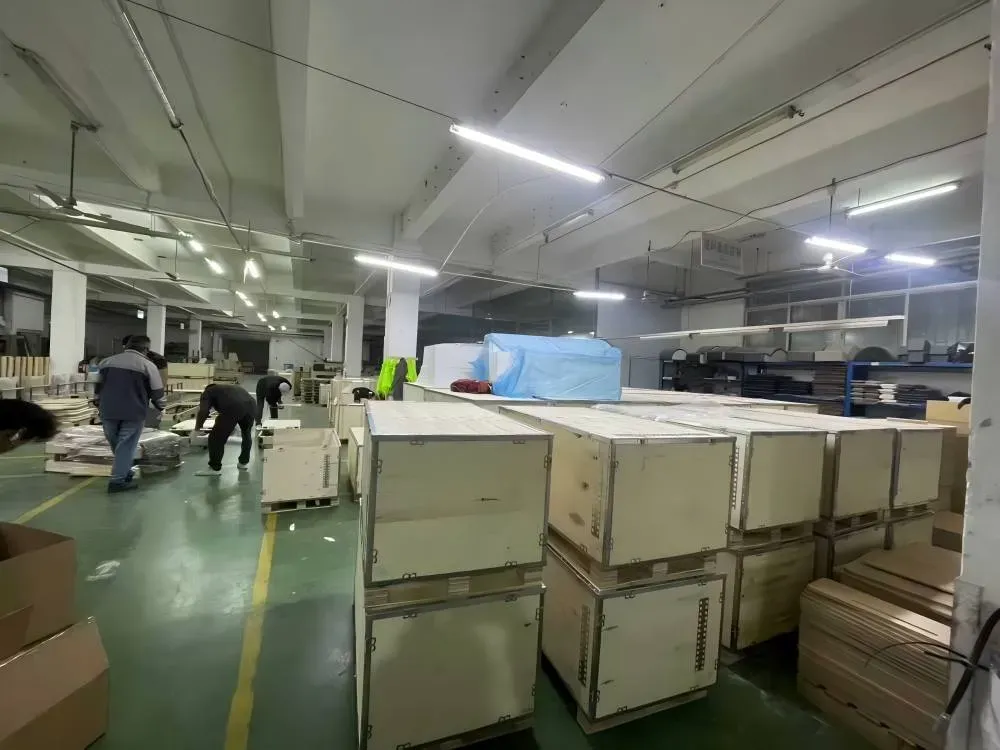
- Operate its own production facility
- Control material sourcing
- Conduct structural load testing
- Provide customization options
- Offer long-term spare parts support
When evaluating a manufacturer, ask:
- Do you produce both wooden and aluminum reformers?
- Can I visit your factory (physically or virtually)?
- What is your production capacity per month?
- Do you perform dynamic load testing?
A professional manufacturer can explain every weld, joint, and spring specification in detail.
2. Commercial vs Home Equipment: A Manufacturer’s Perspective
A home reformer may look similar to a studio model — but engineering differences are significant.
Commercial reformers must withstand:
- 30–50 hours of weekly use
- Continuous load cycles
- Multiple user weight variations
- Intensive instructor training sessions
A reliable Pilates Reformer produced by a professional Pilates equipment manufacturer should include:
- Reinforced frame geometry
- High-tensile spring systems
- Industrial-grade wheel assemblies
- Long-life upholstery materials
If these structural elements are not specified clearly, the equipment is not truly commercial-grade.
3. Wooden vs Aluminum: Engineering Differences Explained
As a manufacturer producing both materials, we guide studio owners based on usage needs — not trend preferences.
Solid Wood Pilates Reformers
Professional hardwood reformers (Maple, Beech) provide:
- Natural vibration absorption
- High structural mass for stability
- Premium boutique aesthetic
- Excellent grounding effect during dynamic movement
Manufacturing considerations:
- Moisture-controlled wood drying
- Reinforced internal frame structure
- Precision joinery or steel core reinforcement
- Anti-warp finishing treatment
Wooden reformers are ideal for:
- Boutique studios
- Premium wellness brands
- Low-humidity environments
Aluminum Pilates Reformers
Commercial aluminum systems offer:
- Lightweight installation
- Corrosion resistance
- Modern minimalist appearance
- High torsional rigidity
As a Pilates equipment manufacturer, we use:
- Industrial-grade aluminum extrusion
- Anodized surface treatment
- Reinforced weld joints
- Precision-machined rail systems
Aluminum reformers are ideal for:
- High-volume franchises
- Coastal or humid climates
- Multi-location studio chains
4. Frame Engineering: The Core of Manufacturing Quality
Frame integrity separates professional manufacturers from low-cost suppliers.
Important technical factors:
- Wall thickness of aluminum extrusion
- Hardwood density rating
- Joint reinforcement method
- Static and dynamic load testing (up to 500kg safety margin)
- Anti-flex torsional resistance
A professional Pilates equipment manufacturer designs frames to prevent:
- Micro-sway
- Creaking
- Long-term joint fatigue
Structural integrity protects your investment for 8–10 years or more.
5. Carriage & Rail Precision
The carriage glide system is a technical signature of manufacturing quality.
Our production standards include:
- High-density polyurethane wheels
- Sealed stainless-steel bearings
- Lateral tracking stabilization wheels
- Precision rail alignment tolerance
Smooth, silent movement is not accidental — it is engineered.
6. Spring Technology and Resistance Calibration
In group training environments, consistency matters.
Professional Pilates equipment manufacturers use:
- High-tensile music wire springs
- Fatigue-tested elasticity cycles
- Calibrated resistance gradients
- Color-coded standardized tension
Consistency ensures instructors can teach multiple machines without resistance variation.
7. Upholstery & Ergonomic Manufacturing Standards
Studio equipment must withstand:
- Sweat exposure
- Alcohol-based cleaning
- Continuous compression
We use:
- Multi-layer EVA foam
- Abrasion-tested medical-grade vinyl
- Reinforced stitching
- Replaceable upholstery panels
A true Pilates equipment manufacturer designs upholstery systems for long-term serviceability.
8. Business Logic: Why Choosing the Right Manufacturer Saves Money
Consider Total Cost of Ownership (TCO):
Factor | Low-Cost Supplier | Professional Manufacturer |
|---|---|---|
Lifespan | 2–3 Years | 8–10 Years |
Downtime Risk | High | Minimal |
Spare Parts | Uncertain | Guaranteed |
Resale Value | Low | 50–60% |
Downtime equals revenue loss.
A reliable Pilates equipment manufacturer reduces operational risk and protects studio profitability.
9. Factory Partnership Advantages
When sourcing directly from a Pilates equipment manufacturer:
- You access factory pricing
- You can customize branding and dimensions
- You receive consistent production batches
- You secure long-term technical support
Manufacturers maintain blueprints and production records — traders do not.
10. Certifications & Safety Standards
Professional manufacturing includes:
- Load capacity verification
- Dynamic fatigue testing
- Footbar locking stress testing
- Spring tensile verification
Safety compliance protects both clients and studio owners.
11. How to Evaluate a Pilates Equipment Manufacturer
Before placing an order:
✔ Request factory photos or video tour
✔ Ask for material specifications
✔ Confirm warranty terms
✔ Evaluate export experience
✔ Review existing commercial clients
✔ Request factory photos or video tour
✔ Ask for material specifications
✔ Confirm warranty terms
✔ Evaluate export experience
✔ Review existing commercial clients
A confident manufacturer will provide transparent answers.
Conclusion: Choose a Manufacturer, Not Just a Machine
Selecting a reformer is selecting a long-term manufacturing partner.
Whether you prefer solid wood elegance or aluminum precision, the most important decision is choosing a reliable Pilates equipment manufacturer that understands commercial engineering standards.
The right partner will support your studio for years — not just sell you equipment.