
Jun 26, 2026Product Knowledge & Guides
Built-in or External Footbar? A Pilates Reformer Buyer's Guide
Learn the key differences between built-in and external footbars on Pilates Reformers. Compare space, maintenance, studio preferences, and buying considerations.
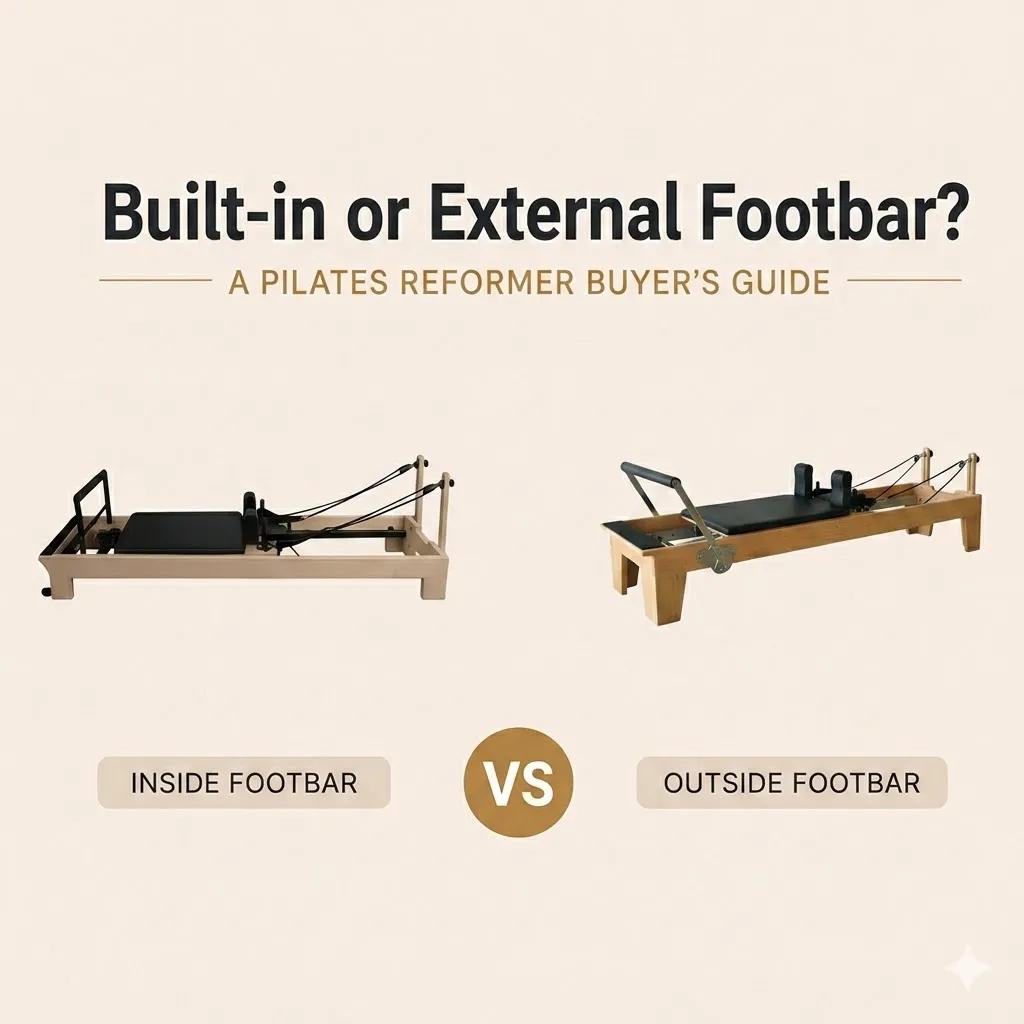
When buyers compare Pilates Reformers, most of the attention goes to wood materials, spring systems, carriage dimensions, upholstery colors, and frame design.
The footbar is often treated as a minor detail.
In reality, it can influence how instructors teach, how studios use their floor space, how equipment is maintained, and even whether a customer chooses one reformer over another.
Over the years, I've seen distributors stock the wrong configuration, studio owners discover their instructors preferred a different setup, and buyers realize too late that their local market had very specific preferences.
If you're planning a studio project, building inventory for distribution, or sourcing reformers for your own brand, understanding the differences between built-in and external footbars can help you make a more informed decision.
Quick Comparison
Factor | Built-in Footbar | External Footbar |
|---|---|---|
Space Efficiency | Excellent | Good |
Appearance | Modern and Clean | Traditional and Functional |
Access for Maintenance | Moderate | Easier |
Boutique Studios | Preferred | Less Common |
Classical Pilates Studios | Acceptable | Often Preferred |
Rehabilitation Facilities | Good | Often Preferred |
Current Market Demand | Higher | Stable Niche Demand |
The important thing to understand is that neither option is universally better. The right choice depends on who will be using the equipment and how the studio operates.
Understanding the Built-in Footbar
A built-in footbar is integrated into the reformer frame. When lowered, it sits neatly within the machine's overall footprint, creating a cleaner and more streamlined appearance.
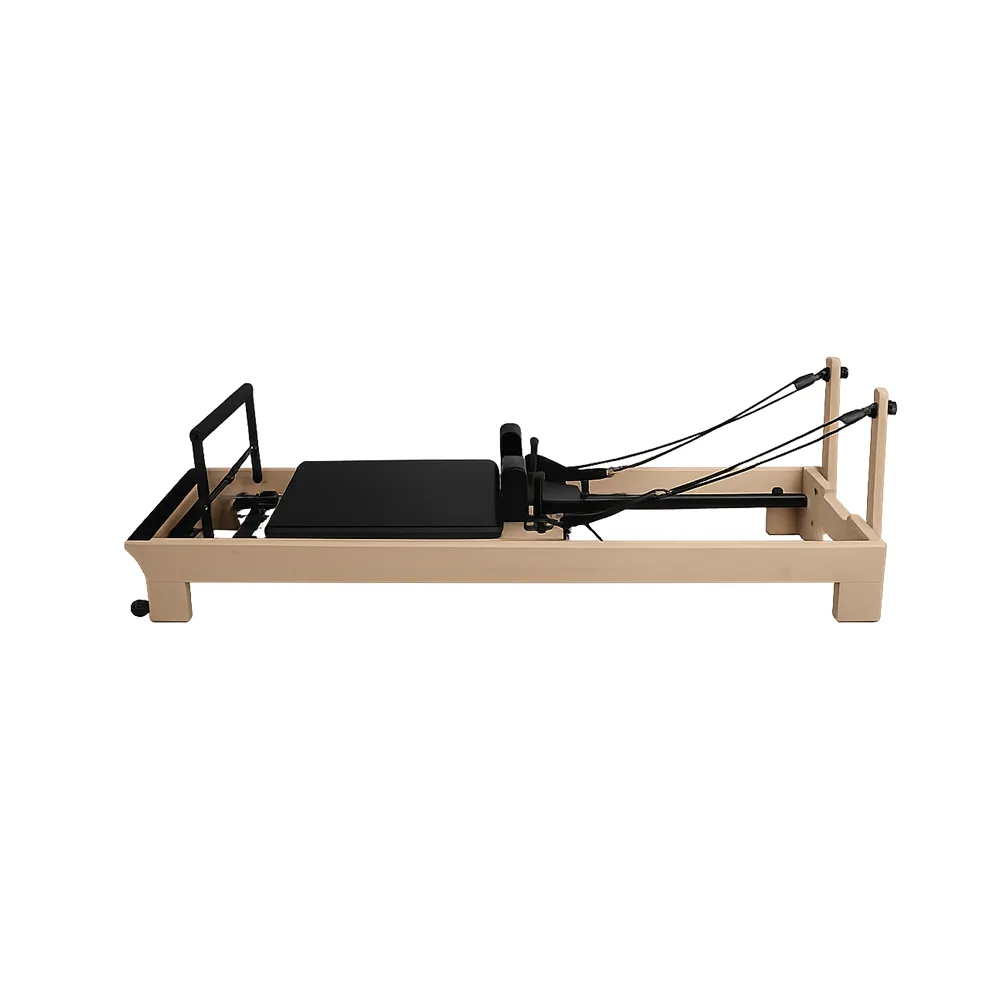
Over the last few years, this configuration has become increasingly popular, especially in newer commercial studio projects.
The reason is simple: space.
Many Pilates studios operate in cities where rent is expensive and every square meter matters. Studio owners often need to fit as many reformers as possible into a room without making the space feel crowded.
Because the built-in footbar does not extend beyond the frame, reformers can be positioned closer together while maintaining comfortable walking space between machines.
The clean appearance is another reason for its popularity. Many boutique studios invest heavily in interior design and prefer equipment that complements a modern, minimalist environment.
For instructors teaching contemporary Pilates classes with frequent transitions around the front platform, the absence of external brackets can also create a cleaner training area.
When Does a Built-in Footbar Make Sense?
Built-in footbars are often a good fit for:
- Boutique Pilates studios
- Franchise studio chains
- Premium residential projects
- Urban studios with limited floor space
- Markets where modern aesthetics influence purchasing decisions
For many distributors, built-in models now account for the majority of commercial studio orders.
Understanding the External Footbar
The external footbar uses mounting brackets attached to the outside of the reformer frame.
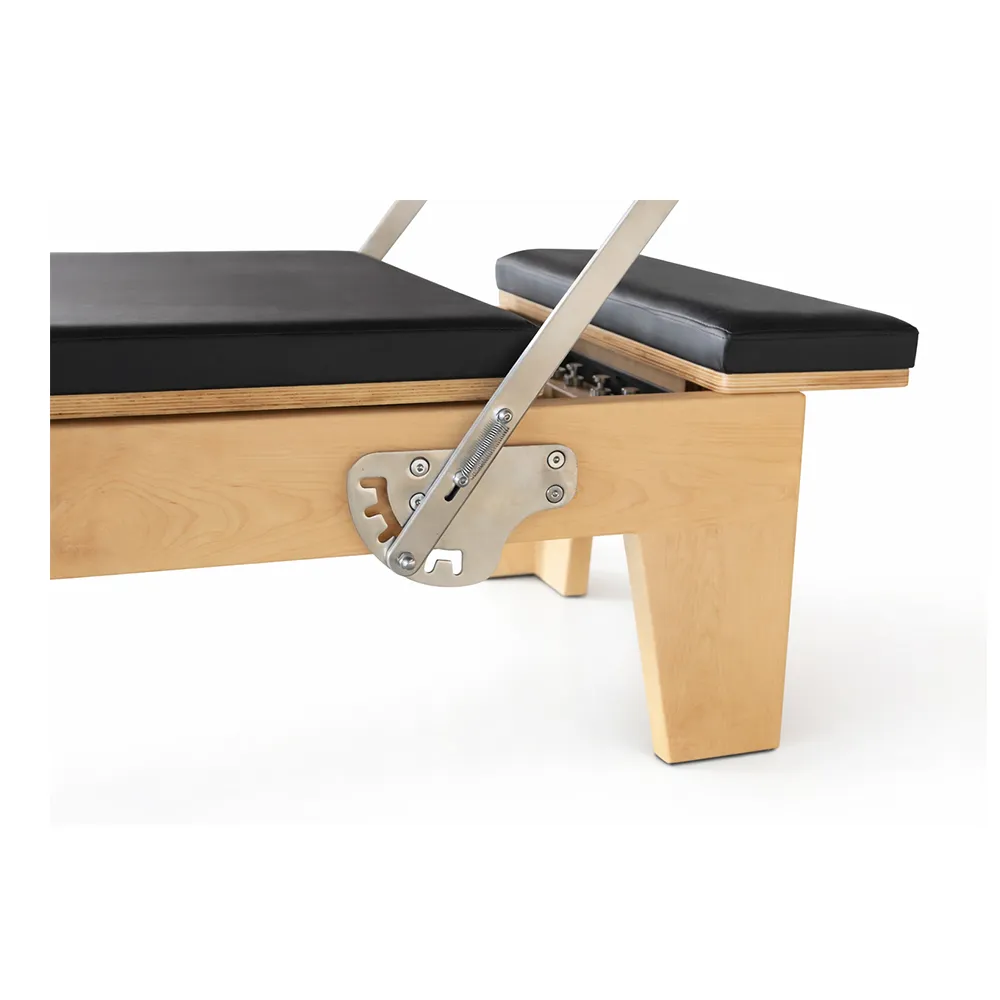
This design has been used for many years and remains highly popular in certain segments of the Pilates market.
One thing I've learned from visiting studios is that instructor preference matters more than many buyers realize.
Many instructors trained in classical Pilates systems spent years working on reformers equipped with external footbars. They know the adjustment system, they trust it, and they often prefer to continue using what feels familiar.
External footbars also remain common in rehabilitation environments and facilities serving athletes, where durability and ease of maintenance are often prioritized over appearance.
While the visual style may feel more traditional, demand for external footbars remains strong in specific markets.
When Does an External Footbar Make Sense?
External footbars are commonly chosen by:
- Classical Pilates studios
- Physical therapy clinics
- Rehabilitation centers
- Athletic training facilities
- Long-established Pilates instructors
- Distributors serving traditional Pilates markets
If your local market has a strong classical Pilates culture, external footbars should not be overlooked.
What About Maintenance?
Most buyers focus on appearance and functionality when comparing footbar designs.
Maintenance usually becomes important later.
The reality is that all commercial reformers require regular cleaning and inspection, especially in high-volume studios.
Maintaining a Built-in Footbar
Because the adjustment mechanism sits inside the frame, access is slightly more limited.
Over time, dust, hair, grip sock fibers, and everyday debris can accumulate within the internal tracks.
Routine cleaning is still straightforward, but it may take a little longer compared to an exposed system.
For studios operating classes throughout the day, regular maintenance helps keep the mechanism moving smoothly.
Maintaining an External Footbar
External systems are easier to access because the hardware remains visible.
Cleaning, inspection, and minor adjustments can typically be performed quickly without reaching into enclosed areas.
For facilities that prioritize simplicity and minimal downtime, this is often viewed as an advantage.
The Bigger Issue: Manufacturing Quality
In practice, the footbar style itself is rarely the source of long-term problems.
Manufacturing quality is far more important.
A poorly built built-in footbar may develop movement over time.
A poorly built external footbar can do exactly the same thing.
When buyers encounter rattling, instability, excessive play, or premature wear, the cause is usually related to machining accuracy, assembly quality, materials, or production consistency.
This is why experienced distributors spend less time asking which design is better and more time evaluating how well each design is manufactured.
The design matters.
The execution matters even more.
A Simple Buying Recommendation
If you're still deciding between the two options, here's a practical way to approach the decision.
If You're Opening a Pilates Studio
Choose the configuration that best matches your instructors' teaching style and the available floor space.
A beautiful reformer that instructors don't enjoy teaching on will quickly become a problem.
If You're a Distributor
A mixed inventory strategy is often the safest approach.
In many markets, a 70% built-in and 30% external split provides enough flexibility to serve both modern studio projects and traditional facilities.
If You're Building a Private Label Brand
Consider offering both configurations.
Customer preferences vary significantly between regions, and allowing buyers to choose often produces better results than forcing a single solution.
Final Thoughts
After years of supplying Pilates equipment to distributors and studios in different markets, I've come to a simple conclusion:
The best footbar isn't necessarily the newest design.
And it isn't necessarily the most traditional one either.
The best footbar is the one that fits your customers, your instructors, and your market.
If you're still unsure which configuration to stock, ask a simple question:
"Do your customers lean more toward contemporary Pilates or classical Pilates?"
In many cases, the answer will tell you exactly which footbar configuration belongs in your next order.