
Sep 11, 2026Product Knowledge & Guides
Aluminum vs Wooden Foldable Pilates Reformer: Which Should You Choose?
Compare aluminum and wooden foldable Pilates reformers by weight, stability, maintenance, appearance, storage and commercial use.

A foldable Pilates reformer can provide professional training performance without permanently occupying an entire room. It is an increasingly popular option for home gyms, instructors, boutique studios and fitness equipment brands serving space-conscious customers.
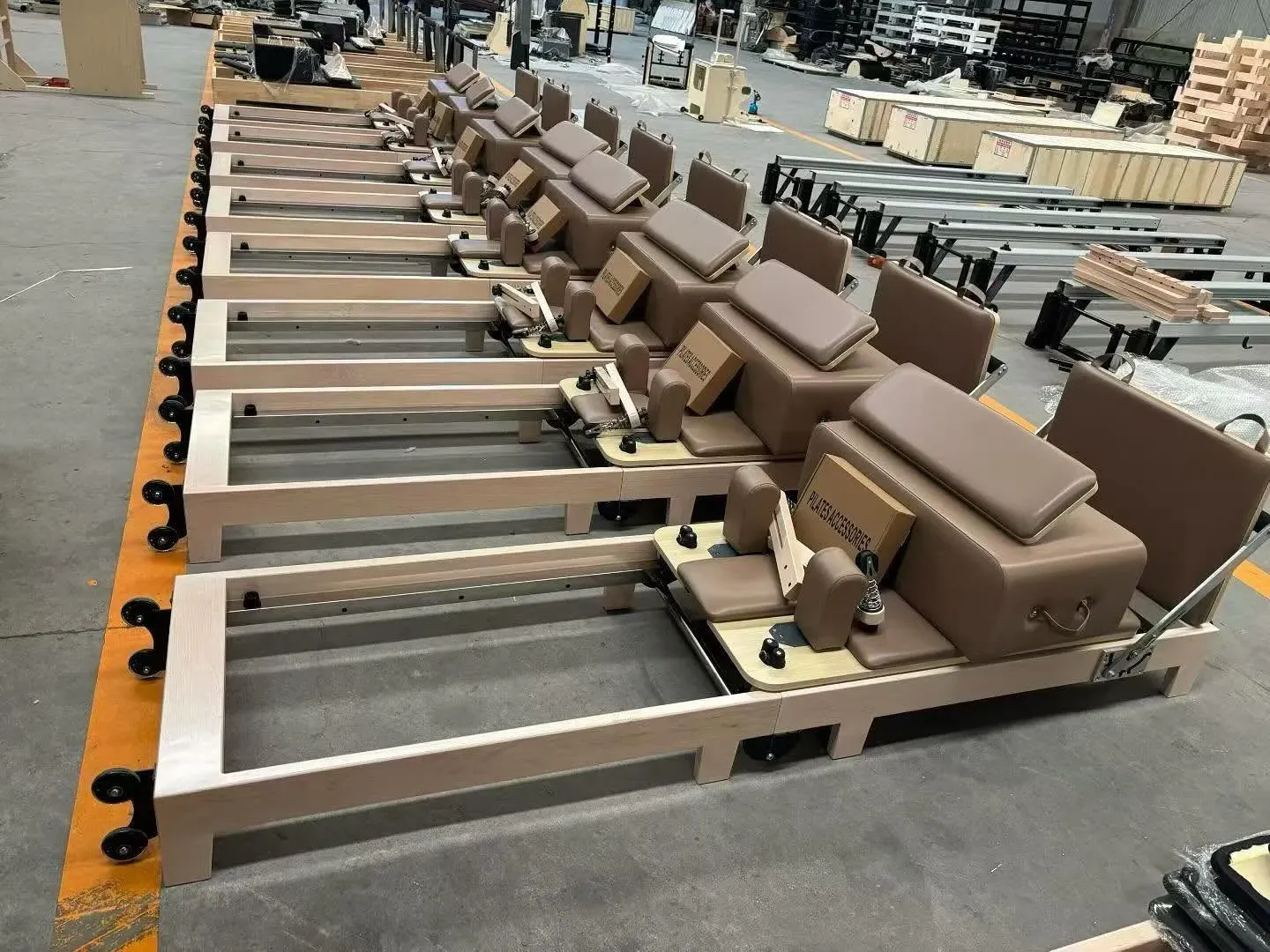
Once you decide to purchase a folding reformer, another important question appears:
Should you choose an aluminum or wooden foldable Pilates reformer?
Both frame types can deliver smooth carriage movement, adjustable resistance and convenient storage. However, they differ in appearance, weight, maintenance, handling and market positioning.
This guide explains those differences and helps you choose the right model for your space, customers and business.
Quick Comparison
Feature | Aluminum Foldable Reformer | Wooden Foldable Reformer |
|---|---|---|
Appearance | Modern and minimalist | Warm and furniture-like |
Frame finish | Anodized, coated or customized color | Natural wood grain or stained finish |
Moving and handling | Usually easier to reposition | Often heavier and more substantial |
Moisture resistance | Generally easier to manage | Requires appropriate sealing and care |
Daily cleaning | Simple to wipe and maintain | Avoid excessive moisture and harsh cleaners |
Training feel | Clean and precise | Solid and traditional |
Best environment | Modern homes and flexible studios | Premium homes and boutique studios |
Brand positioning | Contemporary and practical | Natural and premium |
Shipping impact | Depends on folded size and weight | Depends on wood type, packaging and weight |
Tower compatibility | Must be confirmed by model | Must be confirmed by model |
Actual weight, stability and folded dimensions depend on the individual design. Frame material alone should not be used to judge overall quality.
1. Frame Material and Appearance
The most visible difference is the frame.
Aluminum Foldable Reformer
An aluminum frame creates a clean, modern appearance. Black, white, silver and customized finishes work well in contemporary homes, minimalist studios and commercial fitness environments.
Aluminum profiles also provide consistent dimensions, making them suitable for standardized production and private-label product programs.
Wooden Foldable Reformer
A wooden reformer has a warmer and more traditional appearance. Natural oak, maple and beech finishes can make the equipment feel like part of the interior rather than a piece of industrial fitness machinery.
This makes wooden models attractive to boutique studios, wellness centers and premium home customers who value natural materials and interior design.
2. Weight and Mobility
Aluminum is often selected when the reformer needs to be moved regularly.
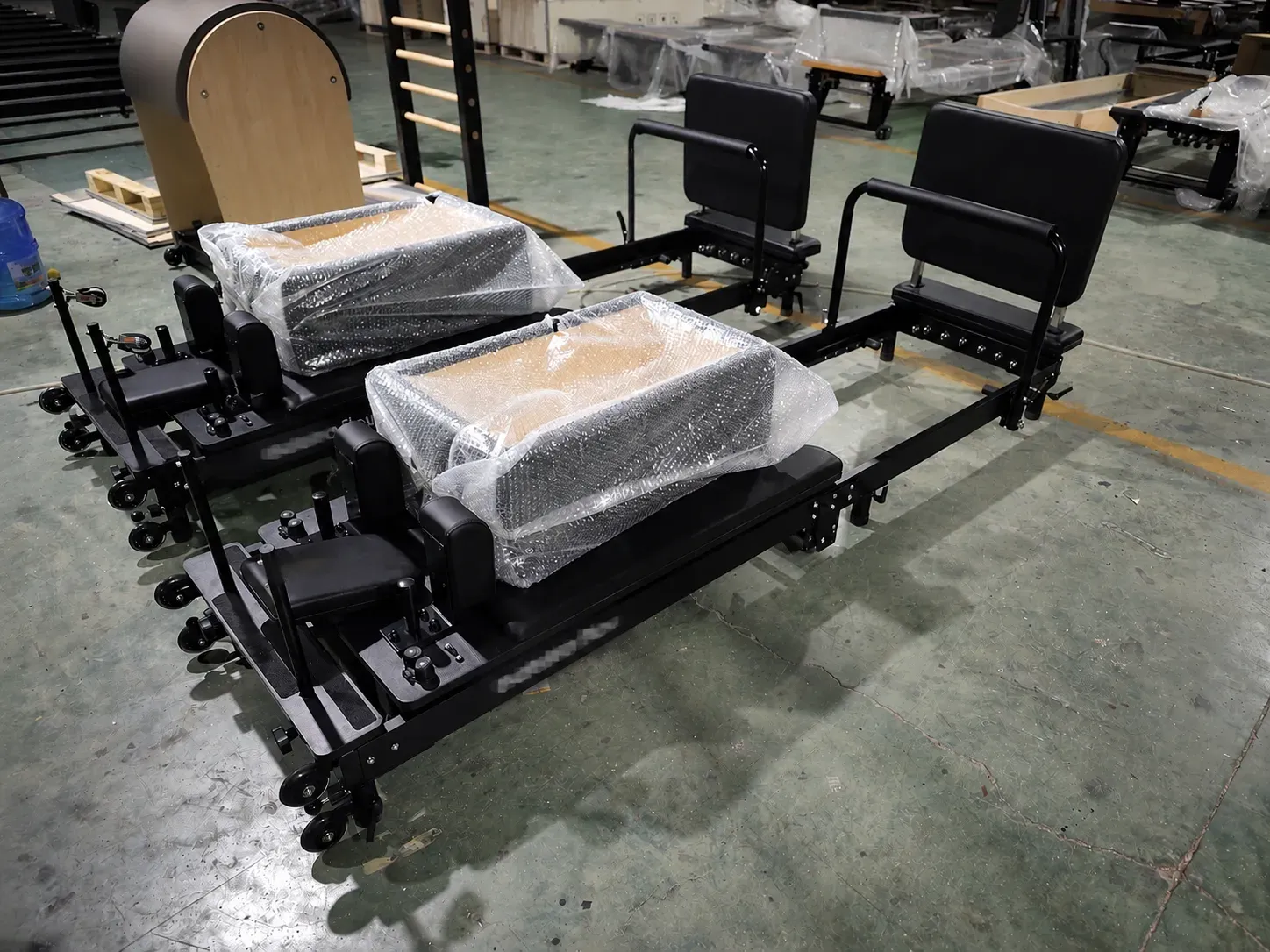
For example, the Leyue Elite A8 Foldable Aluminum Reformer has a net weight of approximately 50 kg and includes transport wheels. Its adjustable legs allow the working height to be changed between 260 and 335 mm.
Wooden folding reformers can feel more substantial because of their hardwood frames. This may be preferred by customers who prioritize a solid studio-style experience, but the machine may require more effort to reposition.
However, buyers should not assume that every aluminum reformer is lighter than every wooden reformer. The final weight also depends on:
- Frame profile and wall thickness
- Carriage construction
- Leg and hinge design
- Footbar mechanism
- Springs and accessories
- Transport-wheel structure
Always compare the actual net weight and demonstrate the folding process before placing a bulk order.
3. Stability and Training Performance
A common concern is whether a foldable reformer is as stable as a fixed-frame machine.
The answer depends more on engineering than on whether the frame is aluminum or wood.
Important factors include:
- Strength and position of the folding hinge
- Security of the locking mechanism
- Alignment between the two frame sections
- Leg support and frame geometry
- Carriage rail alignment
- Wheel and bearing quality
- Footbar rigidity
- Maximum tested user weight
A well-engineered wooden folding reformer can be stable and smooth. A properly designed aluminum folding reformer can also provide reliable commercial performance.
Conversely, a weak hinge or poorly aligned track can create movement, noise or an uneven carriage glide regardless of frame material.
When evaluating samples, unfold the reformer several times and check whether the carriage passes through the folding connection smoothly and without vibration.
4. Folding and Storage
The word “foldable” does not automatically mean that every model is equally easy to store.
Before purchasing, check:
- The unfolded dimensions
- The folded dimensions
- The space required to complete the folding movement
- Whether one or two people are needed
- Whether transport wheels are included
- Whether the machine can stand vertically
- Whether there is a safety lock
- Whether the folded machine remains stable during storage
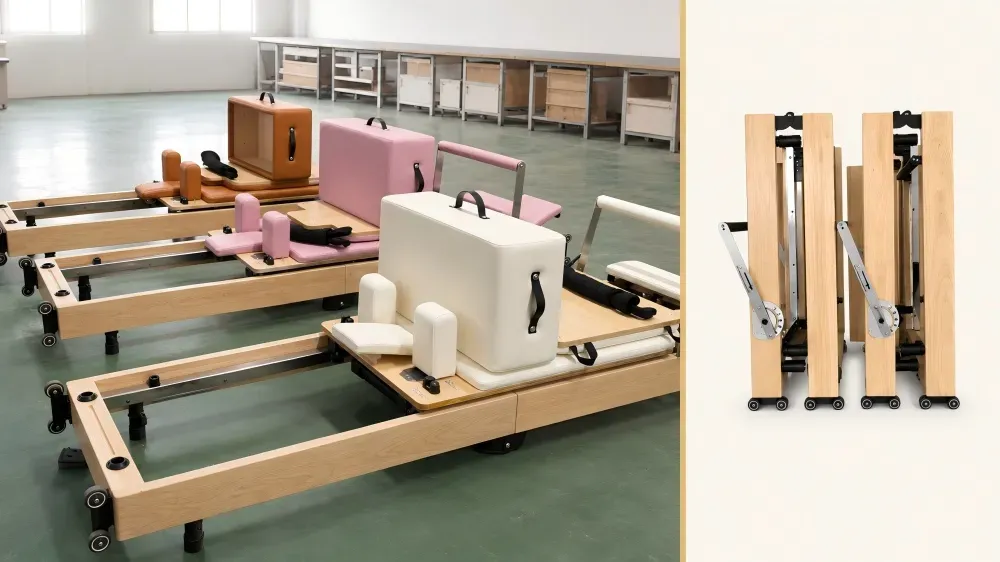
Leyue’s solid Thai oak folding reformer folds to approximately 1265 × 700 × 580 mm, making it suitable for premium home environments and flexible training spaces.
Buyers should also measure doorways, elevators, storage rooms and ceiling clearance instead of considering only the open floor space.
5. Cleaning and Maintenance
Aluminum Frame Care
Aluminum frames are generally convenient for regular cleaning. Their finished surfaces can be wiped down after classes, making them practical for shared environments.
Care should still be taken to avoid abrasive tools or aggressive chemicals that could damage the surface finish.
Wooden Frame Care
Wooden frames should be kept away from standing water, prolonged direct sunlight and major changes in humidity.
A properly sealed hardwood frame is suitable for normal indoor use, but it should be cleaned with a soft, slightly damp cloth and dried promptly. Harsh cleaning chemicals should not be applied directly to the wood.
For both models, routine maintenance should also cover the wheels, tracks, ropes, pulleys, springs, upholstery, fasteners and folding lock.
6. Which One Is Better for Home Use?
Choose an aluminum foldable reformer if:
- The machine will be moved regularly
- You prefer a modern appearance
- Simple maintenance is important
- Your room has a minimalist or contemporary design
- Adjustable leg height is required
- You want a practical home-fitness product position
Choose a wooden foldable reformer if:
- Natural appearance is a priority
- The reformer will form part of the room’s interior
- You prefer a more traditional studio look
- A substantial frame feel is important
- The target customer expects a premium home product
For home use, the best choice is not necessarily the lightest machine. The user must still be able to fold, move and secure it safely.
7. Which One Is Better for a Pilates Studio?
A foldable model is useful for:
- Multi-purpose exercise rooms
- Studios that need to clear the floor between classes
- Personal training spaces
- Instructor demonstration equipment
- Small boutique studios
- Rehabilitation rooms with flexible layouts
For a high-traffic studio running classes continuously throughout the day, a fixed or stackable commercial reformer may sometimes be more practical because it does not need to be folded repeatedly.
If a folding model will be used commercially, confirm:
- Commercial-use suitability
- Tested user weight
- Folding-cycle durability
- Replacement-part availability
- Warranty terms
- Carriage and rail specifications
- Daily maintenance requirements
8. Can a Tower Be Added?
Do not assume that every foldable reformer can support a tower.
Adding a tower changes the load placed on the frame, legs and folding mechanism. Some models are specifically engineered for a tower, while others should only be used as standard reformers.
Before ordering, confirm whether the exact model has:
- Reinforced tower mounting points
- Sufficient frame and leg support
- A compatible folding direction
- Safe storage after the tower is installed
- Appropriate springs and attachment hardware
If tower exercises are essential, select a model designed as a foldable Reformer-with-Tower system instead of modifying a standard folding machine later.
9. Considerations for Distributors and Private-Label Brands
For importers and Pilates equipment brands, product selection should go beyond appearance.
Compare the following information before choosing a platform:
- Product and carton dimensions
- Net and gross weight
- Container loading quantity
- Individual delivery requirements
- Assembly time
- Folding demonstration materials
- Packaging protection around the hinge
- Spare parts
- User manuals
- Replacement wheels, springs and ropes
- Upholstery and frame customization
- Sample and bulk-order consistency
Aluminum folding reformers can fit contemporary and practical product ranges, while wooden folding reformers can support a warmer, premium brand position.
Some distributors may benefit from offering both:
- An aluminum model for portability and modern home fitness
- A wooden model for premium home users and boutique studios
Final Recommendation
There is no single material that is best for every buyer.
Choose an aluminum foldable Pilates reformer when mobility, modern styling and convenient maintenance are the main priorities.
Choose a wooden foldable Pilates reformer when natural appearance, premium positioning and a traditional studio atmosphere are more important.
Most importantly, evaluate the complete machine—not only its frame material. A high-quality folding reformer should combine:
- A secure folding and locking system
- Accurate rail alignment
- Smooth, quiet carriage movement
- Stable legs and footbar
- Consistent spring resistance
- Suitable folded dimensions
- Reliable packaging and replacement parts
Looking for a Foldable Reformer for Your Market?
Leyue Pilates manufactures aluminum and wooden Pilates reformers for studios, distributors, importers and private-label brands.
We can help you compare folding structures, frame materials, dimensions, upholstery colors, branding and packaging based on your target market and order quantity.